Home Blog Page 229

Québec: Where The Snowmobile Calls Home

0

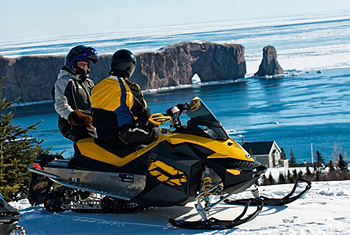
It’s no coincidence that the snowmobile was invented in Québec. With our incredible landscapes, seascapes, forests, mountains and winter marvels accessible only by snowmobile – well, where else could it have been dreamt up?

Québec gets an average of 312 cm (more than 10 feet) of snow per year. Some regions even see up to 700 cm (23 feet). That’s more snow than Alaska, Vermont and Wyoming combined!

You can count on the snow, and what’s more, you can count on the sun, all winter long. What’s the best part of Québec’s 33,500 km (20,500 miles) of snowmobile trails, besides the fact that that’s enough to get you from New York to San Francisco eight times? They’re interconnected. Imagine the entire province spread out before you, waiting for you to decide which region to explore first:

* Abitibi‐Temiscamingue, rated the number one snowmobile destination in North America (Supertrax International, 2011 and 2012)

* The Laurentians, birthplace of the first snowmobile club in the world

* Charlevoix, Québec City & Area and Saguenay–Lac‐Saint‐Jean, with their exceptional conditions and up to 183 cm (six feet) of natural snowfall

* Lanaudière and Mauricie, with their endless choice of circuits and outstanding trail conditions

* Gaspésie, Bas‐Saint‐Laurent, Côte-Nord–Manicouagan and Côte-Nord–Duplessis, with their breathtaking scenery between sea and mountains

* Chaudière‐Appalaches and Centre‐du‐Québec, with their multiple-day loops.

There’s so much to do and see in Québec after an exhilarating snowmobile ride. Enjoy the lights and excitement of the big city or the quiet cultural charm of a small town.

Savour the local cuisine: nothing chases the cold away like a warm greeting and some fine dining! Then, sleep soundly at a fancy shack, a rustic chalet in the woods, a luxurious ice hotel, or even snuggled up in a good old‐fashioned igloo.

You’ll always get a warm welcome from Québecers. We can’t wait to have you chez nous, that is, in our home, among us.

For more information, visit www.quebecoriginal.com/snowmobile
BUILDING CHEAPER SNOWMOBILES

0

One thing we keep hearing is the need in the industry for cheaper sleds. If you ask any of the manufacturers, they’ll tell you this is easier said than done.

Fact is the OEMs are squeezed between a rock and a hard place trying to build sleds that have appeal to the demands of consumers these days.

It may seem like a good idea for a less-equipped bargain sled to be offered in showrooms but would you really put your money on it when there’s a loaded up gizmo-laden sled sitting next to it ready to fulfill your dreams for a higher price?

We keep hearing from the manufacturers their efforts to build cheaper stuff just don’t pan out because snowmobilers want more: More electronics, more power, more comfort, more suspension.

The other factor is the EPA. It just costs a lot of money to build sleds that meet the corporate fleet requirements of the Environmental Protection Agency.

Everything from the design process to the testing and certification of today’s sleds is very, very expensive and requires tremendous manpower. The cost gets passed on to the consumer and there’s simply no way around it.

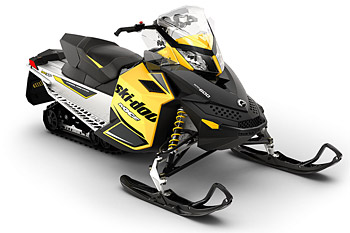
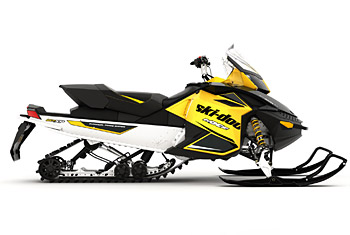
All this being said however, there is a sweet spot in the industry for more sleds like Ski-Doo’s MX-Z Sport 600 XP. This is a very good performing sled that meets the requirements of a lot of performance riders without breaking the bank. Its fairly uncomplicated (by today’s standards) Rotax twin is carbureted and its shock package, although very competent, is a definite downgrade compared to many competitors.

The end result is a sled that is priced right and offers everything you need in the power, ride and handling categories.

We’d like to see more of this kind of snowmobile – at least as far as the EPA allows the sled-makers to sell them.

Grand Prix of Valcourt Tickets On Sale

0

Tickets for the 31st edition of the Grand Prix of Valcourt are currently on sale. Extreme sports fans can take advantage of a pre-Christmas special offer to purchase heated trackside suite tickets for the 2013 Grand Prix Ski-Doo of Valcourt, scheduled for the weekend of February 15-17.

Available until December 25, 2012 inclusively, this is the ideal Xmas gift for the whole family. Each three-day reserved seating pass in the “H” Trackside Heated Suite for the Great Quebec Winter Motorsport Classic, can be obtained for just $80, taxes included, a savings of 35% off the regular price of $125.

A trackside suite pass offers an incredible view of all the action on Circuit Yvon Duhamel from the comfort of a heated location, no matter the weather conditions outside.

“This offer is our Christmas gift to our faithful supporters. It is also an invitation to everyone looking to discover the intensity of a race weekend where they will witness close to 200 on-track practices, qualifying races and days-end final races on Circuit Yvon Duhamel over a three-day period,” says Marie-Pier Lemay, General Manager of the Grand Prix Ski-Doo of Valcourt. “The 31st running of the event will again feature all the major series that made this Grand Prix the greatest North-American snowmobile weekend of the winter. Furthermore, we are adding a spectacular snowmobile freestyle show for fans on Saturday and Sunday. This offer will make a great present under the Christmas tree.”

Fans of the great outdoors can also benefit from this special offer with a savings of 20% off the regular price for three-day general admission tickets at $45 instead of $55.

To take advantage of these special offers and receive ticket vouchers in time for Christmas, fans must call the Grand Prix of Valcourt ticket offices at 1 866 532-7543 Monday to Friday from 9:00 a.m. to 4:30 p.m. They can also go online and click the Buy Tickets tab to learn more about the weekend festivities, lodging and ticket package offers and order safely online.

Trackside Heated Lodge quantities are limited. Accompanied by an adult, children under 12 are admitted free to the Grand Prix site, but they must hold a valid ticket to access the heated trackside suites.

About the Grand Prix of Valcourt – The Grand Prix Ski-Doo of Valcourt is the great Quebec winter motorsport classic. Launched in 1983, this year the Grand Prix celebrates its 31st consecutive running the weekend of February 15-17, 2013. Some of the greatest names in snowmobile racing have had their moment at circuit Yvon Duhamel in Valcourt, including Canadian Blair Morgan, who won eight snocross Grand Prix finales. Also outstanding is the Wahl family of Greenbush, Minnesota who have earned 13 wins in the feature race finale on the ice oval speedway: four by David between 1988 and 1994, six by his nephew Terry from 1995 and 2003, and three by Dustin, son of David, in 2008, 2009 and 2012. For fans, Quebec’s Jacques Villeneuve recorded the most popular victories in Valcourt in 1986, 2005 and 2006.

Visit www.grandprixvalcourt.com/en/

Tucker Hibbert to Wear FLY Helmets and MX Gear

0

FLY Racing is proud to announce Tucker Hibbert has signed a multi-year sponsorship agreement to wear its F2 Carbon helmet during the 2012/2013 and 2013/2014 snocross race seasons.

Hibbert will debut his new helmet sponsorship at the International Series of Champions (ISOC) season opener in Duluth, Minnesota November 23-25. He will also compete in ESPN Winter X Games as well as select events overseas.

When asked about his new partnership, Hibbert said, “I’ve wanted to get involved with FLY Racing for a long time. I’ve always heard great things about the products and the people involved in the brand. We started to talk about the possibility of working together last year.” Hibbert wore the F2 Carbon helmet during the 2011/2012 snocross season and said, “I immediately knew I wanted to wear FLY Helmets moving forward. The quality of a helmet often gets overlooked by snowmobilers but it’s a critical element to both riding and racing.”

In addition to wearing FLY Racing’s F2 helmet during the next two snocross seasons, Hibbert will also wear FLY Racing motocross gear during select AMA Pro Motocross races. Hibbert’s motocross history includes eight AMA motocross 250 top 15 finishes, four AMA Supercross 250 top 10 finishes, one Supercross heat win, and six CMRC MX2 moto wins. “The FLY Racing brand has a lot to offer and I’m really excited to also wear their gear for motocross,” said Hibbert.

Once Tucker Hibbert finds a brand he likes and feels comfortable with, he likes to stick with that brand. He has raced Arctic Cat snowmobiles his entire life and has also been the owner and rider of Team Monster Energy/Arctic Cat since 2006. “Long-term partnerships are really important to me. I’m excited to know I’ll be with FLY Racing for the next two years and hope to continue to work with them for the remainder of my career.”
“FLY Racing is very proud of its newest partnership and wish Tucker Hibbert the best of luck this season and for seasons to come,” stated FLY Racing’s Rich Kumm.

About Tucker Hibbert – Tucker Hibbert was born in 1984 in Driggs, Idaho and now resides in the town of Pelican Rapids, Minnesota. Throughout his snocross history, he has accumulated 69 national pro snocross wins, six national pro snocross championships and 19 national semi-pro snocross wins. Hibbert has the second highest number of wins in pro snocross history and is the youngest gold medalist in Winter X history with his first gold at the age of 15. He has gone on to win 10 medals: six gold, three silver, and one bronze. Along with his several national championships and a record amount of X Games medals, Tucker is also the 2010 and 2012 FIM Snowcross World Champion.

The Reason to Buy Your Permit Early

The operation of Ontario snowmobile trails is solely funded by snowmobilers buying permits.

Ontario snowmobiling does not benefit from any dollars from fuel taxes, sled registrations or other government largesse for regular snowmobile trail operations.

So OFSC snowmobile clubs must rely on snowmobilers buying enough permits – and purchasing them early enough – to pay the considerable start up costs for trails and equipment each fall.

Annual Trail Preparations

32,000 kilometres of snowmobile trails in Ontario don’t appear each winter by chance or by magic or just because snow conditions are right. Virtually every kilometre of trail needs to be inspected and prepped to get it in shape before the snow comes, because after the white stuff falls or the ground freezes, it’s too late to do significant trail prep.

This means that thousands of club volunteers hit the trails each fall to discover what Mother Nature has wrought since the trails closed last winter. Everything from washouts to erosion ruts and from downed trees and new undergrowth to landslides and newly flooded areas (Thank you, Mr. Beaver!) have to be filled, graded, cut and removed – and that doesn’t take into account extraordinary damage frequently left by freak micro bursts, sudden wind storms and lightning strikes over the spring and summer. It’s a massive job even before putting trail signs back up, replacing missing or damaged map boards, repairing or building bridges and culverts, fixing ATV damage, opening gates and fences, and staking fields, water crossings and utility corridors.

Early Permit Sales Pay The Way

And it all takes money – dollars committed before December 1 to get trails ready for whenever it snows. These dollars pay for heavy equipment, professional contractors and operators, loads of fill, fuel, lumber, posts, signs, brushing and chainsaw rentals, insurance, groomer servicing and repairs – the list of work that must be done before winter arrives goes on and on. This is over and above the normal, ongoing expenses incurred by the clubs – groomer payments, bank loan payments, insurance premiums, administration and meeting costs, and all the other taxes and overhead involved in running a year-round business in Ontario.

Ontario’s 217 snowmobile clubs proceed to do all this hard work and incur these bills in good faith, faith that they can have the trails ready on time. Faith that winter will come. And most of all, faith that snowmobilers will support them by purchasing their permits early enough to pay for it all.

Here’s the Deal

Any time Mother Nature is involved, it’s a crapshoot. That’s why all snowmobilers have to stand together: The clubs to get the trails ready early, regardless. And the riders to buy their permit early, regardless. If either party reneges on this deal by waiting to know for certain what winter will bring, bad things happen. If the clubs wait, the trails won’t be ready to ride. If the snowmobilers wait, the clubs won’t be able to pay their bills and certainly won’t have the money to groom. Either outcome would break the faith and result in poor trail riding.

There are no guarantees with the weather. But there is one guarantee snowmobilers don’t want to lose – the guarantee that the clubs will be out there each fall getting the trails ready. And the only way to keep this guarantee in place is for every rider to buy a trail permit on or before December 1st.

It’s absolutely the best way to keep the clubs motivated, active and convinced that doing all this work year after year is worthwhile and appreciated. So what do you want to give you club this fall, a slap in the face by not buying a permit early, or a pat on the back by making your permit purchase by December 1st? Please keep the faith.

WOULD YOU BUY A SLED THAT WAS ALL-OUT LIGHT?

0

There’s no argument here that the Ski-Doo XP is one of the lightest, if not the lightest sleds offered for sale in today’s marketplace.

The Polaris Indy is another example of a very light production sled. However, even the extremely light XP and the bonded-with-glue Indy have room to shed more weight.

The question is this, though: Would you pay extra to buy a sled that was all-out light? What if you could shave an extra 40 pounds out of the dry weight?

Weight savings of this magnitude don’t come cheap. You’d likely be paying well over $2,000.00 to get a factory-build, exclusive model of what you’re riding now with this much weight peeled off.

What would you be getting? Likely, carbon fiber would be used for all body panels and perhaps even the tunnel and bulkhead. The seat would be a hollow core design, shortened and with minimal padding. A-arms would be made of either chromoly, aluminum or even titanium – same with skidframe suspension arms and support structures for the steering such as tie rods, pitman arms and steering racks (if applicable).

A lightened up exhaust system may have thinner walled metal in the expansion chamber, less packing in the muffler and, depending on the sled’s design, be shorter and more compact.

Extras like electric start, reverse and anything more than minimalist gauges would be purely optional. Fasteners would be made of precious metals.

Since engines, clutches and drive parts require extreme durability, beyond using hollow or stamped drives, these would not likely get much weight reduction.

Gears could be hogged out and heat-treated but most are already built to their minimum weight/maximum strength quotient on production sleds.

Want lighter? Get out your wallet!

Installing Snowmobile Studs

0

SnowTrax Television Co-Host AJ Lester is in the TRAIL TECH shop going over the proper way to install studs and carbide runners on your snowmobile this winter.

Subscribe to our YouTube channel!!

Fourcast 2 – Jorli Ricker Feature

0

Here’s some sweet footage from the latest cult snowmo-flick Fourcast 2 by Jorli Ricker.

Visit highmarkfilms.com and download Fourcast 2 from iTunes now!!

Free Canadian Trail Permit with New Arctic Cats

0

Arctic Cat Trail Permit Rebate Promotion Helps OFSC and FCMQ Federations

Arctic Cat is proud to show their support of Ontario’s OFSC and Quebec’s FCMQ snowmobile Federations in a promotion that will also help Arctic Cat owners get out riding and enjoying their amazing trail systems.

Arctic Cat will be providing a FREE Ontario or Quebec Snowmobile Trail Permit with every 2010 – 2012 Arctic Cat Snowmobile purchased from November 1 – November 30, 2012. [Excluding 120’s, Race, Rental, Government and Special Service Models]

For every qualifying 2010 – 2012 Arctic Cat snowmobile retailed during this promotion period, Arctic Cat will issue a refund to the consumer for the amount of $210 for Ontario and $280 for the Quebec Snowmobile Trail Permits.

Each consumer has to complete a rebate form available from their dealer, and submit a copy, or proof of purchase, of the Ontario or Quebec Snowmobile Trail Permits, as well as a copy of the Arctic Cat snowmobile warranty registration, and then mail it directly to Arctic Cat.

Once received, Arctic Cat will issue a check to the consumer for the cost of the Permit. (Limited to one Permit per snowmobile.) For more information on this Permit Promotion, please visit your local Arctic Cat dealer.

About Arctic Cat – Arctic Cat Inc., based in Thief River Falls, Minn., designs, engineers, manufactures and markets all-terrain vehicles (ATVs) and snowmobiles under the Arctic Cat® brand name, as well as related parts, garments and accessories. Its common stock is traded on the Nasdaq National Market under the ticker symbol “ACAT.”

More information about Arctic Cat and its products is available on the Internet at www.arcticcat.com.

CAN E-TEC BE BETTER?

0

Ski-Doo’s E-TEC direct-injected 2-strokes have set the standard for EPA compliance and offer no smoke, incredible start-up and idle characteristics while delivering unbelievable gas mileage and low oil consumption.

We know, it sounds like we’re going overboard with praise, but in five years the competition has only been able to get close to this kind of performance and no one has been able to surpass it – even with 4-strokes. Quite an accomplishment!

The truth is, until someone else steps up with a DI 2-stroke, Ski-Doo will continue to dominate. Here’s a tough question to ask: Can E-TEC be even better than it is now?

Some would argue this is a question that shouldn’t even need to be asked. If you’re leading, why try to improve?

We’ve noted with great respect that in the past BRP has not merely rested on its laurels and kept pumping the same stuff off the assembly lines.

It’s almost as though the company is in competition not with the, uhm… competition, but rather with itself, willingly forgoing its own technology for something better.

Case in point is the deep-sixing of the PowerTEK 800 (already pretty clean) and the SDI engines of a few years ago.

Apparently, with the E-TEC style of direct injection there’s still room for more improvement when the engineers adapt some more of the technology Rotax has already put into use in the Marine Outboard business.

The trick is in E-TEC’s stratified (highly misted) fuel charge at all RPM levels. Since snowmobile engines make huge horsepower with comparatively low displacement compared to much bigger-inch outboards, the fully stratified issue is more challenging to execute.

After multiple conversations with some of Ski-Doo’s engine people we’re convinced those issues have been fully worked out and there’s new technology sitting on the shelf waiting to be put into use on the next generation of E-TEC snowmobiles.