Home Blog Page 192

WHO’LL BUILD THE NEXT SNO-SCOOT?

0

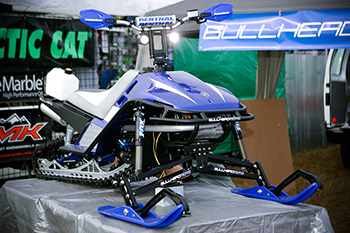
We’ve been scanning the interest in prehistoric Yamaha Sno-Scoots the past few years and continue to be amazed at how the demand keeps growing for resurrected models reclaimed from 20-year-old scrap heaps.

Seriously, people are paying big bucks to get hold of used Scoots in any condition so their kids can have something to ride.

We’ve talked to OEMs in the past about this and the universal answer is that it would cost too much to bring out sleds like this in relation to what the retail price would bring. We think this may be a smokescreen and here’s why:

It’s impossible to ignore the offshore manufacturing connection companies like Arctic Cat have with companies like Kymco.

Kymco is a worldwide manufacturer of road-going motor scooters and has a whole menu of 4-stroke engines and CVT drivelines for these vehicles already fully developed.

Kymco already builds engines, and in some cases whole platforms for Cat’s ATV and SxS vehicles. The marriage is a good one and these engines perform very well and are proven reliable.

So far, the snowmobile biz has been mostly untouched by this manufacturing armada but we think price-pressure is going to make things change soon.

Our point is this: If you wanted to get into a business where there’s already very large demand and needed to produce a vehicle with a price ceiling of about $6K US, wouldn’t it make sense to use those connections to build it?

With the Yamaha-Arctic Cat business agreement going strong, offering such a vehicle to both Yamaha and Cat customers would be double effective.

When you look at the cost of building a low-cost chassis from tube steel and cladding it with plastic, we think it’s possible to do it and make good bucks.

No need for big-time electronics or computer management on a sled like this and all the gizmos you get on a full-sized sled need not apply.

Yeah, we think this is do-able.

OFSC Selects Globalstar for Groomer Fleet Tracking

0

Globalstar, Inc., (NYSE MKT: GSAT) today announced that its SmartOne GPS-based satellite data modem has been chosen by the Ontario Federation of Snowmobile Clubs (OFSC) for a province-wide groomer fleet tracking program being rolled out in time for the coming winter season.

The satellite data modems will be deployed across the OFSC’s fleet of 360 groomers to provide GPS-based tracking and reporting capabilities that will deliver significant program efficiencies and savings for the organization.

Globalstar’s technology was chosen by the OFSC following an extensive pilot program undertaken earlier this year in which various GPS satellite solutions were tested over the course of nearly 90 service hours and 1,100 kilometers of trail – most of which is beyond the reach of cellular networks.

OFSC is the coordinating body for organized snowmobiling in Ontario, providing advice and guidance to member clubs on a broad range of topics to ensure provincial objectives are met. The Federation is also responsible for activities that the clubs deem are best handled at the provincial level such as insurance, safety and the environment.

Proceeds from the sale of the trail permits required to enter OFSC trails provide primary funding for both the trail operations of local snowmobile clubs and their provincial organization. The OFSC comprises 213 member clubs and is responsible for grooming over 30,000 kilometers of trail.

“The results of our pilot program were compelling, persuasive and clearly demonstrated the Globalstar GPS satellite technology as the winning solution,” said Remi Sauve, OFSC President. “Globalstar’s SmartOne data modem outperformed all of the other units we tested, is reliable, affordable and easy to use, and going forward we’ll no longer be vulnerable to gaps in cell phone coverage.”

The SmartOne satellite data modems will provide the OFSC with new efficiencies by accurately tracking groomer time and trail coverage, providing reports every fifteen minutes which will help the organization better monitor grooming activities.

It will also address a growing demand for better safety, connectivity and more transparency with regard to grooming practices and reporting. According to the OFSC, its decision was also based on the fact that Globalstar has a state of the art satellite network.

Online mapping and systems expertise will be provided by AtlasTrax, an authorized distributor and solution provider.

“What impressed me most about the SmartOne technology was the simplicity of the device – no wires and no professional installation required,” said Kenny Johnston, groomer operator for the Cochrane-based Polar Bear Riders snowmobile club. “I was also very happy with the online tracking tool developed by AtlasTrax, which was so easy to understand and use that I did not need any training whatsoever.”

The Globalstar SmartOne is a simplex data modem that utilizes motion sensors, comparative GPS positions and custom configured sensors to gather and transmit asset status information. Each SmartOne is configured to track its asset’s specific needs and provide intermediate and emergency alerts by email and/or text/cellular.

SmartOne devices are designed for outdoor use and operate in severe weather conditions and some of the most remote and challenging locations. The modems are ruggedized and designed to continue to communicate with satellites while covered with up to three feet of snow.

The Ontario Federation of Snowmobile Clubs is a volunteer led not-for-profit association that provides a wide range of quality programs and services to and on behalf of, its member organizations. Its provincial network of organized snowmobile trails connects Ontario communities providing responsible riding experiences that are safe, enjoyable, and environmentally sustainable.

Globalstar is a leading provider of mobile satellite voice and data services. Globalstar offers these services to government, commercial and recreational users in more than 120 countries around the world. The Company’s products include mobile and fixed satellite telephones, simplex and duplex satellite data modems and flexible service packages. Many land based and maritime industries benefit from Globalstar with increased productivity from remote areas beyond cellular and landline service. Globalstar customer segments include: oil and gas, government, mining, forestry, commercial fishing, utilities, military, transportation, heavy construction, emergency preparedness, and business continuity as well as individual recreational users. Globalstar data solutions are ideal for various asset and personal tracking, data monitoring and SCADA applications.

For more information regarding Globalstar Canada, please visit ca.globalstar.com/en.

SKI-DOO’S NEW 4-STROKE

0

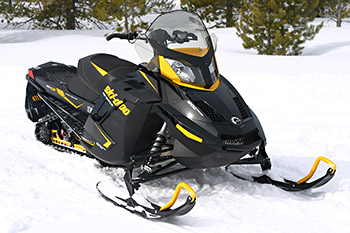
If we’ve been asked once we’ve probably been asked about 100 times what Ski-Doo is likely doing to its XR 4-stroke line-up.

It’s especially telling that the 2015 XR Ski-Doos have remained unchanged this year while the company’s XS models all got a front end upgrade to RAS 2. So far there’s no factory upgrade kit available for used XRs to convert the front end to RAS2 the way you can with an XR or XS model.

We think the reason for this is that Ski-Doo has a completely revisited XR waiting in the wings for MY2016. We’re thinking it might be an all-new chassis using front end castings similar to the Polaris AXYS and more weight reduction to maintain the company’s bragging rights about lightest weight.

Other hints the temperature is changing have to do with Ski-Doo’s 1170 4-TEC triple. It’s no secret Ski-doo wants to shed the “throttle lag” issue that has plagued this engine (even though it hasn’t hurt sales or customer satisfaction one iota) and Ski-Doo already has the wireless technology that cures the problem on its ACE 4-strokes. It’s almost a no-brainer the company would, at the very least, move to wireless throttle on any new XR.

Here’s another angle: Waiting in the wings is a fully developed 1330cc ACE 4-stroke from the Spyder – with, guess what – wireless throttle technology. Using this engine in a new, lighter XR would mean the engine could be naturally aspirated (no turbo), eliminate throttle lag and make more horsepower. We don’t need to tell you how fuel efficient and EPA clean these ACE engines are.

Yes, the 1330 ACE would be dimensionally larger than the ACE 900 – but may not be larger than the current 4-TEC. Power could be amped up into the 150-160 range and would unquestionably keep all those converted Ski-Doo 4-stroke customers interested in upgrading.

With Yamaha and Cat’s 4-stroke business showing signs of dominating right now, a completely new XR would turn the spotlight on Doo full-force.

CAT’S NEXT TURBO

0

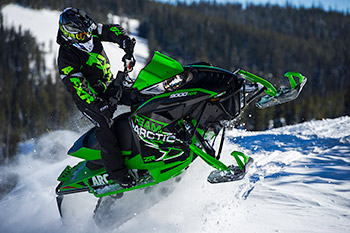
Arctic Cat’s ownership of the big-inch turbo market is actually a very closely guarded secret. The fact is the company sells a lot more factory turbocharged 9000 series sleds than you’d expect.

Being the Turbo-leader is one of those things that builds tremendous brand loyalty with a very high-spending segment of the sport – a segment other OEMs would love to get the attention of.

The downside is the warranty issues often associated with offering an all-out 100-percent vehicle like this. Cat seems to have managed this pretty well the past few years.

Cat’s biggest problem with the 9000 may be that it’s a bit of a one-trick pony at the end of its appeal zone. At 177-hp, its 1056 Suzuki-built twin is essentially the same as it was three years ago and there’s not a lot of incentive for buyers to buy a new one that is the same as the one they’re riding.

If you’re Cat, you’ve got to be looking at ways to stir in a lot more sizzle and build something that will bring more riders into this upper echelon category – or even get existing Turbo owners to trade up. The answer may be in turbocharging the 1049 Yamaha triple already offered in the 7000 Series.

You’ve probably seen Yamaha’s ads offering an aftermarket turbo kit for the Vector and we’re wondering if this isn’t some kind of omen both companies are testing the waters to see if consumers would like a production Cat or Yamaha sled with a 1049 turbo.

We think this is the ideal answer, certainly for Arctic Cat who owns the market segment and will eventually have to use a different engine supplier than Suzuki, but also for Yamaha who eventually will need a replacement for the aging Apex. We’ve test ridden this set-up and have to admit – it’s pretty impressive.

Cat is THE go-to turbo company with more experience than anyone else building reliable, strong-performing turbocharged snowmobiles since the early 00s. Furthermore, Cat has been busting the horsepower barrier compared to all other competitors for a long time.

Think about a production 3-cylinder turbo with a sweet exhaust note and smooth-spooling, multi-cylinder power – maybe around 180 or so stallions.

Get your blood pumping?

DOES CAT HAVE MORE C-TEC 2-STROKES?

0

Cat has done a great job this year offering more sleds at a lower price threshold to entice consumers into its showrooms.

Two examples are the ProCross 5000 (4-stroke twin) LXR and the ProCross 4000 (500cc 2-stroke) LXR. Both these sleds use proven power packages and, with excellent standard equipment lists, are very appealing buys. Their pricing is almost too good to believe.

Meanwhile, at the bottom of the Cat price menu is the “new” Lynx 2000 series targeted at entry-level buyers and utility users. These sleds are powered by Cat’s long-in-the tooth 570 fan-cooled 2-stroke twin and use the recycled Twin Spar platform AC introduced in the mid-00s.

We’ve heard Arctic Cat would love to offer a low-priced 4-stroke to better compete with Ski-Doo’s ACE engines and it looks like an ideal supply source would be Yamaha. Problem is 4-strokes cost big-dough to manufacture and Cat may already have an EPA clean power source that is cheaper and simpler.

What if AC was working on an entry level fan-cooled C-TEC2 2-stroke? This much cleaner technology would be a great substitute for 4-stroke power at the bottom of the price list and would clean up the company’s CAFE (Corporate Average Fuel Economy) rating with the EPA. A 2-stroke like this would be much cheaper to manufacture than an all-new 4-stroke, too.

Certainly, a DSI C-TEC twin would end up being more expensive than the existing 570 but we’re willing to bet it would end up being at least half the retail price of an identical sled powered by an entry-level 4-stroke – and may deliver bonus power, too.

YAMAHA PROSPECTS

0

So what do we think is going to happen to pure Yamaha sleds like the Apex, Vector, Venture GT and Phazer now that the company is having so much success with its Arctic Cat manufacturing agreement?

Here’s a few thoughts:

1. We think the Apex still has some retail life in it and Yamaha will likely build it for another year. It’s really the only sled of its kind in the industry and it still sells well and has plenty of showroom sizzle.

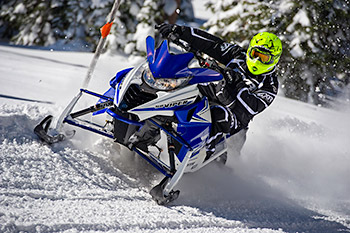
2. We think the Vector may be on the bubble. Although we love this sled, it simply is tough to compete against the Viper’s lighter weight and identical 130-hp power package.

3. The Venture GT will definitely live for a few more years. Its combination of comfort, amenities and ideal power are still enough to keep Yamaha consumers interested.

4. The Phazer will likely hang around for another year but this is a model segment both Arctic Cat and Yamaha want to deliver more on.

Arctic Cat wants a good medium power 4-stroke to grab sales from Ski-Doo’s ACE line-up and Yamaha is well aware the glow is off the Phazer as an entry level sled.

The challenge looks like this: The Phazer’s high-revving 500 twin is an expensive engine to build to make power in the 80-hp range. It’s tough to make use of this engine in another chassis if its cost makes it uncompetitive with other 4-strokes.

Basically, the problem has to do with engine displacement. This engine needs to bigger. We think a less complex, less costly 700 to 900cc 4-stroke twin will deliver sufficient torque and horsepower in the range trail and utility riders want.

Two of the biggest problems with all this is the high cost of tooling a new 4-stroke from the ground up and the time it takes to get there. If Yamaha started today, it probably wouldn’t have anything to offer until 2017.

Barring the guess Yamaha has already got an engine like this waiting in the wings (it wouldn’t surprise us given the company’s expertise at building engines) we don’t see this dream being fulfilled real soon.

2015 GRAND PRIX SKI-DOO

0

It’s back for its 33rd running, the one and only winter motorsport event in North America that offers six types of racing competitions over the course of a weekend: The 2015 Grand Prix Ski-doo of Valcourt presented by Intact Insurance.

The organizers of the Grand Prix Ski-doo of Valcourt are pleased to announce that race fans and members of the media will be able to surf on a new user-friendly website platform, scheduled to go online today at 4 p.m. (Thursday, October 9, 2014) at www.grandprixvalcourt.com.

Today’s web is evolving at high speed, and in order to accommodate our target clientele, essential and much needed work had to be done to upgrade our browser to the latest specs.

The revamping of the site, from basic analysis to new programming, took several months to complete and required the assistance of several individuals. It now features exclusive content that will better meet the needs of fans, subscribers and visitors.

The new site is more interactive. Grand Prix management wants to showcase the magnitude of our event and the adrenaline rush it produces. It is now more user-friendly with precise sections and menus, and hyperlinks to directly access information, specific documents and/or targeted content.

The Grand Prix website is in constant liaison with social media networks. It enables the Webmaster and management to react more quickly to news in order to reach a larger audience and to create direct links with targeted clientele.

For more information, visit us also on Facebook and click I LIKE at: facebook.com/GPSValcourt

Super three-day ticket offer for Heated Suites go on sale for $100 today through December 23, 2014. Quantities are limited.

Castle X Racewear and Tucker Hibbert Part Ways

0

There is an age old adage that says, “All good things must come to an end.” Castle X Racewear and Tucker Hibbert have decided to mutually end their partnership after working together for over a decade. What began as friendship, eventually expanded into an in-depth custom clothing program for both Hibbert and Team Monster Energy/Arctic Cat.

“Everyone at Castle X has had a blast working with Tucker over the years,” said Jess Farr, the President of Castle X. “It has been amazing to have had such a long lasting partnership and to have been part of helping Team 68 look great on the track and in the pits. While our business partnership may have ended, the friendships we have developed with everyone on the team over the years will last a lifetime. We wish them all the best of luck going forward!”

While wearing Castle X gear, Hibbert won nine X Games medals, five National Snocross Championships and two FIM Snowcross World Championships.

“The crew at Castle X has been behind me for a huge part of my career,” said Hibbert. “Looking back, it’s incredible to see the progression of my race gear and the consumer gear they produce. I’ll always appreciate their passion to push the limit. Although we won’t be working together professionally anymore, I know we’ll remain friends.”

Castle X wishes Hibbert continued success as he prepares for his 15th professional snocross season this winter.

LONG TRACKS ARE HOT BUT SHORTIES STILL ROCK

0

There’s no doubt the last few years the trail-biased crossover market has skyrocketed and removed some of the focus from shorter tracked performance sleds.

137-inches seems to be the magic dimension and sleds with this track-length are selling like ice water in the Gobi.

Here’s where it gets interesting: Most of the buyers who want a longer tracked sled are looking for versatility – “I wanna ride off-trail sometimes and not get stuck – maybe even do some conservative hill-climbing.”

Certainly, a longer track enables a rider to do both trail duty and ride off-trail competently, too. However, in the same breath many of these 137 buyers are telling us they like the mogul-bridging ride of the longer meat on the trail and actually prefer these sleds to 120s because they ride smoother. It seems to us, you need to get a handle on how you really ride.

After some extensive trail time on a couple of 120-inchers at the end of last season we concluded we had been missing something with the longer tracked sleds and it wasn’t just about handling.

Speaking of handling, though, there’s no question an extra 17-inches of track (actually, about six more inches on the snow) slows down the razor-sharp handling you get with a shorter sled.

You feel it in the handlebar effort required to turn or when you’re using the throttle to break the track loose to bring the back end around in tight corners. More length means more bite and more side-slip resistance.

Simply, more body-English and muscle is required to get the 137 to do typical snowmobile cornering maneuvers. It’s not a huge disadvantage – especially to those who ride a lot, but novice riders notice the difference right away when their handlebar inputs don’t produce as rapid a response on the snow.

The other factor is weight. Super-light vehicles like Ski-Doo’s XS line-up or the new AXYS, with its mass well-centralized, do gain a few pounds when there’s extra track and skidframe length added.

You can feel the sled has lost a wee bit of agility when it’s airborne or when you’re railing tight stuff and the extra weight out back slightly changes the sleds front-rear balance ratio. You also notice the extra mass when you’re loading the sled in your pickup.

Long track versatility is great but it sure is nice to ride a lighter, more nimble 120-incher. We’d still call it a draw!

RAS 2 KITS FOR REV-X CHASSIS SKI-DOO SLEDS

0

BRP makes it easy for owners of older Ski-Doo snowmobiles to upgrade to the latest front suspension with the RAS 2 Front Suspension kit.

This kit delivers the same RAS 2 benefits of better straight-line tracking in big bumps, lighter weight and great styling – with X Package calibration, at a great price.

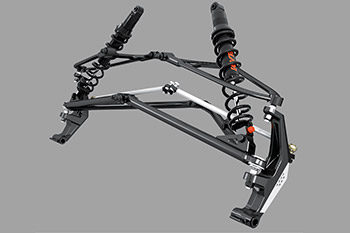
The RAS 2 Front Suspension improves handling and lightens most 2008 – 2014 Ski-Doo trail or mountain models by replacing the major front suspension components, and is a direct bolt on to existing chassis mounts.

Of interest to owners of older Summits is the chance to change to the 36 inch ski stance as well as upgrade to the RAS 2 at the same time. The special pricing of the kit also makes it very attractive for owners that may have front-end damage, allowing them to upgrade and repair at the same time for a low cost.

The RAS 2 kit comes in two different widths, one for trail use at a 42-inch ski stance and one for mountain use at a 36-inch stance. Both kits come with everything needed for REV- XP, REV-XS and REV-XM chassis snowmobiles. Components included are Upper and Lower A-Arms, both Spindles, tie rods, both Shocks and all hardware needed.

For information on all the genuine BRP accessories to fit your ride visit www.store.ski-doo.com or your local Ski-Doo dealer.

BRP (TSX: DOO) is a global leader in the design, development, manufacturing, distribution and marketing of powersports vehicles and propulsion systems. Its portfolio includes Ski-Doo and Lynx snowmobiles, Sea-Doo watercraft, Can-Am all-terrain and side-by-side vehicles, Can-Am Spyder roadsters, Evinrude and Rotax marine propulsion systems as well as Rotax engines for karts, motorcycles and recreational aircraft. BRP supports its line of products with a dedicated parts, accessories and clothing business. With annual sales of over CA$3 billion from 105 countries, the Company employs approximately 7,100 people worldwide.