Home Blog Page 182

WOULD YOU BUY A SLED THAT’S ALL-OUT LIGHT?

0

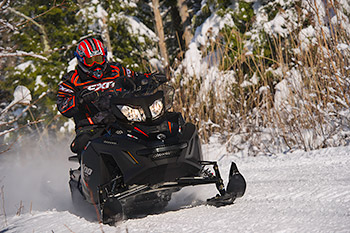
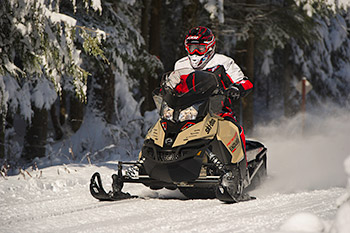
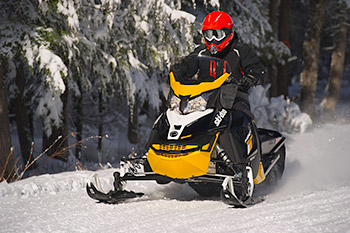
There’s no argument here that the Ski-Doo XS is one of the lightest, if not THE lightest sled offered for sale in today’s marketplace.

The Polaris Indy and AXYS are other examples of very light production sleds. However, even the extremely light XS and the bonded-with-glue AXYS have room to shed more weight.

The question is this, though: Would you pay extra to buy a sled that was all-out light? What if you could shave an extra 40 pounds out of the dry weight?

Weight savings of this magnitude don’t come cheap. You’d likely be paying well over $2,000.00 to get a factory-build, exclusive model of what you’re riding now with this much weight peeled off.

What would you be getting? Likely, carbon fiber would be used for all body panels and perhaps even the tunnel and bulkhead. The seat would be a hollow core design, shortened and with minimal padding.

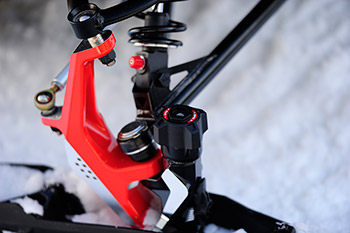
A-arms would be made of either chromoly, aluminum or even titanium – same with skidframe suspension arms and support structures for the steering such as tie rods, pitman arms and steering racks (if applicable).

A lightened up exhaust system may have thinner walled metal in the expansion chamber, less packing in the muffler and depending on the sled’s design, be shorter and more compact. Extras like electric start, reverse and anything more than minimalist gauges would be purely optional. Fasteners would be made of precious metals.

Since engines, clutches and drive parts require extreme durability, beyond using hollow or stamped drives, these would not likely get much weight reduction. Gears could be hogged out and heat-treated but most are already built to their minimum weight/maximum strength quotient on production sleds.

Want lighter? Get out your wallet!

ARCTIC CAT HIRES NEW CEO

0

Arctic Cat Inc. (NASDAQ: ACAT) today announced that Christopher T. Metz, 49, will join the company as president and chief executive officer on December 3, 2014. Metz succeeds Christopher Twomey, who remains Arctic Cat’s board chair.

Commented Twomey: “The board conducted a national search for a new CEO and we are delighted that Chris is joining Arctic Cat. Chris is a proven leader in the consumer and durable goods industries. He has built a career on improving the performance of market-leading companies. He brings an outstanding strategic skill set to his new role at Arctic Cat – a keen focus on executional excellence and deep experience in product marketing, finance, global operations and talent management. Importantly, he is adept at creating strong partnerships with customers and dealers. Along with the rest of the board, I am pleased to welcome Chris and look forward to working with him.”

Since 2005, Metz has served as a managing director of Sun Capital Partners, Inc., a leading private investment firm with more than $10 billion in capital under management. Prior to Sun Capital, Metz was president at Black & Decker, leading its Hardware and Home Improvement Group from 1999 to 2005.

During his 13-year tenure at Black & Decker, he held various other senior leadership positions, including: president of Kwikset Corporation, the world’s largest residential lockset manufacturer; president of Price Pfister, a leading manufacturer of finish faucets; president of Baldwin Hardware; and general manager of European Professional Power Tools and Accessories, based in Frankfurt, Germany.

Metz said: “I am excited to lead a terrific team at Arctic Cat. The company has a strong consumer brand and significant opportunities to increase its sales and profitability. I am eager to build on the company’s success and enhance shareholder value.”

Metz serves on the board of directors of NYSE-listed Vince Holdings Corp., a global fashion brand and retailer with approximately $300 million in annual revenue.

Metz earned a master of business administration degree from the Kenan Flagler School of Business of the University of North Carolina, Chapel Hill. He holds a bachelor’s degree in finance and marketing from the University of Delaware.

Arctic Cat Inc. designs, engineers, manufactures and markets all-terrain vehicles (ATVs), side-by-sides and snowmobiles under the Arctic Cat brand name, as well as related parts, garments and accessories. Its common stock is traded on the NASDAQ Global Select Market under the ticker symbol ACAT.

More information about Arctic Cat and its products is available at arcticcat.com.

SnowTrax Television 2015 – Season Preview

0

SnowTrax returns for another action packed season December 29th, 2014!

Watch on OLN and Wild TV in Canada and on Outdoor Channel across America! Full schedule coming soon!

SnowTrax Television airs thirteen episodes from December to April and has established itself as the most watched snowmobile television series in North America.

Each week the SnowTrax crew guides viewers through an informative and entertaining half hour revealing the inside scoop on the latest snowmobiles, accessories and riding destinations that make snowmobiling winter’s greatest adventure sport.

Affiliated with national broadcasters such as OLN and Wild TV in Canada and Outdoor Channel in the United States, SnowTrax Television effectively reaches over 72 million national households with 24 million of those households being located in the North American snow belt.

SnowTrax Television has and will continue to attract and retain viewers by virtue of its unique, informative and entertaining cinematic format.

Subscribe to our YouTube Channel!

ARCTIC CAT’S NEW LIGHTER 4-STROKE

0

Arctic Cat has been making noises it wants to compete more in markets where small 4-strokes rule.

This is primarily the utility market and if you look at what Polaris has done the last two years with its very successful utility-targeted Indy line-up you can see how much potential there is. However, there’s also a decent market for lower-cost entry-level trail-focused iron with short-tracks and conservative weight.

True, since Polaris doesn’t offer any 4-stroke engines in its snowmobiles, nearly all those utility and entry-level Polarii are powered by the company’s fan-cooled 550cc 2-stroke.

Meanwhile, Ski-Doo sells a ton of utility sleds powered by its 600cc ACE twin. That small-displacement 4-stroke’s selling points are ease-of-use, fuel economy and rock-solid reliability. Interestingly, consumers are willing to pay considerably more for those benefits.

So where does this leave Arctic Cat? The company’s Lynx 2000 series, using the elderly Twin Spar platform is a stop-gap answer to this market but probably isn’t the kind of sled Cat would like to invest zillions into basing a bunch of new models on in the above categories going forward. Weight and manufacturing complexity are definitely issues and a successful offering here would pretty much need to be a fresh sheet of paper.

It seems pretty clear an entry level trail model would need to have a lighter 120-inch skidframe and track, the utility sleds a 141 or 144-incher. Cat already has good technology with its Sliding Front Arm suspension and its super-light XF skidframe. Both would certainly be adaptable to a new chassis.

Cat could bypass a lot of start-up and tooling costs by just building a simplified version of the ProCross using a shorter 120-inch version with a lightweight, small displacement Yamaha mill under the hood.

If you’re thinking the current Phazer 500 4-stroke, it probably wouldn’t be a choice for a low cost substitute because it’s extreme performance level (80-hp from a 500cc twin) makes it a very pricey engine to build and would make the concept of a cheap 4-stroke difficult to deliver on.

To our knowledge, Yamaha doesn’t have a lower cost substitute engine on its menu right now. We’d be willing to bet both Cat and Yamaha are working on one, though.

Vintage Snowmobiling At Its Finest

0

It started off with one of the SnowTrax crew grabbing an old heap, then the passion spread like wildfire.

Pretty much everyone on staff was ridin’ vintage iron by the end of the season and Leaf Spring Bangers World Wide was born.

Join the Bangers at Facebook/leafspringbangers and subscribe to our YouTube Channel!

Get Your Tips Up!

Yamaha’s Direct Injection 2-Stroke

0

It’s been over a decade since Yamaha promised it was getting out of the 2-stroke snowmobile business and by MY 2004 nearly every sled it built featured 4-stroke power.

It’s been an unprecedented undertaking considering the higher manufacturing costs and the weight penalty 4-strokes carry – particularly in an era when snowmobile weight has been front and center with consumers.

This year, Yamaha has opened doors into markets it has not held much court in for the last ten years. Case in point: The company is offering a pretty cool mountain Viper this year with 153 or 162-inch track choices.

The 162-incher is the one we think has the potential to convert a few 4-stroke-doubting mountaineers over to Yamaha turf and we’re anxious to see if it will be a sell-out success for the company.

All indications are it’s doing well and just as the marketing team felt, there is in fact, a group of altitude riders who find the prospect of a vertical 4-stroke appealing.

It doesn’t hurt that Yamaha has made a really good turbocharger add-on kit available and hasn’t reneged on its OEM warranty if you do the upgrade.

Here’s where our speculation-meter starts to warm up. What if the new Mountain Viper does really well and Yamaha sees potential for bigger things in the vertical biz?

You probably already know Yamaha owns patented super-clean direct injection 2-stroke technology and has offered it in its marine division.

It’s no secret the cost to get a sophisticated 2-stroke mill EPA approved, tooled and down the assembly lines is much less involved and expensive than doing the same with a high performing 4-stroke.

We think, despite the fact it runs counter to what identity Yamaha has gained with 4-strokes, there’s real potential for this to happen.

Building a Yamaha-reliable DI 2-stroke would put the company right in the wheelhouse of its competitors and it would mean its future high performance sleds could compete head-to-head for weight, handling and floatation in markets it has vacated because of its 4-stroke-only mantra.

Hey, never forget this: To a snowmobile manufacturer, it’s all about making money. The way for Yamaha to make money is to compete in ALL markets.

OFSC Offers Savings on 2015 Trail Permits

0

Following the resounding success of its pre-November 1st online sales campaign, the not-for-profit Ontario Federation of Snowmobile Clubs (OFSC) invites Ontarians to experience exceptional fun, camaraderie and adventure by purchasing a Snowmobile Trail Permit for a special pre-December 1 fee.

2015 Snowmobile Trail Permits continue to be available online, but for the first time this season, are now also available directly from the OFSC’s community based snowmobile clubs and their volunteers or from club designated retail outlets across the province. There are two permit types available until December 1:

Seasonal Permit – Seasonal Permits are available online or from club retail outlets on or before December 1 for $210 – a saving of $50 off the regular permit fee of $260. Snowmobilers purchasing online will not be charged a processing fee.

Classic Permit – Any snowmobiler owning a sled that is model year 1999 or older is entitled to buy a 2015 Classic Permit. Primarily available online for $140 on or before December 1, a Classic Permit offers a saving of $30 off the regular fee of $170.

Classic Permits are also available on a limited basis through OFSC district offices or their designated outlet. Snowmobilers purchasing online will not be charged a processing fee.

Both the Seasonal and Classic Permit allow access to available OFSC trails anywhere in Ontario for the entire winter.

OFSC member clubs operate over 30,000 kilometres of snowmobile trails throughout Ontario that rely on the revenue from the sale of permits to pay trail operational costs.

These trails generate almost $1.7 billion of winter tourism economic impact annually, while enabling family riders from all walks of life to enjoy winter outdoors by visiting many places and sights only accessible by snowmobile.

OFSC trails are marked, mapped and maintained for the use and enjoyment of permit holders. Ontario law requires snowmobiles entering an OFSC trail for recreational sledding to display a valid permit.

The Ontario Federation of Snowmobile Clubs is a volunteer led not-for-profit association, which through strong leadership, provides a wide range of quality programs and services to, and on behalf of, its member organizations. Our provincial network of organized snowmobile trails connects Ontario communities providing responsible riding experiences that are safe, enjoyable and environmentally sustainable.

For more information on 2015 Snowmobile Trail Permits visit www.ofsc.on.ca.

A 900 ACE TURBO JUST MAKES SENSE

0

Have you ever looked under the hood of a Ski-Doo XS with a 900 ACE? Surprisingly, there’s a ridiculous amount of room for either a) a bigger 4-stroke or b) a turbocharger and all its plumbing.

Here’s where it gets interesting. If Ski-Doo is in fact serious about getting into the ulta-high performance 4-stroke turf owned currently by Arctic Cat (177-hp-Turbo) or even offering a 160-hp 4-stroke, why would it invest in the costly tooling to start over again with an all new engine?

Let’s look at some turbo-history. Years ago Polaris began offering a 750cc Weber 4-stroke twin with a turbo. This engine made a reliable 140-hp with an “overboost” feature that took it to 160-hp for a few seconds when the turbo first cut in.

This extremely strong performing mill was a Supertrax favorite and the level of torque delivered by this combo was legendary. Fun to drive? You bet!

Even before this, Arctic Cat offered a 110-hp turbo package using a tiny 660cc Suzuki triple. It was all packaged in the original ZR sit-down platform and although it lacked a lot of sophistication, was a great sled that inspired a ton of enthusiasm. We still see these sleds on the trails today and some of them have enormous odometer readings.

What we’re saying is this: If you can get the kind of reliable power we’ve already seen in the industry from much smaller displacement 4-strokes, why wouldn’t a 900cc ACE triple make the same kind of power in the ranges we mentioned above?

Ski-Doo already has the weight thing dialed-in with one of the lightest platforms in the business. A torque-laden 160-170-hp turbocharged 900 would be killer in the XS.

Sure, we know Ski-Doo has not offered a supercharged or turbocharged engine in the past. Get this, though: Parent company, BRP, just introduced a turbocharged V-twin in its off-road Maverick side by side. BRP’s Sea-Doo division has been building durable supercharged engines for years now.

We think a 900 ACE with a turbo is a real possibility and Ski-Doo could get it on the market at warp speed.

Pleasant Riders Snowmobile Club

0

Pleasant Riders Snowmobile Club is much more than just a snowmobile club. The love of snowmobiling brings people together and when that occurs great things happen!

Pleasant Riders Snowmobile Club serves the Southern Adirondacks area of Speculator, Lake Pleasant and Piseco, but its members are not limited exclusively to this area. Membership numbers are well over 500, from all over the state and beyond.

The club is homored to receive recognition from NYSSA as the Club of the Year 2014. All clubs strive to achieve this award and this particular club has done it again – an honor first bestowed in 2008.

The club has grown leaps and bounds since 2008 and is now officially a 501c3 charitable organization. You can donate, donate, donate and write it all off come tax time!

Pleasant Riders Snowmobile Club applied and received a grant to purchase a new drag, which required many, many volunteer hours. The members worked closely with DEC to ensure the proper paperwork and procedures were taken to widen and repair our trails.

Beginning with the Fourth of July festivities, members get dressed up and decorate a float for the parade.They organize a clean up crew for the Adopt a Highway program and cook burgers and hot dogs and frying fries for the crowds at AppleFest.

Each year Pleasant Riders Snowmobile Club raffle a new snowmobile beginning in September into February and celebrate the end of another great season with an awesome fireworks display, a Christmas tree burning and then the winner is announced!

A great fundraising event is the Riding for The Cure Snowmobile ride. All proceeds from this event goes to the Local Chapter of the American Cancer Society. Riders set out on guided tours around the area stopping for lunch and returning to Oak Mountain Ski Area for a buffet dinner, raffle, silent auction and a 50/50 draw. The 2014 event raised over $12,000!

At Christmas Santa, Mrs. Claus and their Elves host the local children for a evening of caroling through town. After joy is spread throughout, the Elves prepare for a live auction with goods donated to the Club.

The most rewarding event of the year is the Toys for Local Tots Toy Drive. Toys are collected for all ages of boys and girls, the doors of the local VFW chapter and parents are invited in who may need a little extra help.

Pleasant Riders Snowmobile Club truly enjoys serving its community and volunteering time to ensure the best trail system. If you’re already a member, you may have seen the improvements the club has made and is making. If you’re unfamiliar with Pleasant Riders Snowmobile Club, visit Facebook/Pleasant-Riders-Snowmobile-Club to find out more.

New Sharpening Tool from BITEHARDER

0

Less than three years after Welch Manufacturing Technologies announced the release of the snowmobile industries first diamond coated carbide runner sharpening tool, owner Glenn Welch and the team at BITEHARDER have done it again with the release of their newest product, the BITEHARDER Carbide Stud Sharpening Tool.

Building on the incredible success of their carbide runner sharpening tools, the patent pending BITEHARDER stud sharpener is a simple and effective way to sharpen your studs without the need to remove them from your track.

“The stud sharpener is one of our Professional Series Tools,” says Welch, “meaning it needs to run in a pneumatic style die grinder at speeds of 10,000 RPM or greater to obtain the best results.” Welch continues noting a Standard Series Portable version is in the works.

As with their other tools, industrial diamonds on the inside face of the tool are used to perform the sharpening process. CNC machined from the highest quality steels to precise tolerances the BITEHARDER Carbide Stud Sharpening Tool also provides a universal shank for mounting to any high speed pneumatic grinder. The BITEHARDER brand is leading, yet again, with another MADE IN THE USA tool for the Snowmobile Industry enthusiasts to embrace.

The tool is designed to sharpen the carbide stud without changing the overall height of the worn stud. Each tool is rated to sharpen 500 or more studs and takes only about 15 seconds of grinding per stud to bring back a sharp tip, allowing you to sharpen all the studs on your track in under an hour.

For the 2014/2015 snowmobile season, the BITEHARDER Stud Sharpening Tool will only be available directly from BITEHARDER and retails for $149.95.

For more information about BITEHARDER’s Carbide Runner Sharpening Tools, and the NEW BITEHARDER Stud Sharpening Tool, including video demonstrations, visit www.BITEHARDER.com.