Home Blog Page 175

2007 Jag Z1 Issues

0

Dear Motorhead:

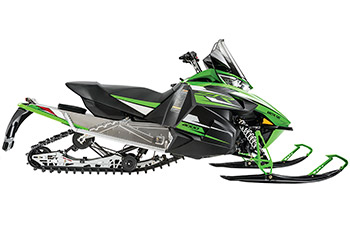
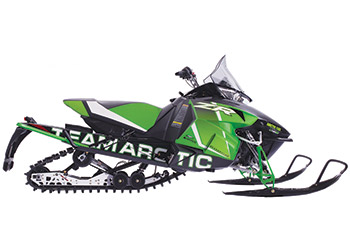
I need help. I purchased a 2007 Arctic Cat Jaguar Z1 early build last year for my girlfriend and she’s complained from the start that it is darty and just a handful overall to ride.

I’ve backed the springs as far off as they can go per the recomendations of the guys in arctic chat (she’s about 110lbs soaking wet) and the handling got better, but is still darty on hard pack and plows in the powder.

The sled has bergstrom 8″ ugly stick skegs with their ski skims and 96 picks. Some of the guys have recommended throwing the stock skis in the garbage and moving the SLP SLT skis to correct the issue.

Given the knowledge base you guys have and your dislike of nervous darty sleds I want to get this setup to give her the confidence she has when riding my sled.

Please help!

Jeremy H

Thanks for your email!

If you have an early build 2007 Jag then yours has a 121 inch track instead of a 129. Those first Z-1s were supposed to have 129’s but AC apparently had a supply problem or something and they were fitted with 121’s.

The 121 inchers were a handful in terms of tail wagging and feeling loose. The F-chassis was and always has been built for a 129 inch track and skid. If your Z1 is a 121 it’ll look short from the side – the tunnel is still the same length as the 129 but the track is tucked under the back end.

Softening up the rear of the sled will not really affect the darty-response and unless you go back to AC’s dual staggered stock carbides you will have darting issues with a single rod carbide.

Unfortunately those staggered stock carbides push in turns. One thing that we found did help was installing duallies on these skis. The darting is softened and initial turn-in will remain strong – however there may still be a measure of understeer in tight cornering situations.

If those carbides you’ve mentioned are actually 8 inches of carbide – not just 8 inch bars – then you’re GF is going to have arms like Lou Ferregno after a weekend of trying to lever that sled around – you should have no more than 4 inches – at the very most 6 inches of carbide for a rider of that weight.

Hope this helps!

Motorhead Mark

SKI-DOO HILLCLIMBERS BLAST INTO SEASON OPENER

0

BRP’s Ski-Doo X-Team racers launched their assault on the RMSHA hillclimb circuit this weekend with strong performances by Blaine Mathews and Jay Mentaberry leading the way.

Mathews claimed the Stock King of the Hill title for the weekend by first winning the 1000 Stock class, and then topping the other Stock class winners in the end of day run off. He also raced to a third in Stock 700 and a second in Stock 800 to establish himself as one to watch the rest of the season.

Mentaberry was able to take the hotly contested Open Mod final on his turbo charged Freeride and backed that up with a second place finish in the Mod King of the Hill run for his best weekend as a pro. At twenty years of age, there’s a lot of time for this kid to perfect his craft.

Other notable finishes included Tom Roby grabbing first in Pro Masters Stock, Trent Handsaker taking the win in Pro Masters Improved and third in Pro Masters Stock. The next RMSHA event is in Afton, Wyoming February 27th.

For more information on Ski-Doo snowmobiles visit ski-doo.com, or the On Track blog site for racing specific information.

600 OR 800 – WHICH IS BEST?

0

We’ve heard arguments both ways, first from 800cc sled owners and then from 600 riders.

800 riders will ask the question: Why cut yourself short when you’re spending the money for a new sled anyway? Just buy the maximum horsepower and be done with it. Besides, if you’re riding a 600 with a group of 800’s you’re going to be looking at taillights all day.

Another point is if you’re running at maximum speeds on big lakes all day long, your 600 is going to use as much or more gas than an 800 and your oil consumption will be high too.

800 owners tend to be key influencers in any group and are usually looking for the most available power for themselves and will unwittingly put pressure on their riding buddies to go big, too. Is it always the right direction to go?

First, a 600 producing somewhere around 120 to 130-hp is almost perfect for the majority of trail riding you’ll be doing. The power delivery from an engine in this range means you’re using less muscle to lug it over trails and to keep it in maximum control.

You won’t experience the level of fatigue you might feel if you’re yanking around a bigger, more powerful sled with that extra 35-40 ponies. This is especially important for female riders, novices or younger riders.

Certainly, on lakes and straight-aways, the 800 will outrun the 600 but we’ve found a 600 at the hands of the right rider tends to be a bit more agile in the turns and the sled may even be slightly lighter overall.

In acceleration runs from corner to corner on normal trails where straights are not as long, the 600 can actually be quicker.

Today’s 600’s are great engines and historically, this engine displacement size has had far fewer durability issues than the more tightly-wound 800 2-stroke choices out there.

Just ask any 800 owner how long they keep their sled and why they want to sell it every couple of years.

Frankly, this writer loves the 600 class and finds that hp range just about perfect.

BLAIR MORGAN TO VISIT VALCOURT GRAND PRIX

0

This year’s Valcourt Grand Prix will have a special guest on hand as legendary X-Team snocross racer Blair Morgan will return to visit during the weekend festivities.

This will be Blair’s first visit back to the storied Grand Prix track since 2008 where he will serve as Master of Ceremonies for some of the weekend races. Fans and racers will get a chance to meet the snocross icon throughout the racing action, which starts on Friday and runs through Sunday.

Blair Morgan revolutionized the sport with his standup riding style when he burst on the National snocross scene in 1997.

Others followed and learned from him, but he blazed the trail and always demonstrated the ability to see fast lines no one else could. Blair was recently inducted into the Snowmobile Racing Hall of Fame – an honor well deserved.

For more information on Ski-Doo snowmobiles visit ski-doo.com, or the On Track blog site for racing specific information.

For information on the Valcourt Grand Prix visit grandprixvalcourt.com

Model Year 2016 Snowmobile Sneak Peek Tour

0

The new 2016 snowmobiles are here and there’s no better way to experience the new models and learn about the latest technology then by visiting a manufacturer’s Sneak Peek tour location in your area.

Once again Yamaha, Ski-Doo and Polaris have teamed up to bring their latest new snowmobile models on a coast-to-coast tour starting in early March and zig-zagging across North America until mid-April.

Each manufacturer will feature their most exciting new models along with new technology displays, clothing and details on their spring retail offers. In addition, factory representatives and local dealers will be there to answer questions and give first hand knowledge on the newest innovations. Also, several stops include information booths from state or provincial snowmobile associations and local clubs, providing great information on trails and other snowmobile related activities in the area.

This year’s United States tour kicks off in Stewartstown, New Hampshire on March 6th and will make stops across the snowbelt before concluding in Spokane, Washington on April 6th. To the north, the Canadian tour will commence in Quebec on March 13th and will travel west until reaching St. Albert, Alberta, and wrapping up on April 11th.

Most tour stops are free and represent a great opportunity for an evening out with friends and family.

East/Midwest U.S. Tour:
March 6-7 – Diamond Pond SnoDeo, Stewartstown, NH
March 10 – Radisson Hotel, Manchester, NH
March 11 – Augusta Civic Center, Augusta, ME
March 13-14 – Hiltebrant Recreation Center Pavilion, Old Forge, NY
March 16 – Greater PA Expo Center, Oak, PA
March 18 – Blue Cross Arena, Rochester, NY
March 20 – Birch Run Expo Center, Birch Run, MI
March 21 – Deltaplex Arena, Grand Rapids, MI
March 23 – Wisconsin State Fair Park, Milwaukee, WI
March 25 – Central Wisconsin Convention Center & Expo, Wausau, WI
April 1 – Fargo Dome, Fargo, ND
April 3-4 – National Sports Center, Minneapolis/Blaine, MN

Western U.S. Tour:
March 13-15 – West Yellowstone Expo, West Yellowstone, MT
March 18 – Davis Conference Center, Layton UT
March 24 – Denver Mart, Denver, CO
March 26-29 – World Championship Hill Climb, Jackson Hole, WY
March 31 – Riverside Hotel, Boise, ID
April 2 – Washington State Fair Expo Hall, Puyallup, WA
April 6 – Spokane County Fairgrounds, Spokane, WA

Canada Tour:
March 13-14 – Centre des congres de Quebec, Quebec, QC
March 20-21 – Place Forzani, Laval, QC
March 23-24 – Bell Sensplex, Kanata, ON
March 27-28 – Eastview Arena, Barrie, ON
April 3-4 – Red River Exhibition Park, Winnipeg, MB
April 7-8 – Prairieland Park, Saskatoon, SK
April 10-11 – Servus Credit Union Place, St. Albert, AB

For complete tour details including locations and times visit snowsneakpeek.com

Polaris Takes the Plunge in a Big Way

0

Polaris Industries Inc. (NYSE: PII) today announced the company, through its employees and matched by The Polaris Foundation, raised almost $30,000 for Special Olympics Minnesota.

The company also donated two snowmobiles which will be offered at raffle by the organization.

“Polaris is proud to lead the way in fundraising efforts for the Special Olympics Minnesota’s Polar Plunge,” said Scott Wine, Polaris Chairman and Chief Executive Officer. “This organization provides wonderful programs for more than 8,100 Special Olympic Minnesota athletes and I’m pleased our employees embraced the cause in such a big way.”

As part of the fundraising effort, Polaris employees had the No. 1 team with 110 “Plungers” from the organization participating at the White Bear Lake Plunge, on Saturday, January 31.

The event saw more than 8,000 attendees, consisting of Plungers and spectators, who spent the day watching the Plunge, snacking on food, meeting Snowflake, the Plunge mascot, and checking out Polaris’ new ground-breaking on-road vehicle, Polaris Slingshot.

The White Bear Polar Plunge was only the second of several Plunges happening around the state. Interested parties can find more information at plungemn.org. People interested in the snowmobiles being raffled by Special Olympics Minnesota can find more information at www.plungemn.org/polaris-raffle or by visiting any of the upcoming metro Plunge locations to purchase a raffle ticket.

Polaris is a recognized leader in the powersports industry with annual 2013 sales of $3.8 billion. Polaris designs, engineers, manufactures and markets innovative, high quality off-road vehicles, including all- terrain vehicles (ATVs) and the Polaris RANGER and RZR side-by-side vehicles, snowmobiles, motorcycles, and on-road electric/hybrid powered vehicles. Polaris is among the global sales leaders for both snowmobiles and off-road vehicles and has established a presence in the heavyweight cruiser and touring motorcycle market with the Victory and Indian Motorcycle brands. Additionally, Polaris continues to invest in the global on-road small electric/hybrid powered vehicle industry with Global Electric Motorcars (GEM), Goupil Industrie SA, Aixam Mega S.A.S., and internally developed vehicles. Polaris enhances the riding experience with a complete line of Polaris Engineered parts, accessories and apparel, Klim branded apparel, and ORV accessories under the Kolpin and Cycle Country brands. Polaris Industries Inc. trades on the New York Stock Exchange under the symbol “PII,” and the Company is included in the S&P Mid-Cap 400 stock price index.

Information about the complete line of Polaris products, apparel, and vehicle accessories is available from authorized Polaris dealers or anytime at www.polaris.com.

Cold Winter Good for Ontario Snowmobiling

0

In a customer survey last spring, 95.8% of respondents said that Ontario snowmobiling is enjoyable, very enjoyable or extremely enjoyable.

So for a second consecutive winter, the not for profit Ontario Federation of Snowmobile Clubs (OFSC) is pleased to report that over 30,000 kilometres (95.5%) of its snowmobile trails are available for snowmobilers to enjoy in February, including Ontario’s Family Day Long Weekend. With continuing cold temperatures in the long-range forecast, Ontarians could have OFSC trails to ride right through the March Spring Break.

The OFSC’s extensive trail system provides more kilometres of snowmobile trails than there are kilometres of provincial highways. It offers excellent sledding opportunities for local residents, touring riders and out of province visitors in every snowbelt region of Ontario.

Consequently, the popularity of snowmobiling is growing, with participation up 21% last season, including a significant resurgence of new participants and the highest number of permitted sleds in the past ten years. Sled manufacturers also report that Ontario new sleds sales increased by 21% in 2014 and that many dealers are sold out of 2015 snowmobiles.

“This growth is only possible because our 213 clubs and thousands of volunteers prepare, maintain and operate a truly world class trail system that’s second to none,” commented Remi Sauve, OFSC president. “It’s an amazing accomplishment and we welcome everyone to go snowmobiling to discover the winter wonderland that’s been created for their enjoyment with Mother Nature’s cooperation.”

To keep trails as smooth as possible, OFSC snowmobile clubs operate about 352 heavy industrial groomers for over 90,000 hours each winter. With an estimated total fleet value of $26.3 million, these groomers are similar to those used on ski hills.

With the International Snowmobile Manufacturer’s Association reporting that the average snowmobiler rides about 2,600 kilometres each winter, it’s estimated that OFSC permit holders and their families logged in excess of 200 million kilometres on OFSC trails last season and are well on their way to achieving that milestone again this year.

“By most measures, snowmobiling is Ontario’s premier winter tourism activity. We offer trails in almost every part of the province, the opportunity to travel by snowmobile from community to community, and for riders to see sights and places that can only be reached and appreciated in the winter,” said Paul Shaughnessy, OFSC executive director.

With an economic impact of $1.7 million annually for the benefit of winter tourism in Ontario, OFSC snowmobiling is also a major contributor to the wellbeing and sustainability of many winter businesses and rural communities. The OFSC invites more Ontarians to buy a trail permit and discover snowmobiling this winter at www.ofsc.on.ca.

The Ontario Federation of Snowmobile Clubs is a volunteer led not-for-profit association, which through strong leadership, provides a wide range of quality programs and services to and on behalf of, its member organizations

WINDSHIELD MYTHS BUSTED

0

Low windshields on trail snowmobiles have been a bone of contention around the sunny offices of Supertrax for a few years.

Yes, we see the merit of a super-low windshield on mountain or freestyle sleds being ridden in powder, but what’s the deal with OEMs putting those “thong” windshields on trail sleds?

It seems a lot of snowmobilers think they’re actually penalizing themselves by having a mid-height windshield on their sled. They argue their sled actually goes faster when they have a low windshield on it and a higher one would slow them down.

This sounded fishy to us and, despite the fact the low windshield look seems like it’s more attractive and adds speed, we weren’t convinced.

We spoke to an aerodynamics expert about this and he told us the most aerodynamic thing on a snowmobile is actually not on the snowmobile. It’s not the hood, not the windshield, but rather the rider’s helmet.

The least aerodynamic thing is the rider’s body. Anyone who has blasted a lake at the C-note with a low windshield knows how much air resistance there is pushing against your chest, almost like a giant hand trying to push you off the back of the sled.

So, logic would tell you, a good windshield that directs air to the upper half of your helmet and away from your body would be the best way to overcome aerodynamic drag. Less drag means more top speed and that’s the biggest hold-back for so-called “windshield-wise” riders who want to go faster.

Certainly a windshield that’s too tall or too large works against the principle we’ve outlined, but there are plenty of good ones from every manufacturer that will not only give you a more slippery profile but will keep you warm and comfy all day, too.

Best Crossover Snowmobiles

0

SnowTrax Television Co-Host Luke Lester helps decipher the confusing crossover snowmobile market by outlying what sets each sled apart and which one might be right for your type of riding.

Subscribe to our YouTube Channel!

A TALE OF TWO TURBOS

0

Last weekend we rode two turbocharged sleds back to back for 140 miles, a 129-inch 9000 Series Cat stocker and a Viper SE with an MPI aftermarket turbo kit prepped by Yamaha Canada. We were surprised and impressed.

Earlier this month you read our report on our experience riding our 2015 9000 Cat back in December and how buzzed we were with the sled’s seemingly endless supply of power and torque.

Frankly, we were unable to reach the sled’s top speed given the distance and icy conditions we were testing it on. We did see 118-mph, however, and decided that was good enough for that day.

Naturally we were skeptical about the Yamaha’s ability to keep up with the Cat and were doubtful an add-on turbo could make the Viper perform anywhere near close.

We ran the daylights out of both sleds on several hard-packed lakes, drag racing them when the coast was clear and came away impressed. The sleds were dead even – almost within a sled length every time we ran them head-to-head. One time it would be the Cat, the next time it would be the Viper.

When we compared the drive-ability of the two sleds we were really blown away with the Viper. Throttle tip-in was very linear and predictable – not much different than a stock EFI 1049 – until you pinched the flipper to the bars and then the sled just rocketed away.

We found the power delivery was much nicer than the 9000 when trail riding and the sled even felt way lighter over the skis. As a matter of fact, the Viper felt lighter overall, period.

We’re not sure if this is because the 1049 is a bit lighter than the 9000’s 1056 twin (it is), or if the Yamaha turbo kit has less paraphernalia than the 9000’s, or both. It could also have been the skidframe’s front arm settings taking some weight off the skis, dunno.

We also noted less residual turbo noise taking place under the Viper’s hood as the waste gate opened and closed on the turbocharger and as pressure was popped-off. Keep in mind, the stock Viper is a throatier sounding sled than the 9000 but we didn’t find it to be a lot noisier than a stocker.

All in all, the Viper with a turbo is like a puppy dog on trails and turns into a monster when you get it out in the great wide-open. Clutching was flat-out excellent.

We rode it hard all day and the sled ran and performed exactly the same at the end of the ride as when we began. Worthy of note was that we all agreed the rear suspension calibration was much better on the 9000 but the overall driveability of the Viper was truly impressive.

We think the 1049 triple with a turbo would be a great and logical substitute for the current Suzuki twin in the Cat someday and who knows, maybe even as a super-performance Yamaha production sled.