Home Blog Page 171

RIDING THE 2016 YAMAHA VECTOR

0

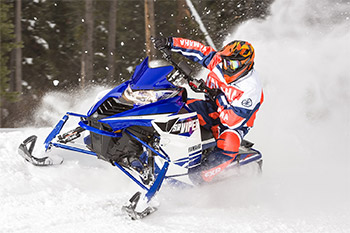
Certainly Yamaha has made good use of a good thing. That good thing we’re talking about is the 1049cc triple used in the Vector, Venture, Viper and in 7000-Series Arctic Cats.

The basic Vector chassis hasn’t seen a tremendous change since it was introduced in 2003. However, moving it to a rider-forward configuration a few years later (2006) amped up its appeal and sustained its viability as a very good trail sled.

Certainly, the intro of the Viper two years ago overshadowed the Vector and we even felt it may be the end of the road for it in 2016.

Yamaha surprised us with some major changes for next year and, after riding it in February, we think the all-Japanese model may have more life in it.

Two differences are the intro of an all-new skidframe in two sizes – 129 and 146-inches and a new electronic throttle control system called YCCT.

First, the throttle. This electronic control differs from Ski-Doo’s handlebar mounted system in that the servo is located under the hood on the throttle bodies.

A cable runs from the handlebar flipper to the servo and it makes the whole thing seem completely seamless. If no one told you it was there, you’d never be aware of it. There are three driving modes with this set-up and you toggle them from the speedometer.

The new SingleShot skidframe is up to 10-lbs lighter than the former Monoshock setup and works at least as well, if not better. It’s particularly good in stutters and chop at low and medium speeds and we found it resisted bottoming very well at higher end speeds.

This skid uses plastic coupler blocks and if we had a choice we’d go for the 146. Even on tight trails we found the 146 Vector turned-in well with the extra track length and the bonus of more floatation is really tempting on a sled that tends to be a bit more obese than the Viper. As it is, the 129’s performance is still very good and there is a weight saving with the shorter track.

The Vector’s riding position seems a bit outdated and our taller riders were complaining about its ergonomics. However, riders about 5’9″ and less were happy with the layout and when riding it, felt the changes this year were truly noticeable.

The LE version of the Veck comes with Yamaha’s performance damper system and it’s about the smoothest sled you’ll ever ride. Engine mods this year don’t necessarily produce more power but we felt this version was plenty fast and the kind of sled you could ride on a long trip and be very happy with.

2016 Fox QS-3 Shock Controversy

0

There was a lot of new technology at Snow Shoot (the industry’s 2016 new model introduction to the press) held in West Yellowstone, Montana earlier this month. One we really took to was Fox’s Quick Switch/3 Position shocks available on a number of models for 2016.

We suspect there’s been behind-the-scenes hanky-panky with these shocks.

First, lets say this – every sled these dampers appeared on impressed the entire Supertrax/Snowtrax crew.

On all the Arctic Cat ZR Limiteds (and El Tigre) these shocks did not just improve ride quality they tangibly altered the way the ProCross chassis handles terrain.

The simplicity of their adjustability and their range of adjustment in just three clicks was doggone impressive.

The shocks did the same thing (but not quite as profoundly) on Yamaha’s Viper models using QS-3’s. Why not quite as impressive? We suspect Yamaha did not go as far as Cat with front arm and rear torsion spring recalibration (read: softer).

Finally, in a surprise move, the QS-3s showed up on Polaris’s 2016 AXYS 800 Adventure including a special QS-3 variant with an air chamber and a Schraeder valve and manual pump to add more spring to the rear arm when an optional passenger seat is added.

The plot thickens. At the Polaris Sneak Peek event in early January we were told (but did not see the AXYS Adventure 800) the sled would come with a unique rear arm Fox air assisted shock. Not a mention was made of the QS-3 name or that the front arm and both front ski shocks would be QS-3s.

Why do we mention this? We had heard rumblings Arctic Cat worked a cooperative program with Fox to bring these new shocks to market on an exclusive-use basis.

Suffice it to say there were no smiles in the Cat camp when this topic was raised. We have a strong suspicion this ain’t over.

Some of our more seasoned readers (read: older) will remember in 1997 Fox got themselves in a pickle with Arctic Cat by selling Cat’s proprietary “Remote Front Arm Adjuster” shock system to Polaris.

An ensuing legal battle resulted in the recall of all those shocks from 1997 model year Polaris XCR 440SP race sleds. Stay tuned.

Arctic Cat’s Godfather of Engineering

0

Motorhead Mark Lester gets the opportunity to sit down with the Godfather of Arctic Cat engineering – Roger Skime to take a look back over his 50 year career in the snowmobile industry.

Subscribe to our YouTube Channel!

RIDING THE 2016 SKI-DOO RENEGADE ENDURO

0

We’re a bit surprised at some of our readers’ and viewers’ feedback after reading about Ski-Doo’s new Renegade Enduro.

In our opinion, this was one of the best 2016 models offered by Ski-Doo and our SnowTrax and Supertrax test riders pretty much universally agreed it was a great move to upgrade to this more macho version of what was once the GSX.

Some of you commented this was just a camouflage job and the Enduro was really not much different sled than the GSX.

In some ways this is true but as BRP says: “The proof is in the riding”. To be fair, the Enduro does use an air shock system like the GSX did in its rMotion skidframe and has a 137-inch track, also like the GSX. However some key changes give this sled a completely different flavor than its predecessor.

First, the Enduro uses a new version of the XS bodywork that is only differentiated from an MX-Z by its flared side panels.

From the outside you can barely tell the difference styling-wise, but it provides better wind resistance than an XS and apparently, even though it is narrower than the XR was, combined with the mid-height windshield, the shelter factor is about the same for the rider.

The Enduro comes with Ski-doo’s new TS adjustable skis, where you simply dial in more carbide to suit trail conditions and an Ice Ripper with carbide tipped studs built into the track) track which vastly improves acceleration and grip.

Since we first rode the Enduro a month ago Ski-Doo has added electronic reverse instead of manual and the Enduro is now offered in two colors: the camo-military beige (our preference) and now, jet black.

We put the most miles on versions of this sled with the 1170 4-TEC and the 800 E-TEC 2-stroke. Although our first choice is the 800, we were impressed with the 4-TEC and its new ITC intelligent throttle control set-up.

There is some varied opinion on ITC around here but the bottom line is it improves the throttle lag situation a little and makes it much easier to move the sled around in tight situations such as putting it on a trailer or parking it in a garage (we’ve found it’s easiest to just flip the switch onto ECO when you’re maneuvering in tight spaces at low speeds).

With the extra grip of a pre-studded 137 and that 800 mill, you can rock this sled on all kinds of trails and the ski combo, along with rMotion, means the handling is flat-out excellent. Best of all is the adjustable air-ride which is simply and absolutely premium.

We’ll go on record as saying we love this sled and think it deserves to be a big success.

TEAM ARCTIC DOMINATES AT USXC WARROAD 100

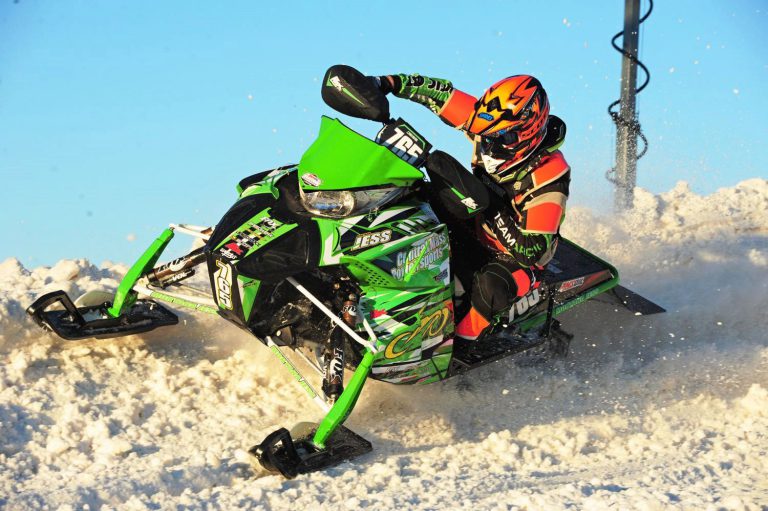
Team Arctic cross-country proved what terrain domination really means during their 14-victory performance at the USXC Warroad 100.

Competing in deep snow conditions ranging from ditch, lakes and river aboard ZR 6000R XC and ZR 4000RR snowmobiles in the ProCross chassis, Team Green claimed 14 wins out of 19 classes, 39 out of 57 podium positions and ended the season with 15 of 20 class high point championship titles.

The competition-crushing performance was led by Zach Herfindahl, who claimed two emphatic wins en rout to championship titles in Pro Stock and Pro Open, edging out teammate Wes Selby for high point honors.

Class-rookie Ryan Trout notched his first victory of the season in Semi Pro Stock, while Timmy Kallock took the Semi Pro Improved win and championship title. Additional class winners in Warroad include Brandon Wolter, Nathan Sillerud, Mike Lenarz, Mike Dirkman, Jolene Bute, Ross Ilstrup, Hunter Houle, Blair Herfindahl and Savannah Landrus.

Team Arctic’s 2015 USXC high point champions include Zach Herfindahl (Pro Stock, Pro Open); Lance Efteland (Semi Pro Stock); Timmy Kallock (Semi Pro Improved); Jeremy Grove (Expert 85, Expert 85 Improved); Mike Dirkman (Masters 40 Plus); Brandon Wolter (Sport 85); Ean Voigt (Trail); Savannah Landrus (Junior Girls); Hunter Houle (Junior 14-17); Keaton Black (Junior 10-13); Steve Martinson (Classic IFS); Jesse Watland (Vintage) and Gerry Mattison (Vintage 50 Plus).

“We couldn’t be happier and more proud of our racers and crews who dominated Warroad as well as the entire USXC cross-country season,” said Mike Kloety, Team Arctic Race Manager. “Their talent and hard work combined with our ProCross ZR snowmobiles delivered twice as many wins and championship titles as all other brands combined.”

Team Arctic hillclimb racers conquered the RMSHA White Pine event in Pinedale, Wyo., with five class wins and 14 podium finishes aboard Arctic Cat M Series snowmobiles with the ProClimb chassis. The top finishes occurred in a range of categories and engine classes, proving the versatility and range of the machines along with the expertise and preparation of the racers and crews.

Arctic Cat Inc., based in Thief River Falls, Minn., designs, engineers, manufactures and markets all-terrain vehicles (ATVs) and snowmobiles under the Arctic Cat brand name, as well as related parts, garments and accessories. Its common stock is traded on the NASDAQ National Market under the ticker symbol ACAT.

More information about Arctic Cat and its products is available on the Internet at arcticcat.com

BIG CHANGES FOR FXR IN THE WEST

FXR Racing is proud to announce the reorganization and restructuring of their Western USA market.

FXR has contracted Rasmussen Style Sales Management (RSSM), owned by Bret Rasmussen, to take over direction of its Sales and Marketing program in Western USA, effective immediately.

“Bret Rasmussen has been an FXR Development and Ambassador Rider for almost four years and I’m really pleased to announce our partnership with Bret and RSSM,” said Milt Reimer, FXR owner and CEO. “Bret’s accomplishments in the mountains on a snowmobile are legendary and his contributions in snowmobile development and also rider training through Ride Rasmussen Style have had a tremendously positive impact on the industry. Bret is highly respected and one of the nicest, most sincere personalities in the snowmobile industry and we look forward to future sales and growth under his leadership, knowledge and endorsement of the FXR brand.”

RSSM has hired Bryan Bennett to act as Sales Manager for Western USA, and will work together with Bret to increase the presence of FXR in the Western USA and Mountain Market segments. A certified RRS instructor, Bryan has spent years riding in FXR apparel, and brings experience in professional sales management.

“Advanced backcountry sleds create needs for advanced gear in extreme conditions. We have a number of variables in the backcountry that create concerns for sledders, from severe weather and avalanche conditions to machine break downs and adverse snow conditions. I don’t need my riding gear to be one of the variables, that’s why I use FXR gear every day. FXR builds product I can trust to meet the demands of the backcountry rider. I am excited to take it to the next level working together with FXR and Bryan to give backcountry riders a safer and more pleasurable experience.” Bret Rasmussen

FXR looks forward to this new partnership, and to working together with both Bret and Bryan in establishing a strong FXR presence in the Western USA market.

FXRracing.com

ADJUSTABLE LIMITER STRAP FOR SKI-DOO MTN SLEDS

BRP has developed a quick and easy way to change the handling of a mountain snowmobile with the flip of a lever.

Riders can choose more or less chassis transfer to keep their skis higher or lower depending on snow conditions, terrain or riding style.

The tMotion Adjustable Limiter Strap’s slim design fits tightly along the running board without intruding on the rider’s feet. It uses a unique spring-loaded cam to shorten or lengthen the limiter strap, which allows the lever to be very compact because it doesn’t directly move the strap. The net effect between short and long positions is significant; equal to two hole positions on a conventional limiter strap adjustment, letting a rider tune their snowmobile’s handling effortlessly.

The tMotion Adjustable Limiter Strap is a bolt-on accessory for 2016 models with tMotion rear suspensions, and can be retrofitted to earlier tMotion equipped machines with the addition of a new front suspension arm – the kit will be offered in both 2016 and pre 2016 configurations.

A video of this product can also be viewed HERE

For information on all the genuine BRP clothing and accessories to fit your ride visit store.ski-doo.com or your local Ski-Doo dealer.

2016 ELECTRONIC THROTTLE CONTROL

0

Drive by wire (DBW) technology is spreading in the Ski-Doo camp (and at Yamaha) this year with the addition of an Intelligent Throttle Control (ITC) system on the popular and updated 4-TEC 1170 engine and drive-by-wire on Vector and Venture 1049cc triples from Yamaha.

The ITC system on Ski-Doo’s 1170cc 4-TEC was admittedly (by Ski-Doo) put into play to counter what we’ve been griping about for over five years – throttle lag. Does ITC system have any effect on what we now refer to as “Delayed Throttle Pick Up” or DTPU? In a word, yes.

However we rarely use just one-word answers around here, so here goes. I would personally suggest the use of ITC on the 1170 has reduced DTPU by 60-percent in my estimation.

Is this improvement noticeable? Yes. However the situation still lingers and the 1170 suffers by comparison to the Yamaha. Here’s why: Interestingly, in the same year Ski-Doo decides to address DTPU with ITC, Yamaha comes to the market with its own version of drive-by-wire throttle control.

Before we go any further, let’s say this: The biggest compliment any DBW system could receive from a user would be “This has drive-by-wire? I couldn’t tell”. This is precisely what we experienced with the 1049 Yamahas equipped with YCCT (Yamaha Chip Controlled Throttle).

If Yamaha hadn’t introduced YCCT we might have been more pumped about ITC on the 4-TEC. However, Yamaha has clearly aced this technology and is the benchmark for DBW in the immediate future.

By the way, ITC on the 4-TEC includes three throttle modes. Our feeling is this: Does anyone buying a 130-hp performance snowmobile really care about ECO Mode?

2016 POLARIS SKS OVERVIEW

0

The name Snow King Special or SKS defined Polaris’s ultimate long-tracked sleds a couple of decades ago. Then things got very serious and the Rocky Mountain King (RMK) name became the company’s definitive handle for mountain riders.

For 2016 the SKS is front and center again with all the sizzle of Polaris’s ultimate mountain sled, the Pro RMK, now using the fresh AXYS front clip and low mounted 800HO engine introduced last year.

The main difference between the two is the SKS does not utilize the lighter belt-drive Quick-Drive system you get with the Pro RMK. This is a clue to the market the SKS is targeted at.

Although the belt final drive is lighter, there are less gearing combos available than with a conventional chain case. This drive benefit makes the SKS appealing to a wider range of freeride and pure mountain users without sacrificing much in the way of performance.

As it is, the 2016 AXYS-based Polaris mountain sleds have dropped considerable weight compared to the last RMK version and feature some critical ergonomic and balance changes that make them incredible deep snow performers.

The SKS and the Pro RMK use the new forged aluminum upper and lower A-arms – actually the first production mountain sleds to ever go this far, and the 3-lb lighter redesigned mountain skidframe with Swiss Cheese rails that have been computer designed for efficiency.

Taller spindles are used and overall more ground clearance is available so the sled slithers through powder with less resistance and digs out of powder much quicker. There’s an extra bulkhead cooler added to the SKS so it can handle more sparse or frozen-down snow conditions and longer riders to your fave powder playground.

The SKS comes with a choice of three tracks in 155-inch lengths. There’s a 2.4-incher or a 2.6 (Series 6) or a Peak 2.25, ideal for freeriding. Unlike the Pro-RMK, the SKS uses piggyback Walker-Evans clickers up front and has extra idlers in the skidframe to take advantage of the varying snow conditions it’s designed to be used in.

Our mountain test riders were very impressed with this sled and felt it could climb nearly everywhere an RMK could go, turns extremely well in off-camber situations and was very maneuverable in powder or when side-hilling.

Any weight handicap (compared to the super-light RMK) was masked thoroughly by the sled’s balance and agility in a wider assortment of riding situations. Keep in mind, this sled is probably close to the same weight as last year’s Pro-RMK but has all the AXYS features of the new-generation platform.

TEST RIDE: 2015 Polaris RUSH 800 Pro-S

0

SnowTrax Television Co-Host Luke Lester evaluates the 2015 Polaris 800 RUSH Pro S in the all-new AXYS platform boasting the gorgeous 60th Anniversary paint job.

Subscribe to our YouTube Channel!