Home Blog Page 122

WHAT HAPPENED TO THE SVX 450?

0

Ever wonder what happened to the SVX 450 Snow Bike project from Arctic Cat? We have, and as a result of asking the question got a “sort-of” answer from Cat’s new Snow Boss, Craig Kennedy, when we interviewed him at Hay Days.

The question was easy to ask. “What’s happening with the SVX 450 project?”. The answer is considerably more complicated.

First-off, there’s the issue of the power unit – the European Sherko 450 off-road motorcycle. While we never received anything concrete on the Sherko we wonder if there wasn’t an issue with price.

ONE STOP SHOPPING

The SVX’s calling card was supposed to be the first integrated, one-stop-shopping Snow Bike. With the Timbersled paradigm there is the necessity to purchase a full-on 450 dirt bike to install your Timber Sled kit on before you go anywhere.

AC saw an obvious opportunity to exploit the TimberSled’s success and sell completely assembled snow bikes. When the snow melted, the buyer could then purchase a front and rear wheel and “convert” the unit back to a wheeled vehicle.

On top of this savvy plan was this: The SVX was rumored to be targeted to launch at an incredible (low) MSRP. It would make sense a fully built snow bike should be cheaper to buy than a separate 450 dirt bike and a kit – right?

This info is old news and we wonder if the Sherko was just too expensive to make it to the market as an integrated snow bike. We’ll never know.

WHAT’S A SNOWMOBILE?

Back to Craig Kennedy. Craig was quick to acknowledge Arctic Cat is still “in” the Snow Bike game, however, he made it clear there are some ongoing challenges with the product relating to SSCC certification.

We heard from industry insiders that to be a “snowmobile” a vehicle needs a left side handlebar brake and a right side throttle flipper – not a barrel style throttle that can be prone to freezing.

From what we understand Cat did develop a left side brake lever that functioned as a clutch for the first part of the lever travel and a brake when squeezed further.

No word if SSCC approved this design or not. We also heard noises about noise – the need to silence a 450 dirt bike engine to “snowmobile” legal levels presents some hefty challenges, not the least of which is where do you hang a large muffler on a 450 dirt bike with a track in the rear?

Kennedy indicated Arctic Cat would continue to work on the SVX project. In other words, Cat doesn’t want to walk away from the snow bike biz so they’re keeping one foot in the door. That’s a good thing.

WHY?

The SVX 450 is a good first effort at building an integrated snow bike. The use of Camso’s proprietary track, suspension and ski allowed Arctic to benefit from economies of scale and get the vehicle on-track for a competitive MSRP.

Truth is, the Camso kit’s single slide rail design produced decent handling on hard pack trails – something the original Timber Sled kits didn’t do as well – up until the arrival of the new Timber Sled Aro kits.

TO KIT OR NOT TO KIT

At the end of the day we wonder if it might have been better for AC to pursue a snow bike kit rather than the lofty goal of building the first legal “snowmobile” bike. It’s this reality which tweaks our sensibilities and has us wondering again if Arctic Cat will come to market (first) with an SVX kit including the two stage brake/clutch, a flipper throttle and some sort of muffler system. If they approached the market this way they could likely take their time with SSCC certification while actually getting a piece of the snow bike market.

TEXTRON TORQUE

Here’s our final thought. With the incredible financial depth of AC’s new owner – Textron Corporation – and their obvious interest (and ability) to acquire companies, maybe Textron could buy a specialty Euro-dirt bike brand (there are a number) and produce the first fully integrated, one stop shopping snow bike?

Newfoundland Backcountry Ride with Troy Burt

0

AJ heads east to Newfoundland, Canada where he hooks up with 5 Toes Riding’s best ambassador and North America’s Top Snowmobiler 2016 Winner – Troy Burt. While there, they waste little time and head to the West Coast Mountains where they pilot some new Gen4 Ski-Doo Summits in the high elevation terrain and check out some of the cool landscape features including the 30 meter deep Lomond Sinkhole near Bonne Bay Pond.

Then on their second day of riding, watch as AJ and Troy go all out in the snow aboard Gen4 Ski-Doo Summits and push each other to their limits going beyond their comfort zone of riding. Insane hill climbing, jumps and trail ripping included!

Subscribe to our YouTube Channel!

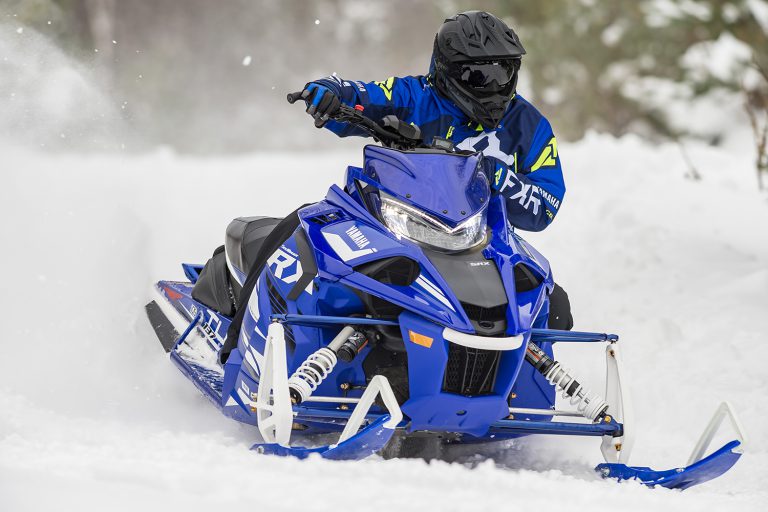
MOST ANTICIPATED 2018 SLEDS: Yamaha SnoScoot

0

Although I don’t think there are any “bad” sled choices this season, there are certainly a few I’m more excited about than the rest. This one might surprise you.

Don’t laugh… this is an important sled – and it’s one of those sleds that needs to be looked at in proper context.

I’m excited about it because of what it means for the future of our sport… and maybe a little bit because I had a SnoScoot when I was a kid and have nothing but great memories about it.

The future of snowmobiling, like any sport, is dependant on getting new and young people involved and passionate about it. Until now there’s been a pretty sizeable gap in the snowmobile market for young people who are too big for a 120 but still too small for a full size, fan cooled sled.

Safety is paramount, especially when kids are involved. So once a little guy or girl outgrew their 120, a parent had only two options. Keep them off the snow until they grow a bit more and can handle a bigger sled or take the risk and put them on a bigger sled. Obviously, neither are acceptable.

Today the SnoScoot, as it did in the past, perfectly fills the gap and gives your growing kid a stepping stone between a 120 and a full-size sled, keeping them engaged and passionate about the sport, ensuring its future.

I’m not going to claim the SnoScoot is only fun for young people, though. I happen to know for a fact it’s a blast for grown-ups who are still young at heart.

SUPERCLAMP Super-Traction Grid Install

0

AJ is installing a Super-Traction Grid from SUPERCLAMP on his trailer track which provides incredible additional grip and accommodates both snowmobiles and ATVs. Can be installed on both trailers and truck decks.

Subscribe to our YouTube Channel!

1977 YAMAHA 440 EXCITER

0

In 1971 my neighbor, Joe Stringer, bought a Yamaha GP 396. It was actually a 40-horsepower SS 433 with a 396 GP decal kit, but I ran it in Junior Class and Joe ran it in Men’s Class in LeMans racing.

We ran that sled three years and never got caught, but in 1974, Joe sold the sled to a guy who promptly seized the engine, bored it 10-thou over and went one oversize. Needless to say, the piston was a little sloppy.

Joe played it coy with denial. Anyway, the guy got the correct piston in it and kept racing it as a GP 396. You kind of have to laugh about it now as, just like in NASCAR back then, there was a lot of cheating in those early days of snowmobile oval racing.

In 1976, I bought a 1974 GPX 338 but that molded rubber, cleated track was not one of Yamaha’s better innovations. When those cleats started rattling out the back end at 75 mph, it ripped and twisted out the tunnel if the track derailed. I came out unscathed, but sled’s aluminum tunnel was bent and ripped to doll rags.

When I first started attending Minnesota’s Hay Days Grass Drags in the mid-nineties I was on the lookout for a Yamaha 440 Exciter. I found several contenders, but their aluminum belly pans and bumpers were either twisted, bent, stretched or all three.

I ended up buying a 1973 GP 292 with 765 original miles. My first thought was to race vintage ovals with it, but when I got it home and cleaned it up, I realized it was just too nice to race so I just drove it around at vintage events all winter looking like a true Yamaha collector.

A few years back I found a 440 Exciter for sale in the vintage tent at Hay Days and it looked to be in above average condition. Unfortunately, I had no room in the trailer to bring it home and not enough cash with me so I had to walk away from that deal.

That winter I went to the Waconia Ride-In event in Waconia, Minnesota and there was that very same Exciter I walked away from at Hay Days. A few moments later I was the proud owner of a 1977 440 Exciter.

As it turned out, the sled needed a piston and rings, a carb rebuild and a carb intake boot. It took three years, but the folks at Hudon’s Salvage in Barneveld, New York, tracked down an original OEM intake boot for that hateful Keihin carb.

I put more time into this project than I intended, but it was a good runner and I may have put 150 miles on the sled. Do I still own it? Nope! I met a guy looking for a 1973 292 GP to complete his collection of 1973 Yamaha sleds and he bought my Exciter and all the Yamaha parts I had collected.

Full REVIEW: 2018 Yamaha Sidewinder S-TX DX

0

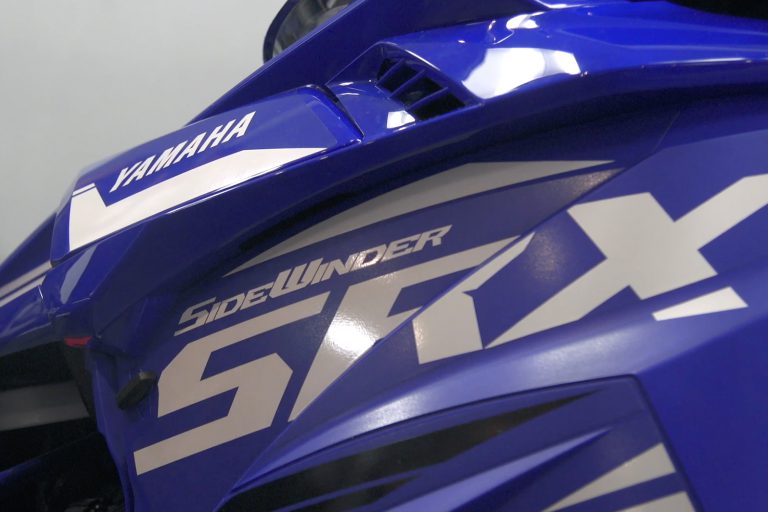
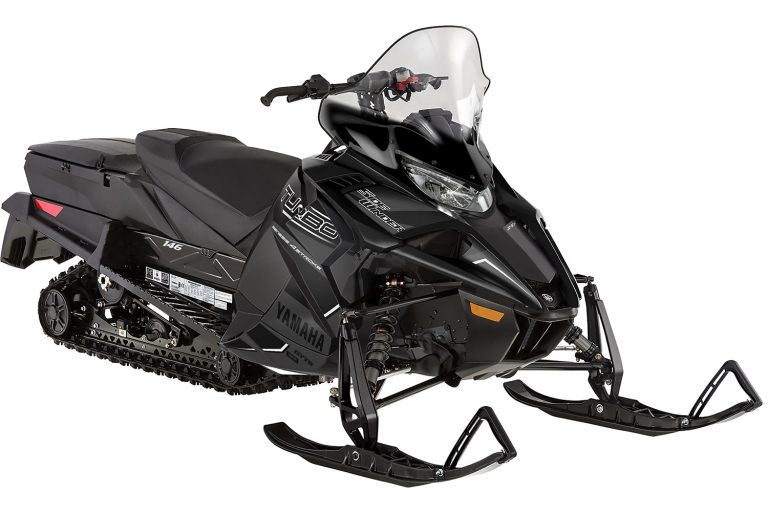
Motorhead Mark is here to give his detailed impressions on the “anti-crossover” 2018 Yamaha Sidewinder S-TX DX 146.

Subscribe to our YouTube Channel!

WHAT WOULD IT TAKE TO MAKE YOU SWITCH?

0

There are actually two parts to this question – and we have a sense there are a few dealers who would like to hear your opinions.

Part I: What would it take to make you change from a 2-stroke to a 4-stroke, and visa-versa?

This is a big topic around the Supertrax cave. Some of us are diehard 2-stroke lovers and some are hardcore 4-stroke supporters.

One side says it’s all about weight and anyway, 2-strokes are just as clean running, offer all the reliability of 4-strokes now, besides really good gas mileage.

The other side says 2-strokes are junk and have to be rebuilt every 10,000 miles, still blow smoke and don’t deliver consistent gas mileage.

What do you say and what type of engine would make you change over?

Part II: What would it take to make you change brands?

This question is a biggie because snowmobiling is one of the most brand loyal businesses in the world. It takes a lot to convert snowmobilers to another brand and it’s one of the biggest challenges OEMs face as they bring out new models and strategize to get new customers into their fold.

As far as we can tell, these are the main reasons riders switch to another make:

1. A bad experience with their current sled.
2. Lousy warranty or service response from a dealer.
3. A new model exciting enough to draw a customer away from their current sled. (eg: turbo, youth model etc.)
4. Desire for a snowmobile not offered by their current sledmaker (ie: no 4-stroke, no 2-stroke, no touring sled, no competitive off-trail model, etc.)

Post your answer in the comments section below and let us know what it would take for you to change in either or both of these categories.

We really, really want to hear from you on this!

SnowTrax 2018 – Episode 3 Sneak Peek

0

Luke hosts a mountain sled shootout between the 2018 Polaris 800 PRO-RMK 174 VS the 2018 Ski-Doo 850 Summit X 175. Watch as Luke compares the two snowmobiles through six distinct categories including: power, ergonomics, handling, features, suspension and overall rider experience. Will defending champion Polaris retake the shootout title in this year’s competitive mountain sled segment?

AJ is in the shop recommending performance focused, high-quality powersports motor oil products from the market leading company, IPONE.

And Luke is reviewing the successor to the runner-up of the 2017 Real World Sled of the Year – the 2018 Polaris Switchback Assault 800.

Subscribe to our YouTube Channel!

509 Sinister X5 Ignite Heated Goggle

0

If you’re running with a moto lid with a goggle setup, you’ve likely experienced the frustration of your goggles fogging up during your ride.

Doesn’t matter if you’re blasting trails on a icy afternoon or working up a sweat while carving powder, fogging is annoying and at one time the best solution was just simply bring a backup pair of goggles or worse yet, run em under your muffler just to thaw the ice-up. 509 has come to the rescue with a solution to this nagging problem.

509, makers of incredibly slick snowmobile gear introduces its Sinister X5 Ignite HEATED goggles. Powered by a Strap mounted rechargeable 7.4v, 2200mAh, lithium-ion battery pack, the thermal conductive transparent ITO (Indium Tin Oxide) heated dual lens provides continuous fog-free runtime of up to 5 hours at maximum temperature.

To quickly eliminate fog at the press of a single button, the transparent thermal conductive Indium Tin Oxide layer on the inner lens quickly heats up to 104° F and runs in either an auto 120-second mode or an ‘always on’ mode ensuring clear fog-free vision throughout your ride.

The power pack features integrated Bluetooth technology for your battery’s status, firmware upgrades and there’s a soon-to-be-released free Ignite mobile app that will allow you to create customized heating profiles for your goggles.

FEATURES:

* Ignite heated dual lens technology
* Thermal conductive transparent ITO (Indium Tin Oxide) heated lens
* Strap mounted rechargeable lightweight 7.4v, 2200mAh, lithium-ion power pack
* 104° F maximum heating temperature
* Lightweight rechargeable power pack & charging cable
* 4-5 hour continuous max temp runtime
* Mobile app connectivity (coming soon) through integrated power pack Bluetooth
* Single button ignition: Auto 120 second & always on modes
* Audible & LED status indicators
* Sonic welded, IP57 rated water & dust resistant power pack

Check out 509’s Sinister X5 Ignite Heated Snow Goggle and run fog-free all season long.

509films.com

SUSPENSION PART 4: SKI-DOO rMOTION

0

Amazingly, Ski-Doo’s rMotion, a suspension we personally feel is at the top of the heap for ride compliance, is not about trick attachments or gimmicks.

This rather conventional two shock-in-skid setup doesn’t possess a lot of breakthrough Ski-Doo-only technology but is calibrated and designed so precisely it works amazingly well for all types of riders and riding styles.

rMotion is a coupled, dual arm skidframe using a coilover shock on the front arm and torsion springs at the rear. There’s a long front arm with a high lower mounting point on the rail.

At the extreme rear, the coupler blocks (originally Polaris and FAST tech) are adjustable by rotating them and there are two torque links (originally Arctic Cat tech) used to control track deflection and optimize bite under acceleration.

Rate changes can be adjusted with a linkage that provides varied mounting positions for the lower mount of the rear shock.

Yes, there are various remote adjustable options if you pay for them, for tuning spring and damping rates from the drivers seat. This is a nice touch but truly, not critical to the way the skidframe functions.

The biggest deal with rMotion is how it has taken basic available technology and precision calibrated it to produce incredible ride results.

If we could say anything about it to turn the spotlight on Ski-Doo, we would mention that rMotion’s long arm tech (now used by everyone else) was first out of the gate.