Home Blog Page 413

4-Stroke EFI Basics for Snowmobiles: Part 2

0

EFI Thinks for Itself

By: Kent Lester

By introducing electronics and computer controls, automotive engineers have been able to eliminate the problems carburetors have been wrestling with for years.

For instance, with EFI, no choke system is necessary and the fuel and air flow balance is always consistent despite weather conditions or the temperature of the engine. Fuel flow is near perfect on every stroke of the engine and fuel is not wasted as it “puddles” in a manifold waiting for a valve to open so it can enter a combustion chamber.

The result is an engine that starts easier, idles with precision and accelerates at any RPM level without hesitation. Is the exhaust cleaner? In most cases it is.

How does it work? Back to the aerosol sprayer mentioned in Part 1. If your finger could press and release the nozzle hundreds of times per second and time the pulses so they fall exactly at a pre-determined point, you’d be doing what EFI does.

In order for this precision pulsing to take place, an EFI system has to be able to “read” several conditions. This is accomplished by using a team of electronic sensors located on or within the engine and exhaust system.

The data accumulated from these sensors is channeled to a “brain” or Engine Control Unit (ECU) where the information is processed and the decision as to how long the injector should stay open is made and how much fuel should be squirted in relation to the air flow available.

The ECU also controls engine timing so the injectors are squirting at the engine’s optimum time window to maximize fuel efficiency and power depending on its load.

The Engine Control Unit (ECU) controlling a snowmobile’s EFI system is really a computer that processes the feedback it receives from a fleet of electronic sensors and then chooses the duration and frequency of the pulses the fuel injectors should be spraying gas.

This tiny “black box” is well hidden within the snowmobile’s wiring network and protected from the elements.

Like any computer it contains programs or “maps” that process data and apply it as required. These data maps are created by the manufacturer and are programmed into its complex database.

They detail every possible scenario of outdoor and internal engine temperature, fuel flow, air flow, existing power, load demand and every other conceivable possibility at every RPM. These calculations and adjustments are processed thousands of times per second.

Keep checking back for more on this 4-part series about the basics if Snowmobile EFI technology.
4-Stroke EFI Feedback

0

Written by: Jonathan Belanger

I just read Part 1 of the Electronic Fuel Management article with great interest. I found the article well written. There was, however, some omitted information.

First off, the MAP sensor is used in conjunction with an air temperature sensor to determine the density of the air charge within the manifold. It is this information that adjusts the fuel delivery for things like altitude and temperature.

Additionally, there is another style of EFI system that was not presented. This type of system uses a titanium wire in an air flow housing placed before the throttle body. This replaces the combination of MAP and Air Temp sensors.

The wire is electrically heated and when air passes through the sensor, the volume and temperature of the air charge is determine.

This system is better at adjusting for altitude and temperature and meters the air flow much better than the MAP/Air Temp sensor combination.

In the mid-80s Ford introduced the V8 Mustang with the MAP/Air Temp Sensor combination and switched to the Air Flow Sensor a year or two later.

Follow Up:

Jonathan:

Fascinating information, thanks so much for sending it. The article we posted is a fairly elementary one targeted at introducing snowmobilers to the various electronic controls being used specifically on sleds today.

There are three more follow-up segments to this article that will be coming out on the web in the next few days and then another whole series on 2-stroke electronics that will be posted after the December issue of Supertrax is out. Some of the missing info you mentioned may be mentioned in the other segments.

I’d never heard of the titanium wire system you wrote about and would love to learn more about it. Please send me a link if you have any more info.

Kent Lester

’07 Phazer: 2-Stroke Weight, 4-Stroke Great!

0

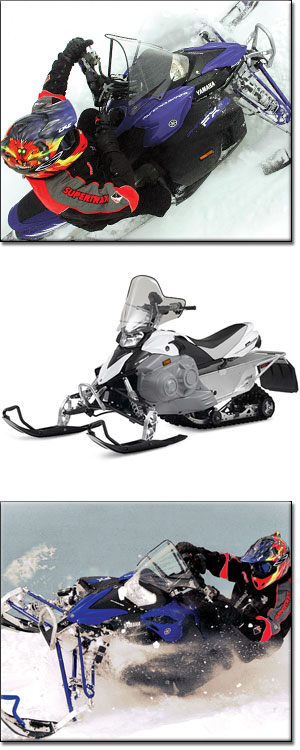
When you first sit on a Phazer you’ll notice feedback strangely similar to a YZF motocrosser. The narrow and tall seat delivers a dominating feel looking over the trail and puts the rider in the perfect position for a stand up ride similar to the YZF.

The deep tunnel and low hung running boards let you pinch the mid-section of the seat with your knees and pull the Phazer around in deep powder when playing off the trail.

The front section of the Phazer has more Vector and Apex influence with the use of injection molded body panels popping outward, mirroring the shape of the engine and driveline components they cover. This makes the Phazer look more concept than production and really catches your attention.

The boiler underneath this little steam cannon is a 2-cylinder 500cc liquid cooled, fuel injected 4-stroker. The mill is based on the single cylinder YZF250 motor and they strapped two of those 250s together to make a stump pulling torque monster of an engine fueled by a 43mm Keihin dual throat EFI throttle body.

This sophisticated engine uses an Apex-like remote primary drive to drop crank revs from near-12,000 RPM to 8,000 RPM at full whack, thus ensuring belt reliability.

The power characteristics of the Genesis 80hp mill are similar to other Yamaha 4-strokes: they make potent power down low. The torque generated by this 499cc reactor is incredible and propels the Phazer up to cruising speed quickly.

The Phazer creates what could be called the best, stock factory exhaust note, period. This little gruntmeister barks horsepower commands to the 14-wide by 121 inch track and lets you know it’s bred from the same line of engines strapped into the YZF MXers.

Squeeze the go stick and an angry 4-stroke thump reverberates out the rear exiting exhaust and plays a tune sweet enough to win American Idol.

The all new Phazer-specific Pro-Active rear suspension delivers a plush ride in the harshest conditions. Using a Polaris-like double coupled drop link and an Arctic Cat-ish Torque Sensing Link on the rear arm plus what appears very similar to Ski-Doo’s SC-4 accelerated front arm shock set-up, Yamaha has melded the best ideas in the biz here placing a full 16.1 inches (at the rear axle) of whoop-whipping travel at your beckoned call.

The dual A-arm front suspension is equally as competent, using a small spaghetti-like sway bar similar to that on an MXZ 440 Ski-Doo snocrosser. The bar attaches to the lower A-arm via forged dog bones and effectively counters front end roll under hard cornering conditions.

Holding the A-arms to the skis are a sweet set of extruded aluminum spindles, hollowed out to the max, looking more like an aftermarket part than a production piece.

When it comes to choosing between the GT or FX package the most significant difference is in the suspension department. The rear end of the GT comes with two Kayaba IFP gas shocks.

The front arm shock has a threaded preload adjuster allowing for an even wider range of adjustability versus a snail cam collar found on many competitive sleds.

Out back, square torsion springs can be adjusted to one of three preload settings. The front end of the GT uses two aluminum KYB shocks with threaded bodies. The adjustability of a threaded body provides for preload is a huge benefit over snail cam collar adjusters found on most low cost snowmobiles these days.

We predict the biggest problem Yamaha will face is consumer perception of this new generation snowmobile. To combat this, Yamaha has geared up promotions that include a set of Phazers on a trailer with matching jackets and helmets for a ridiculously low monthly payment. Smart.

Slammed FreeStyle

Question:

The cool looking freestyle chassis drag sled in your latest issue really caught my eye.

Where can I find the details on the sled? It looks pretty cool slammed to the ground.

Todd Olson

Response:

The Freestyle shown in the November issue is a mod sled raced by Craig Marchbank. Craig says the lightweight of the chassis appealed to him and it just seemed like a natural to make it into a drag sled. I’m sorry, I don’t know what he used for power in this cool looking rig.

CJ Ramstad

4-Stroke EFI Basics for Snowmobiles: Part 1

0

Carbs: Better or Worse?

By: Kent Lester

To understand the efficiencies of 4-stroke EFI you first need to understand the inefficiencies of carburetors.

Think of an aerosol spray can. Whether you’re spraying paint or hair spray, press the nozzle down and you’ll get a consistent, unending (until the can is empty) spritz of liquid.Carburetors work something like that.

When the engine is running, because of the vacuum or sucking effect of air flowing into the carburetor, gasoline is being sprayed as long as your thumb is holding the throttle open.

Every stroke or revolution of the engine whether intake, compression, firing or exhaust, the carburetor is delivering fuel. Although the cylinder’s intake valves regulate whether or not the gas is actually getting into the combustion chamber there’s always a range between the ideal amount of fuel and too much fuel being available.

The presence of too much fuel not only causes those annoying burbles and hesitations when you tip-in the throttle but can cause an idling engine to stall or can make start-up difficult and flooding too easy.

Air flow is another issue. Oxygen is your engine’s second fuel and if the balance between air and gasoline is off, the engine can find itself in a “too rich” environment where performance is affected or a “too lean” situation where excess heat is generated and the engine’s physical health is in jeopardy.

To get a cold engine started, carburetors depend on a “choke” or an “enrichener” to adjust the balance between fuel and air flow. Gradually, more air is introduced as the engine warms up.

Various manual, mechanical and electric choke devices have been added to carbs over the years with varying results. Certainly, with snowmobiles, the manually operated choke is most common.

Keep checking back for more on this 4-part series about the basics if Snowmobile EFI technology.

Sneak Peek Rumors: Package Speaks Volumes

Despite the fact all the snowmobile manufacturers are tense about releasing info surrounding early release limited build models, we received a 50 pound invitation to Ski-Doo’s annual “Sneak Peek” 2008 model preview in January.

The 50 pound package included two 25 pound bar-bell weights and a small white envelope.

The always intuitive minds here immediately got the point.

The ad showing a Ski-Doo pilot adding bar bell weights to his REV parked next to a Yamaha 4-stroke is in the most recent issue of Supertrax.

TOUGH DUFF

0

The High Sierra AT3 Sierra-Lite duffel has a sizeable main compartment with hold-down straps, two zippered mesh pockets and a moveable divider, plus a front loading zipped storage compartment coupled with a smaller zipped accessory pocket.

The easy-grip extendable handle and wheels will make a late rush at the airport less frustrating plus the molded base allows the bag to stand upright while waiting at the ticket counter.

Hidden padded backpack straps stored behind the zippered padded back panel allow you to remain hands-free as you throw this bag on your back to walk it up steps.

Grips, zips and fabric inside and out appear to be high quality and very durable.

Visit highsierrasport.com and call 1-800-323-9590 for more information.

Top of The Line Skid Lid

0

The Stance Maxim Snow is Z1R’s premium snowmobile helmet, sporting Snell and DOT approvals as well as a lightweight polycarbonate shell.

These sexy skull covers are designed to be warm in extremely cold conditions and, because of an excellent venting system with opening and closing ports, are cooler when the temperature gets mild.

HOLESHOT: Post Duluth Rundown

0

By: AJ Lester

There was a glow around the Polaris trailers as Ross Martin absolutely dominated Pro taking home both Stock and Mod wins at the WPSA Season Opener.

Following close behind in Mod class was Levi LaVallee on an IQ and in Stock Mike Schultz rode his way to second. In the Semi-Pro Brett Bender pulled rank and swept both class finals looking very much at home on the IQ racer.

This is a huge boost for Polaris and a great way to start off the season. With a solid factory funded race effort and a thirst for blood Polaris will be hunted by green, yellow and blue for the remainder of the WPSA season.

Out of the BMR trailer newcomer Ian Hayden managed to pull 4th in Stock followed by veteran rider and team owner Blair Morgan in 5th. In mods, Dave Allard scored the best of the bunch with an 8th.

Semi Pro finishes proved a bit better as Katejun Coonishish score second in Mod.

We expect to see big things from Ski-Doo in WPSA including the rumored mid-season release of the next generation Rev II in the Mod class. If true, look for Warnert and BMR to get hold of these limited racer-only sleds.

The first-round Yamaha Mod looked very R&D-ish, resembling the all-new Phazer. WPSA Pro Champion Robbie Malinoski lit the wick on the blue rocket and finished with qualifying positions 5, 5 & 6.

This is impressive for an all-new race sled; unfortunately it’s not good enough to make it to the final. Teammate Yuji Nakazawa ran 7, 6 & 4 in qualifying missing the main as well.

As disappointing as this is for Yamaha, Spirit Mountain is always a bag of mixed treats and in no way determines year-end results. Rumor has it a completely redesigned and totally new race chassis is on the way for Robbie and Yuji. Definitely don’t count these guys out.

We weren’t quite sure what to make of Cat letting Robbie Malinoski go. However with Tucker back in the game we expect to see some great results.

Team Green faired okay at Duluth with Garth Kaufman scoring a third in both Stock and Mod finals and working off the rust, Tucker managed to wrap up a 5th in Mod.

In Semi Pro Open Dan Ebert roped in dual 3rd place finishes. Mike Bauer pulled in behind Ebert and cruised his way to a 4th in Semi-Pro Stock.

AC didn’t produce a new race sleds this season. Instead Arctic Cat divvied up remaining 2006 crated Sno-Pros to the top Pro and Semi Pro race teams.

This not only allows AC to move all the overstocked race units, it offers time to prepare an all-new racer based on the new F-chassis for the 07/08 race season.

We think it would be cool to see Tucker on an F-chassis Mod racer mid season, but that’s just our opinion.

AJ Lester is a full-time Editor and test rider for Supertrax International, North America’s #1 Snowmobile Enthusiast Publication. AJ began racing Sno-X when he was eleven. During his ten year career he amassed multiple National and Regional Championships, scoring a record 26 Semi-Pro National victories in the 2002/2003 season. AJ’s years of experience ensure his often humorous opinions on everything from racing rules to trail sled performance and handling tips are both credible and insightful.

600 Fusion Heat Problems

Question:


I keep having a problem with the amount of heat coming out the foot peddles on my ’06 Fusion 600.

I remeber seeing a vent in Supertrax that was behind the left front shock. Can you repost that again?

Thanks and great mag. Keep up the good work.

Edgar Terry

Response:

Ed:

I know there were some underhood heat problems with the Fusion bodywork last year, especially on the exhaust side when outdoor temps were extra warm.

Apparently, the new bodywork on all 2007 IQs has remedied the heat buildup around the muffler. Sorry, but I dunno about any company making grilles for the plastic area behind the front shocks. We’ll post this and see if we get a response for you.

Here’s what I’d do in the meantime. Just drill about 8, 3/8 inch holes through the plastic behind the right side shock tower on the back of and inside the wheel well . Keep the holes within about a 4×4-inch area and you can cover them later with an aftermarket grille – even old airbox lids modified work fine.

If you decide to just leave the holes exposed and they’re not too close to the outside of the bodywork, any snow getting inside will go directly toward the muffler.

The idea is to get more air flowing through that side of the bodywork but you need to keep vent holes low so intruding air and snow doesn’t interfere with underhood air pressure.

Less is more here and I’d suggest adding a few holes at first and making sure it makes a quantifiable difference before going nuts with the drill. You should probably remove the muffler and drill from the inside out.

Also, before doing anything at all, you may want to check with your Polaris dealer and see if there’s a freebie fix for this problem. Hope this helps.

Kent Lester