
Home Blog Page 412

Canadian Powersports Dealers Form United Front

Press Release –

A landmark event in the history of the Canadian Powersports industry took place Monday December 11th, as dealers, industry speakers and a host of association sponsors from across Canada as well as the Executive Director from the New York State Powersports Dealers’ Association met to develop an ambitious plan in support of Canada’s independent powersports dealers.

One of the highlights of the morning session was a presentation given by Tim Stover of the manufacturer backed Motorcycle and Moped Industry Council. Stover discussed various land use and lobbying efforts that the MMIC focuses on that help maintain a positive public image for the powersports industry and powersports dealers nationwide. This was the first time that the MMIC and CPSDA had worked together in such an effort which promises to help build manufacturer and dealer relations down the road.

Other key industry lobbyist speakers included Sandy Currie from the Canadian Marine Manufacturer’s Association (CMMA) who provided perspective on Manitoba Senator Mira Spivak’s controversial Bill S-209 which has been threatening the personal watercraft and Canadian boating industry since 1999.

Currie explained that due to recent health concerns, the Senator has withdrawn the bill from the legislature agenda. Currie also expressed a strong desire to work with the CPSDA membership to acquire data for a comprehensive marine industry study the CMMA is working on.

During the afternoon dealer-only closed door session, considerable discussion was focused on how dealers could solidify investment in their dealerships by working together with OEM suppliers to forge a set of provincial franchise laws.

“We firmly believe that our industry has regressed in recent months in terms of being able to offer the quality of buying experience consumers are coming to expect. Both the OEMs and the dealers agree that dealerships need to undergo a merchandising modernization process much like in the auto industry but to forge ahead we need a solid foundation first before millions of dollars get invested in new storefronts” expressed CEEDA President and CEO Bev Leavitt.

CPSDA attorney Mark McMackin further explained that recent versions of OEM dealer agreements have shown a trend toward an increasing imbalance in favour of the OEM.

“Until we can hammer out a set of guidelines that both OEM suppliers and dealers are comfortable operating within, dealer morale will continue to erode. Frankly, dealers of all brands are quite deflated by the dealer termination notices that have been issued by Honda Canada nationwide last July because it really means that the two thirds of all powersports business owners that are predicted to retire (according to a recent report from the Business Development Bank of Canada) within the next 10 years have had their hard earned goodwill swept out from under their feet” explained McMackin.

In a passionate presentation made by New York State Powersports Dealers’ Association Executive Director Bob Ski, it became evident that although it is critical that a province or state have a set of franchise laws in place to govern an industry, it is another thing to have rules respected and enforced.

Interesting comparisons between the Ontario and New York State powersports markets were also discussed which revealed that amongst the 18.95 million people in New York State there are only 238 authorized powersports dealers whereas in Ontario, 12.49 million people are service by 304 dealers. That’s a ratio of 1 powersports dealer for every 79,621 people in New York State compared to one dealer for every 41,085 people in Ontario” commented CPSDA President and CEEDA board member Stephen Bieda.

CPSDA and NYPSDA representatives also discussed the merits of incorporating a “code of ethics” into the membership criteria for all North America powersports dealerships which would prohibit powersports dealers’ association members from selling beyond State/Provincial or National boundaries to further enhance the existing clauses in many powersports OEM dealer agreements.

The primary purpose of the event was to rally dealers from across Canada in support of the effort to strengthen relations between dealers and OEM suppliers and to enhance communications amongst a fragmented network of Canadian powersports dealers.

Limited Build Predictions from Supertrax Staffers

Here’s what we think the sled makers might release before the end of this season:

Ski-Doo:

Look for a limited-build (one per dealer) REV II wearing Renegade clothes and powered by the new-last -year 800R PowerTek engine.

If this new Gen II REV is lighter than its predecessor, Ski-Doo could release an X-package 121 incher to more clearly make its point.

Polaris:

We think Polaris wants to shore up credibility and sales in the popular flat land, deep snow marketplace. This means they need a 136 inch IQ to compete with Ski-Doo’s Renegade chassis, Arctic’s CrossFire platform and the 4-stroke Rage and Attak from Yamaha.

If we were betting folks – and you know, we’re not – we think a 600 IQ CFI with a 136 inch IQ (not mountain) skid makes a lot of sense.

It would also be easier for Polaris to drop such a model as a limited build this season, as it doesn’t compete with other Polaris models now in showrooms, except for maybe the Switchback.

Arctic Cat:

While we think it’s unlikely AC will debut any consumer oriented limited builds this season we do expect Thief River falls will show off an F-based Open Mod sno-X racer before the end of the season.

This new “F- Sno-Pro” will foreshadow next year’s racing Sno Pro expected to be powered by a 600cc engine as the sport moves away from 440 stock engines in 2008.

Yamaha:

The highly sensitive Supertrax RADAR has picked up some unusual (for Yamaha) signals indicating something limited is in the works for this winter. Yamaha has not been in the habit of releasing early-builds so this info is potentially earth shattering.

While no details are available at this writing, January’s Sneak Peek event may see the intro of an SE variant of a popular Yamaha. How about a signature series Robbie Malinoski Nytro or Phazer?

Ski-Doo’s New EXO Series Lids

0

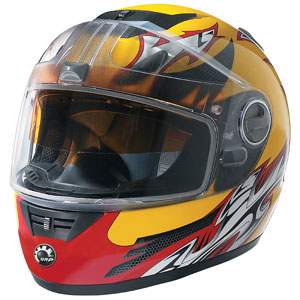
Ski-Doo’s hot, new, Snell M2005 and D.O.T. approved and wind tunnel tested EXO series helmets are a must-have this winter.

Optically corrected shield with anti-scratch, moisture wicking, breathable removable liner and cheek pad, adjustable vent system and rear spoiler combine to make this the ultimate brain bucket.

Visit your local Ski-Doo dealer and click the banner at the left side of this page for more information.

4-Stroke EFI Basics for Snowmobiles: Part 4

0

Regulating Fuel Flow

By: Kent Lester

It just makes sense that if you have thousands of computations taking place every second and mechanical “squirt guns” (injectors) to get the fuel into the cylinders, there could be a problem with fuel delivery.

This challenge is handled by using extremely high pressure in the fuel system and very sophisticated injector nozzles to open and close at the same rapid level the ECU is calculating.

For this reason, electronic fuel injection systems use a very powerful pump, usually located inside the gas tank, to get the pressure high enough in the fuel rail for the nozzle to respond as quickly as possible.

The fuel rail is merely a distribution reservoir for gasoline where the highly pressurized fuel can be ready for instantaneous delivery to the nozzles.

EFI throttle bodies are located the same place a carburetor would be situated and from the outside actually look pretty similar. There’s one massive difference between a carburetor and a throttle body. No fuel flows through an EFI throttle body – only air.

Air flow is regulated by a flapper style butterfly valve monitored by the throttle position sensor (TPS). Gasoline is introduced to the cylinders via the injectors only and, in port style injection systems, the most common type with snowmobiles, the injector nozzles are located between the throttle body and the engine, either on the intake manifold or the cylinder head.

The idea is to get the nozzles as close to the intake valves as possible.

SNOWPOD: Thanks for The Memories

0

A letter to CJ Ramstad:

I just wanted to take a quick minute to let you know how much I enjoy Snowpod.com – especially the past week. I was in the third grade (1967 model year) when my Dad, who was a John Deere dealer in Jerome, ID, picked up an AMF/Ski-Daddler franchise.

By the time the Ski-Daddlers faded from existence, we were hearing rumors of John Deere getting into the biz.Jerome Implement was also a Harley dealer, but we chose to not get involved in the AMF/Harley Davidson snowmobile product.

The ’72 model John Deere 400 & 500 were not very exciting and I continued to ride my 1971 Ski-Daddler Mark XX. It was an awesome little sled with an Arctic slide frame, a 15″ wide steel cleated track, and a strong running, high revving, Hirth 340, axial fan cooled engine.

The ’73 JDX8 was OK but the short plastic track did not go very well in our western snow. In ’74 I was a sophmore in high school and I got one of the 295/S’. I literally kicked butt that winter so my Dad backed me the next year on a Winnepeg to St. Paul entry on a ’75 340/S.

I do not recall the exact number of entries that year, but 376 is the number that comes to mind. Only 22 finished. I was one of the 300+ that did not finish, but it was a once in a life time expereince to be there.

The 340/S photos brought back a flood of memories. I know it is a very busy time of year for you. but I wondered if you could take a quick look at your archives and see if you have any phots of #21 in the ’75 Winnepeg to St. Paul race.

Sincerely,

Ron Bentzinger
Snowmobile Product Manager
Western Power Sports

Visit www.snowpod.com to find a new snowmobile photo every day from the archives of snowmobile legend CJ Ramstad

More Radical Intros On The Way From Yamaha?

With all four OEMs setting their dates for Sneak Peek previews of 2008 models, we suspect the sizzle factor will be strong in every camp.

Yamaha made it clear over a year ago it will stay on the cutting edge and we expect yet another radical intro.

It seems obvious that the popular Vector might be due for a massage; under its traditional sit-down ergonomics lies the original RX-1 platform.

The Apex, debuted in 2006, uses a variant of the RX-1 chassis to deliver superb rider forward ergos and huge improvements in both ride and handling.

We suspect the Vector will debut a more rider forward profile and add increased 4-stroke sophistication to its already bulletproof, super-efficient 1000cc triple.

4-Stroke EFI Basics for Snowmobiles: Part 3

0

4-Stroke EFI Sensors

By: Kent Lester

Here’s a list of the most important sensors used in common fuel injection systems and what they do. We’ve noted specifics about snowmobile applications:

* Throttle Position Sensor

The TPS monitors the throttle valve or “butterfly” position within the throttle body. This position actually determines how much air is being introduced into the cylinders. The ECU takes this info, considers the RPM level of the engine, processes the data and regulates the fuel flow accordingly.

It makes sense this data is in constant flux as your thumb moves the throttle randomly during acceleration and deceleration.

* Engine Speed Sensor

The ESS calculates the true speed or RPM the engine is operating at. It works in tandem with the Throttle position Sensor but the TPS reports up-to-date as your thumb presses down on the throttle while the Engine Speed Sensor is already reading the data present in the engine.

The calculation of where the engine RPM is at versus what the Throttle Position Sensor is demanding is the difference. Adjustments are made instantaneously.

* Coolant Temperature Sensor

This one is especially important during start-up and idle when precise fuel flow is critical to fire the cylinders and keep a cold engine running smoothly.

It reports the current operating temperature of the engine and makes adjustments to the fuel flow through the injectors so the engine doesn’t behave “cold blooded” or reject throttle inputs on cold days.

* Manifold Absolute Pressure Sensor

The MAP sensor measures the air pressure or vacuum in the intake manifold as the engine is running.

Manifold vacuum is a good indicator of what level the engine is producing power. Low vacuum means there’s lots of air flow, high pressure means less flow – kind of like the amount of water you can squirt through a garden hose versus a fire hose.

This is an after- the- fact measure of power and verifies with the CPU whether its inputs have been accurate. The CPU then makes further adjustments according to is data map.

* Mass Air Flow Sensor

The MAS sensor calculates how much air is entering the engine. It’s a very precise temperature reader and its guts are designed to measure temperature changes on the intake side many times per second as the engine is running. More air flow has a cooling effect and less air means a higher temperature is present.

When the ECU receives this info it responds by either lengthening or shortening the time the injector stays open. Although common in automobiles, in powersports applications like snowmobiles a Manifold Absolute Pressure sensor is used instead of a Mass Air Flow sensor.

* Oxygen Sensor

This one is located within the exhaust pipe or the exhaust manifold and monitors the amount of oxygen present in the exhaust after combustion is completed.

This helps the ECU determine how rich or lean the fuel mixture is after it’s been burned. If a lot of oxygen is present it can mean the engine is too lean; not much oxygen and it’s rich and probably not meeting emissions standards.

Oxygen sensors are critical tools in the regulation of exhaust emissions. Although EFI managed 4-strokes burn very, very clean, even without an exhaust oxygen sensor, most current 4-stroke snowmobiles use the more costly closed loop system (oxygen sensors in use) because 02 sensors are deemed to be necessary at this point in emissions regulation history.

The term “open loop” merely means the EFI system does not use an oxygen sensor.

Keep checking back for more on this 4-part series about the basics if Snowmobile EFI technology.

Fuel Mileage Controversey

Question:

I e-mailed your staff last year concerning the claimed 20 mpg of the “06” Yamaha 4 cylinder sleds. Nobody I ride with has ever gotten that kind of mileage and the dealers even say 15 mpg is what to expect.

I know there is a process to reprogram the electronics on the sled through the instrument cluster and have been told by a Yamaha technician how to do it. Unfortunately I did not write down all the info but have gotten some info over the Totally Yamaha web site. This changes the co calibration point of the sled and effects the low and mid range of the fuel delivery system.

I was wondering if you have any info regarding this and if you could pass it along to me. I know you are supposed to use exhaust gas analyzers to be the most accurate but was told you can try various settings as long as you keep the base data to enable you to go back to original if need be.

Any help to get the mileage up would be appreciated,

Thanks.

Gary Schoppenhorst

Response:

I find it interesting that with the number of Apex and Attak 1000’s sold last year you are actually the only person I’ve received a comment on regarding poor mileage. I’ve had many questions about suspension and front end stuff but not mileage.

I’m not questioning your numbers – I’m sure you’re getting what you say you are. However, we did not experience this with our PR unit Apex last year. In fact, we put huge miles on the sled and found it to be consistent – providing the snow was packed – in its mileage numbers.

I know there are chat rooms with people claiming poor mileage but I have to wonder just how wide spread this problem was. For sure fiddling with your ECU is not a good idea; particularly if you’re chasing a leaner burn in the interest of mileage.

If you can achieve 15 mpg then I wonder how hard it would be to get 20 – depending on your riding conditions – by altering your throttle habits?

Let me make this point. Did we ever get low mileage out of our Apex 1000? Yes. However it was always when we were on the loud handle – running big lakes at or near the C-note for long pulls. Under those circumstances we would never expect good mileage.

The same goes for the other sleds which we have seen 20 plus mpg from. The 600 SDI and 1000 SDI Ski-Doo’s go way down in MPG on full throttle pulls. So does the Vector. MPG is a difficult thing to quantify.

You don’t have to ride like an old lady to get good mileage #’s but you do have to tame it down a bit.

Motorhead Mark

Do Fan Cooled Motors Lose Power After Warm-Up?

Question:

I have a 550 Fan cooled Polaris; I read in another magazine that fan cooled motors lose some of their power after they warm up.

I know liquid motors run cooler and make more power. Is this a big problem for the fan cooled motors? Should I be concerned about it? What can I do to help the motor?

Thank you for your time.

Mike Rohwedder

Response:

Fan cooled engines do not lose power when they get up to operating temperature – they’re designed to make their claimed HP at temperatures experienced under normal operating conditions.

Any 2 or 4 stroke engine, liquid or fan cooled will suffer from decreased power when temperatures go outside of the engine’s design limits. Example: If you operate a liquid cooled sled and do not have adequate snow on the coolers in the tunnel it will ultimately overheat, loose power and seize.

If you operate a fan cooled with the hood vents blocked or under huge loads on a 50 degree F day, it will over-heat, loose power and seize.

In actual fact, fan cooled engines are less likely to have severe overheating problems as they do not rely on snow to cool them.

Fan coolers use air (always present – albeit it can become too warm) and fuel – (always present and always relatively cool). Fuel is a very important and reliable part of the cooling system for a fan cooled engine.

This is why a fan cooled engine is generally not as efficient as a liquid cooled motor – the fuel is performing two jobs – cooling and energy for combustion.

The reason you have heard this story relates to this reality. When you increase specific output in a given displacement engine it will produce more heat. Example – a fan cooled 550cc mill will deliver about 60 ponies.

If you port and time the same 550cc displacement mill to produce 100 HP – easily attainable – the engine must be liquid cooled to live. Get it?

Your 60 HP motor cannot be hurt or improved with extra cooling – provided you are operating it within its design parameters.

Enjoy it and don’t worry about cooling.

Motorhead Mark

Tourism Eastern Townships Welcomes Snowmobilers

0

Press Release –

Come and celebrate with us the cradle of snowmobiling in the Eastern Townships!

Tourism Eastern Townships, in collaboration with Tourism Québec, would like to draw your attention to the snowmobile attractions in the Valcourt area.

2007 will be an important year for Valcourt, where the snowmobile was invented and developed by Joseph Armand Bombardier.

A century after the famous inventor’s birth, the Bombardier Snowmobile Museum will be entirely renewed.

The Grand Prix ski-doo de Valcourt, from February 16-18, celebrates its 25th edition with exciting competitions.

The Bombardier plant has a new production line using the latest technology. New 2008 models will also be on display.

Also note the 2,000 kms of snowmobile trails to be explored in the Eastern Townships!

For more information call 1-800-355-5755 and visit EasternTownships.org
