Home Blog Page 325

Feds Invest $25 Million In Trails Across Canada

0

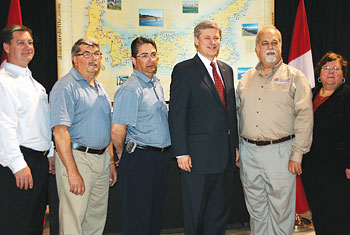
On Friday March 6, 2009, Canadian Prime Minister Stephen Harper announced a $25 million, 50-cent matching dollars investment in recreational trails across Canada as part of the federal government’s Economic Action Plan.

As proof of his government’s serious commitment to trails, Prime Minister travelled to Summerside, PEI last June to speak to all Canadian snowmobile associations at the International Snowmobile Congress (ISC).

“Investing in Canada’s national trails helps create jobs today. It also opens up new opportunities for tourism businesses and allows more Canadians to enjoy the Canadian countryside in a safe and responsible manner,” said the Prime Minister.

The portion of the federal investment available to the OFSC is $1.733 million, and with matching dollars this will mean that the OFSC will be undertaking trail projects this fall and winter totalling $3.46 million to improve snowmobiling tourism opportunities in Ontario.

The investment will be infrastructure focused to help create new jobs and boost local economies. As a result, the OFSC and its districts were very busy this past summer identifying and developing projects that fit the strict program criteria, not the least of which is that all finds must be invested by March 31, 2010.

This is more great news for OFSC snowmobilers, who will benefit from significant new improvements this winter, especially on the major projects intended to be used as templates for showcase tours that will help guide future trail development.

For the latest national info on the $25 million federal investment, click on: ntc-canada.ca.

New Classic Permit In Ontario

0

Got a sled 15 years of age or older? Classic and antique sleds can now get legal on OFSC trails in Ontario Canada with the new 2010 Classic Permit available this season at $125.

Only available through OFSC district offices, purchasing a Classic Permit requires proof sled ownership and will only be issued for the snowmobile VIN and owner name shown on the MSV registration slip.

For more info visit www.ofsc.on.ca

OFSC INSIGHT: Sharing the Rising Cost of Trails

By: Craig Nicholson

By now, most snowmobilers have accepted the user pay system. This is where each individual rider pays a small share of the total cost of providing snowmobile trails to ride.

Each small share is partly reflected in the fee for a Snowmobile Trail Permit (I say partly, because in fact, the fee does not cover the full annual cost, as you will see.) The basic idea is that since every sled entering OFSC trails contributes some damage to the trail surface, every sled should have a permit to help defray the expense of making that surface smooth again.

Of course, operating trails is much more than grooming. It’s also about simply keeping them open, available, marked, mapped and connected. From planning the trail to negotiating land use with property owners, and from building the trail to opening and operating it every winter, costs are incurred at every step.

Every time a weather event happens in any season, more costs are incurred re-clearing and re-repairing the trails. It’s a never-ending process that is a bit of a money pit, because Mother Nature is unpredictable.

OFSC snowmobilers often wonder where their permit dollars go. According to operations reports filed by OFSC clubs for 2008/09, clubs logged 102,394 hours of grooming last winter, using 339 industrial groomers with a fleet value of about $22 million.

The amount of fuel used was 1.2 million litres – a big cost that balloons even more when other expenses like insurance, maintenance, repairs, trail prep and repairs, and wages are added on.

With all operating costs factored in, including the value of volunteer contributions, the average investment to open and operate OFSC Prescribed Snowmobile Trails is $496 per kilometre, per year.

Multiply that by the OFSC’s 39,742 kilometres of trails and the annual operating tally was almost $20 million last winter alone! Plug in another $2.5 million for the OFSC, district and club costs for organizing, administering and supporting trail operations, and the 2008/09 total is closer to $22.5 million.

Even with strong 2009 permit sales, last winter’s permit revenues topped out at $17.2 million, leaving a shortfall of $5.3 million. While volunteer efforts, fundraising and sponsorships make up part of this gap, a considerable deficit still exists between actual trail-related revenues and expenses.

What’s more, this gap has not diminished during the past five years, when all operating costs have increased dramatically (as you know from your own daily living experience), while snowmobile trail permit fees have stayed the same (not even a cost of living increase to cover inflation).

To cut expenses during this time, OFSC clubs have decommissioned some trails, made their operations much more efficient, developed new ways of sharing expenses, and expanded bulk buying. But despite all this belt-tightening, at some point cuts to the bottom line alone are not enough, unless we riders are willing to accept far fewer trails to ride.

So for 2010, snowmobile trail permit fees are increasing for the first time since 2004. Yes, the timing may be unfortunate, economy-wise. But the OFSC initiated the process for permit fee approval with the Government of Ontario almost a year ago before the downturn, and the business case is based on a demonstrated long-term need, not on the economic climate of the day.

The approval process took many months to complete and the approved fee increase directly reflects the constantly rising costs associated with opening, operating and maintaining the trails you and I ride each winter.

Think of it this way: your full season permit fee just went up 20 bucks for the first time since 2004: averaged out over the past five years of no increases, that’s only $4 per season, a small additional amount to pay for the snowmobiling fun you have already had!

There’s another factor to consider. The entire operation of snowmobile clubs and trails has become significantly more complex in recent years. One result is a much greater workload for club volunteers, without a corresponding increase in the overall number of volunteers.

These committed and unpaid snowmobilers can only do so much on their own. Unless many more snowmobilers offer to lend a hand too, outside workers have to be hired or contracted to take the increased load. At some point, and that time is now, this means a permit fee increase.

So before you complain about the permit fee going up after five years of staying the same, ask yourself what you’ve done to help your local snowmobile club recently? If your answer is not much, then you shouldn’t be surprised about paying a bit more. The cost of opening, operating and maintaining snowmobile trails has to be covered by user pay – and that means each one of us chips in a little more.

Finally, remember that as not for profit organizations, the OFSC, its district and clubs are mandated to invest all permit revenues to support trail operations. There is no profit motive here. Every dollar of the fee increase will be invested to pay costs associated with making great trails available for you.

It’s all about snowmobilers helping snowmobilers: if for most of us that means contributing a few more dollars to keep on riding the best snowmobile trails in the world, then so be it. A 20-buck hike is a small price to pay for this privilege.

FROM THE PUBLISHER: A Year Later

By: Mark Lester

I’m finding it hard to believe we’re beginning our second season publishing Go Snowmobiling Magazine for the OFSC. It’s been a whirlwind twelve months assembling information for the members of the largest motorized trail organization in the world.

This past February we merged the television properties pioneered and owned by our good friend, the late John Massingberd, into our Canadian and US publishing business. Our new title is Supertrax Media and it includes pretty much all of what we are around here.

The good news for our readers is the incredibly popular Snowtrax television series, the largest viewed snowmobile enthusiast TV show in both the US and Canada, is now staffed with the people who bring you Supertrax and the OFSC Go Snowmobiling Magazine.

Snowtrax television will be jam-packed with exciting and informative features that will engage hardcore and beginner snowmobilers alike. With exposure in both print and television (TSN carries Snowtrax in Canada. Check local listings), we will do what we do best – communicate snowmobile enthusiasm in a bigger way than ever before.

To say the past winter presented us with a sizable learning curve would be completely accurate. However, I need to say this on behalf of everyone here at Supertrax Media: We’ve had a riot getting back in touch with a herd of great people involved in our favourite sport right here in Ontario.

From the staff at the OFSC to dozens of hardworking club directors to countless volunteers across the province, it’s been truly rewarding to report on the amazing progress snowmobiling has made in Ontario.

Among the most exciting stories we followed all last season is the Federal Government’s announced injection of $25 million into recreational trails across Canada. At this writing it seems Ontario is poised to receive a respectable chunk of that cash.

Clearly, the snowmobiling fraternity in Canada and, in particular the OFSC here in Ontario, have demonstrated above all other trail users it can turn government cash into jobs, economic impact and increased tax revenue.

Don’t think for a second it’s a coincidence. Snowmobiling activity, as measured by Trail Permit sales, rose substantially last season. In fact, full season permit sales have jumped from about 84,000 two seasons ago to over 90,000 last winter.

When the OFSC announced continued growth early this spring, the news spread through the sno-mo-industry like a Kenora brush fire. The industry as a whole has focused tremendous attention on Ontario as a result of continued impressive growth beginning the winter of 2007-2008. The Trail Permit sales slide ended two years ago and sales are now clearly established on a solid growth curve.

Yes, we know the cost of a permit has risen marginally this season and yes, we agree, this is a tough economic time. Here’s the deal. The cost of a Trail Permit has stayed level for over five years despite costs to maintain our trail system skyrocketing.

Truthfully, there’s never a good time to raise the price of a permit but this increase for 2009-10 is marginal and much needed to ensure the great riding you’ve been enjoying continues.

With economic optimism slowly replacing media pessimism the crew here at Go Snowmobiling Magazine is sensing potential for another impressive snowmobile season in Ontario. Even though the summer of 2009 left Ontarians with little more than dreams of hot days at the beach, look on the bright side as we go full speed toward winter.

The worse the weather is in the winter, the better the snowmobiling. Yeah, we can live with that.

2010 GRAND-PRIX DE VALCOURT

0

**BREAKING NEWS**

The 2010 Grand Prix De Valcourt will be held on February 19th – 21st, 2010. The event will be held at the Yvon Duhamel race track in Valcourt.

A committe, including the Valcourt Chamber of Commerce and the Town of Valcourt, will be in charge of the administration of the GRAND-PRIX.

Plus a committee, formed with experienced volunteer workers from the previous Grand-Prix, will be in charge of the organisation of the race and satellite events.

A number of individuals and organizations have offered both sponsorship dollars and / or interest free loans, to support the event.

More to come.

Can an MXZ Adrenaline Handle Rough Trails?

0

Question:

I’m from the Buffalo, NY area where the winters are long and cold, yet the riding season is really quite short. Most of the trails in the area are pretty rough and get beat easily.

What is my best option for the best ride on this type of trail so I don’t end up killing my back after every ride?

Every now and then I’ll get on the throttle, but for the most part I just like to cruise. I was looking at an ’08 or ’09 MXZ Adrenaline. Any ideas?

Thanks for your help.

Jeff

Reply:

Thanks for your email!

Here’s the deal – the XP Adrenaline in 2008 was a great sled except for one important issue – ride quality. First year ’08 XP’s were over-sprung and over-damped in the rear.

If you can acquire an MY 09 or current (2010), you will own one of the best riding sleds in the biz.

I would also suggest you look at a Renegade 137 Adrenaline (2009 or 2010) as the extra track length bridges moguls and delivers an even better ride – maybe the best in the biz.

Hope this helps!

Motorhead Mark

EPI Clutch Compression Tool

0

Press Release –

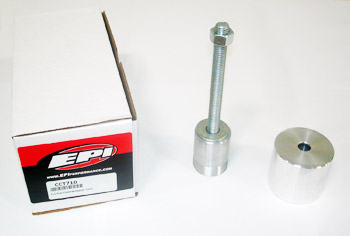
New Ski Doo QRS Driven Clutch Compression Tool from EPI

EPI, the world leader in CVT Performance Clutch Tuning now offers a tool that makes changing the driven clutch spring and helix much easier on the Ski Doo QRS clutch.

This new tool from EPI is a high quality machined aluminum piece and includes complete instructions with photos on how to use it.

Part Number: CCT710
Price: $99.95

Contact EPI at 218-829-6036 or go online at EPIperformance.com

Yamaha Announces USCC contingency

0

Press Release –

Yamaha Snowmobile Division announced today a significant contingency program for qualified racers competing in both regions of United States Cross Country (USCC) race events.

“Cross country is one of the most accessible forms of racing available,” said Yamaha Snowmobile Marketing Manager Wade West. “An average snowmobiler can come out to a cross country event and have a very good time competing on the same kinds of terrain he or she rides all season long, and do it with a minimum of setup modifications to their trail sled.”

Yamaha Snowmobile Division applauds this kind of grass roots racing. “We encourage amateur racers to develop their skills in organized events, like USCC’s Yamaha Sport 85 class and gradually move up to the semi-pro and pro ranks,” added West.

Yamaha’s contingency program for the coming 2009-2010 race season is as follows:

Pro Stock/Pro Open class*

Red Lake 500:
1st: $10,000; 2nd: $3,000; 3rd: $1,500
All other USCC/USCC East events:
1st: $3,000; 2nd: $2,000; 3rd: $1,000

Semi-Pro Stock/Semi-Pro Improved class*

Red Lake 500:
1st: $3,000; 2nd: $2,000; 3rd: $1,000
All other USCC/USCC East events:
1st: $1,500; 2nd: $1,000; 3rd: $500

*Contingency will only be paid out for 1 class per rider at each USCC event.

For details on Yamaha’s USCC/USCC East contingency program, contact Jesse Strege at 218-843-5999. For more information about USCC events, visit www.usccracing.com.

FREE RIDE PROJECT: Crossfire 800

0

By: AJ Lester

We’ve been working on a 2009 Crossfire 800 this year, magnetizing it with all kinds of aesthetic and mechanical tricks to build an ultimate free-rider.

Before Jeff Devolin from Birchpoint Cats in Bobcaygeon, Ontario touched the 800 he put it on his dyno and noted an impressive 151hp, a sizable gain over last year’s 800. While Jeff is widely known for extruding huge power numbers out of Cat motors we asked him to give our 800 a nice light massage, keeping the stock reliability while pulling out any extra horsepower he could find. Another requirement was a stock exhaust so we could be legal no matter where we rode.

To say we were blown away with the results would be an understatement. Final horsepower numbers were 163.9hp, with 109.4 foot-pounds of torque – enough juice to stand the 141″ x 1.50 track on end and propel the 800 to big digits in deep powder. When we inquired as to what Jeff had done, the answer was surprisingly short, new reeds, a new Y-Pipe and some light porting was all that was required to gain the extra 12.9 ponies.

While just shy of 13 HP might not blow you away, the crispness and usable power range was increased tremendously. The 800 mill runs happier and smoother, and with strong traction, truly pulls like a cat on a screen door. Reliability has been perfect and while we knew the tuned-up 800 would run big numbers on the lake, with the current clutch and gear setup, it’s the most trail-rideable boondocker we’ve ever put our paws on. To get your Arctic Cat tuned from mild to wild, contact Birchpoint Cats at 1-705-738-2473 or online at www.birchpointmarina.com.

Stock shocks are getting better and better but it’s no surprise aftermarket or factory modded suspension is more sophisticated and refined than what the manufacturers use. The Fox Float 2 Evol Rs we added to our Crossfire are as close to perfect as air shocks get.

While they don’t have a big piggyback up top, they do have a smaller Evol chamber down at the bottom that allows thumb adjustable rebound control. While all Floats have a pump adjustable air valve, the Evol R’s don’t need it to give riders quick adjustments.

The difference between the stock Floats on our Sno-pro to the Evol’s was one of the most noticeable suspension changes we’ve ever made. We call these shocks Float 2s because they have more technology inside than standard Floats. This includes a similar return spring used on all Yamaha Float shocks and eliminates shock shaft sticktion and sag when pounding hard through a long, progressive corner.

While the Float 2s with the Evol chamber dramatically improve ride quality, handling and the ability to quickly adjust to terrain, they also make great eye candy and grab attention from onlookers asking what the Evol chamber is all about.

In stock trim the Crossfire Sno-Pro offers a perfect-length 141-inch track, a 1.50-inch lug and a very handy, adjustable bar riser. The riser allows you to trail ride the sled to any free-ride area you want to session, jack the bars, then ride back again comfortably.

The deep-lug track on this sled was a dream to throw around in deep powder and really benefited from the extra ponies Birchpoint found. The 1.5 lug was deep enough to take you anywhere you needed to go in the powdery stuff and short enough to not feed back negative input on the trails.

The super-light 141-inch, air shock equipped skid helped huge in the flotation department allowing the 1.50 lug to do its work. On the downside, a 141-inch track sled does drive harder into corners but resists turning as quickly as 121-incher does.

The rear suspension consists of a conventional Fox on the front arm and a Fox Float on the rear with no torsion springs. This is the same as Arctic’s mountain sleds and saves big weight. I wasn’t sure how the rear would work, but soon found I was loving the buttery smooth ride. Whether dropping 20-footers or riding through trail whoops, this skid worked great, and offered the best of both worlds.

The front suspension was where we experienced the biggest change. The Evol Rs were ready for anything we could throw at them and performed beautifully on and off trail. They were plush enough to soak up stutter bumps at high speeds yet firm enough to handle big hits thanks to their trick inner return spring and Evol chamber. With these shocks, the CF wouldn’t nose over in high speed corners or when maneuvering through technical off-camber hills in the backcountry.

At the end of the day, a stock Crossfire Sno-Pro is a great crossover free-ride-able sled. With a little work and a relatively small budget you can really alter the DNA of your Crossfire and morph it into something that’ll not only make your buddies envious but change the way you look at a traditional crossover snowmobile.

NO BULL BUYER’S GUIDE OUT NOW!

0

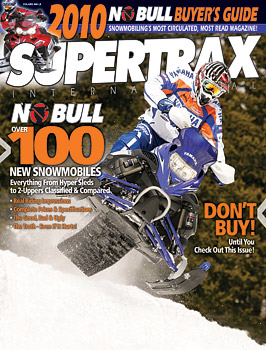
The 2010 No Bull Buyer’s Guide is landing in mailboxes and on newsstands now!

This issue features over 100 new sleds for 2010. Everything from Hyper sleds to 2-uppers all classified and compared. Find real riding impressions from the pros, plus complete prices and specifications.

We tell the truth even if it hurts. Don’t buy new until you check out this issue!