Home Blog Page 119

NEW BLACK CATS RUNNING BOARDS FROM ARCTIC CAT

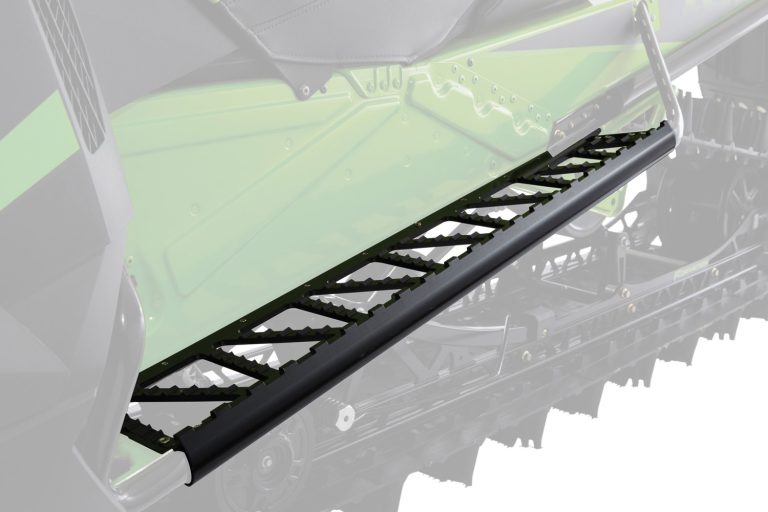
St. Cloud, Minn. (July 18, 2018) – Stand and deliver the ultimate backcountry ride with the new Black Cat Running Boards from Arctic Cat. They’re constructed from rugged 6061 extruded aluminum for maximum strength, and feature large cutouts to minimize snow accumulation. Aggressive edge grips deliver excellent boot traction while side-hilling. They weigh 6.5 pounds for the pair. Available in Black, Silver, Medium Green and Purple for most 2012-newer Arctic Cat models in 141-inch or longer tracks. The MSRP is $391.95 U.S./$529.95 Canada.

These and other new Arcticwear items are available now at most Arctic Cat dealerships and through the Arctic Cat online store at www.store.arcticcat.com.

NEW BLACK CATS REAR BUMPER FROM ARCTIC CAT

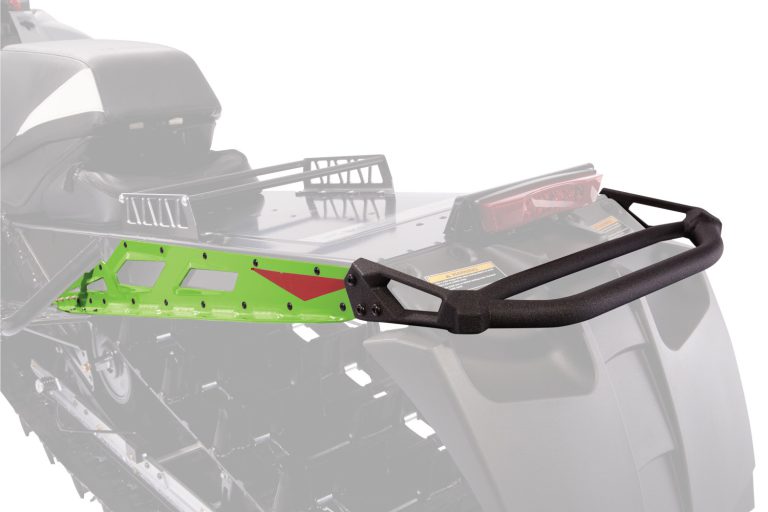
St. Cloud, Minn. (July 18, 2018) – Add custom style and easy-grabbing ergonomics with the new Black Cat Rear Bumper from Arctic Cat. It features flush-mount, powder-coated aluminum side plates integrated with a tubular handle that’s easy to grab. Works with stock or Black Cats running boards on most 2012-newer Arctic Cat snowmobiles with 153-inch or longer tracks, as well as select 141-inch models. Weight is 4.5 pounds for 153-inch models and 5.2 pounds for 162-inch models. Available in Black, Medium Green, Gray, Orange and Purple. The MSRP starts at $205.95 U.S./$278.95 Canada depending on model.

This and other new Arcticwear items are available now at most Arctic Cat dealerships and through the Arctic Cat online store at www.store.arcticcat.com.

NEW ARCTIC CAT MODULAR HELMET WITH ELECTRIC SHIELD

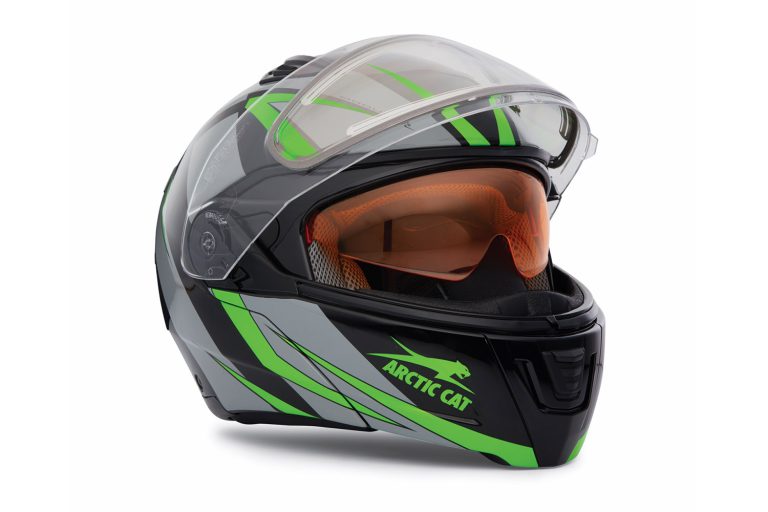
St. Cloud, Minn. (July 18, 2018) – Enjoy warm, quiet head protection and fog-free viewing with the new Arctic Cat Modular with Electric Shield. It’s constructed with a thermoplastic injection-molded shell and features a secure flip-up chinbar that’s easily operated by a front-center lock tab. The dual-lens electric shield comes with a coil and power cord for plug-and-ride convenience fog-zapping performance. Riders can easily customize the interior airflow with adjustable chin vents and removable breath deflector and chin curtain, while the integrated retractable orange sun shield provides optional versatility and eye protection. Meets DOT standards. It’s available in Green, Black, Purple, Orange and Solid Black in XS – 2XL sizes.

The MSRP is $247.95 U.S./$335.95 Canada.

These and other new Arcticwear items are available now at most Arctic Cat dealerships and through the Arctic Cat online store at www.store.arcticcat.com.

TUCKER HIBBERT RETIRES FROM PROFESSIONAL SNOCROSS RACING

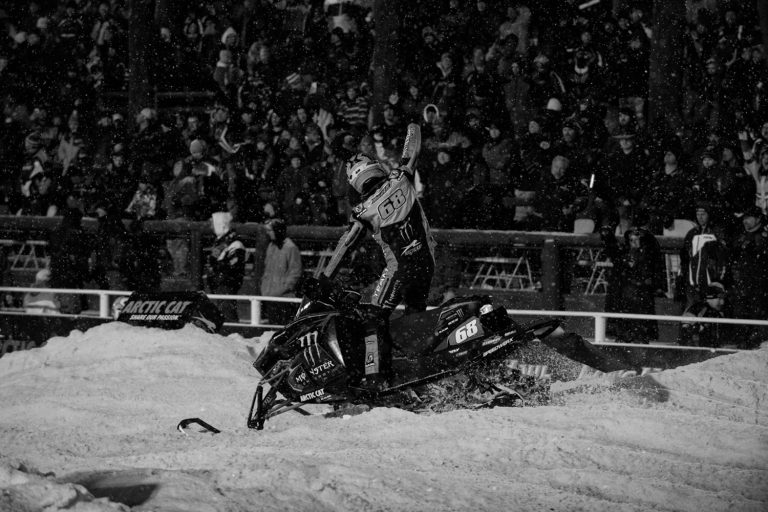
May 16, 2018 – After 25 years of chasing checkered flags in snowmobile competition, Tucker Hibbert today announced that he’s reached the finish line of his remarkable racing career. The 33-year-old from Pelican Rapids, Minnesota, is now officially retired as a professional snocross racer.

“It’s time for me to retire from professional snocross racing,” Hibbert said. “It’s been a great career and now is the right time to move on. I’m healthy and happy. I’ve accomplished my goals, which were to do my best and enjoy the process of working hard with the people around me. We just finished a great season where I felt as good as I ever have and won my 11th Championship.”

Reflecting on his career, he added, “I’ve dedicated a huge part of my life to racing snowmobiles. I’m thankful for the lessons and experiences that racing provided me over the years. It’s been an incredible ride.”

Hibbert leaves the sport as the most decorated racer in snocross history. He began racing snowmobiles as an amateur at age 8, won his first X Games gold medal at 15 and turned professional at age 16. In his 18 years as a professional snocross racer, Hibbert won 138 of the 235 Pro National events he entered in addition to 11 Pro Championship titles, 10 X Games gold medals and two World Championship titles.

Hibbert’s storied career is a testament to the talent, determination and hard work of his own as well as those who were integral to Team 68 over the years.

“Working hard, as a team, has been the most rewarding part of racing,” Hibbert said. “There are so many amazing people who have played a role in my career. I’ve been fortunate to work with some extremely talented, dedicated and all-around good people. I’ll cherish the memories we’ve all made together for the rest of my life.”

The team’s success was also the result of the support given by key sponsors. “I’m proud of the relationships we’ve built with the brands that have supported me,” he said. “Many of them were career long sponsors and that’s something I’m really thankful for.”

Hibbert also credits his fans, saying: “I’m blessed to have met a lot of great people through racing. Their energy and excitement helped push me to do my best. I truly thank all of them for their passion and support.”

Hibbert’s retirement from professional snocross is effective immediately. He is currently working on event opportunities at which he can personally thank his fans, sponsors and the snowmobile racing community for their contribution to his career.

Full REVIEW: 2018 Polaris 600 RUSH XCR

0

In our closing Test Ride of the season, AJ squeezes the fun flipper as he reviews the spirited performance of the 2018 Polaris 600 RUSH XCR.

Subscribe to our YouTube Channel!

2018 Revolutionary Advanced Design Award

0

The SnowTrax tradition of recognizing technological innovations in the snowmobile universe continues as we hand out the Revolutionary Advanced Design Award. The R.A.D. Award recognizes the hard-work and innovation a given manufacturer brings to the market which advances the technology footprint of the snowmobile industry.

Subscribe to our YouTube Channel!

2018 Real World Sled of the Year

0

The final snowmobile showdown of the 2018 Season commences as Luke and Mark host this year’s coveted Real World Sled of the Year evaluation. After tens of thousands of accumulated miles across a full spectrum of test riders, they breakdown the top contenders from Arctic Cat, Polaris, Ski-Doo and Yamaha. Make sure you tune in to find out which sled scored the highest and provided the SnowTrax team with the best overall rider experience.

Subscribe to our YouTube Channel!

SLED OF THE YEAR AND RAD AWARDS SELECTED!

Supertrax Media, producers of SnowTrax Television, North America’s most watched, longest running, snowmobile television series, is pleased to announce the winners of the show’s annual Real World Sled of the Year and Revolutionary Advanced Design awards for Model Year 2018.

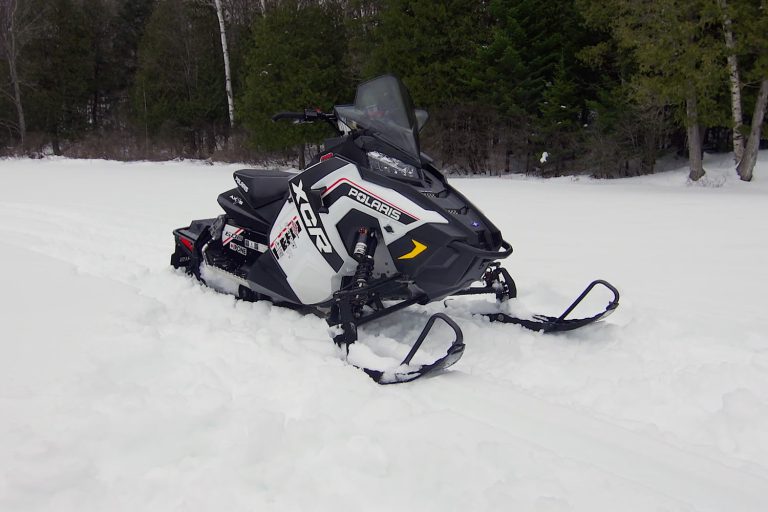
REAL WORLD SLED OF THE YEAR AWARD: Polaris Switchback XCR 800 HO

The battle for the annual SnowTrax Real World Sled of the Year laurels continues to intensify with the last two seasons witnessing almost dead-even heats between the two finalists.

Once again it was the hardcore staff at Supertrax Media and SnowTrax Television scoring the sleds across 18 categories of evaluation for the snowmobile industry’s ultimate award.

The nominees were impressive: The Yamaha Viper LTX 137, Arctic Cat’s ZR 8000 137, the Polaris 800 XCR Switchback 800 HO and the G4 Ski-Doo Renegade 850 XRS.

Interestingly, this year’s nominees were all, without exception, 137-inch models, indicating just how quickly the industry is moving to longer track lengths in top performance sleds.

Voting was exceptionally tight, requiring staff voters to spend extra time weighing the strengths and weaknesses of each of the nominees.

When push came to shove it was the Polaris XCR Switchback 800 HO carding the winning votes sending it to the top of the Supertrax Media podium for the 2018 Real World Sled of the Year Award.

It cannot go unsaid this year’s result was again as close as we have seen with the Ski-Doo G4 Renegade 850 XRS literally neck and neck in the voting with the Polaris Switchback XCR.

In the end, the XCR prevailed largely due to its inimitable handling prowess and high-speed ditch-banging demeanor.

The XCR is marketed as a hardcore sled for discerning riders and this cannot be overstated: The XCR rules terrain with its sophisticated, fully adjustable Walker Evans shocks and the continued supremacy of the AXYS platform’s variable castor, double A-arm IFS.

While the G4 is unquestionably the technological leader in the industry, the inherent goodness of a design delivering legendary handling performance at the limit, prevailed.

Polaris’ Pro XC external shock rear suspension received solid praise from the test team for it’s excellent control in deep bumps and square edged hits.

While the G4’s rMotion skidframe takes plush to new levels, the Polaris Pro XC delivers amazing control and stability when the sled is pushed to its limits.

Brake performance was also universally praised by the Supertrax Media staff. The Polaris jackshaft-mounted caliper and Hayes master cylinder provided what some testers called the best feel and depth of modulation among all OEM braking systems.

Congratulations to Polaris for winning the Real World Sled of the Year competition in model year 2018.

REVOLUTIONARY ADVANCED DESIGN AWARD: Ski-Doo SHOT Starter System

Ski-Doo set the snowmobile industry on end when it pulled the sheets off the SHOT starter system. The SHOT system uses the 850 and 600R’s stators as an electric starter motor powered by an ultra-lightweight capacitor.

The capacitor will hold a sufficient one hour charge to restart the engines. The beauty of the SHOT system is its inherent lightness. Tipping the scales at barely 11 pounds, it beats current electric start systems by more than 20 pounds.

So far, the SHOT system has only been used on Ski-Doo’s Summit line-up. Mountain riders are the most weight-influenced snowmobilers in the sport and they are also the most prolific re-starters of their sleds, often in awkward, off-kilter positions.

SHOT means after using recoil start at the beginning of their ride-day owners can use the push-button SHOT the rest of the day without the weight penalty of a conventional electric start system.

The SHOT capacitor is recharged in as little as 90 seconds and ready for another “shot” after each use.

There’s only one thing left to say about SHOT: In the future will the capacitor be increased to supply power at any time replacing batteries and starter motors on both mountain sleds and trail snowmobiles? Only Ski-Doo knows the answer to this question. However, Ski-Doo engineering continues to push the boundaries of snowmobile technology to new and ever-higher heights.

Congratulations to Ski-Doo for winning Supertrax Media’s RAD (Revolutionary Advanced Design) award for 2018.

For more information contact (705) 286-2135

THE NEXT BIG THING IN SUSPENSION

0

Seems there’s almost always something lurking on the horizon that’s supposed to be the next big thing.

Sometimes the “thing” actually makes it to our sport but turns out to be not-so-big. Think about Electronic Power Steering.

I believe we’re on the cusp of a “thing” which will turn out to be “big”. My rationale goes like this. Most of the pieces of the next big thing are openly displayed and available on 2019 sleds from both Arctic Cat and Yamaha.

They only lack a few more pieces to become paradigm shifting. Furthermore, off-road SxS OEM, Polaris, has the next big thing done and available on certain 2019 RZRs.

WHAT IS IT?

Active suspension. Polaris raised more than a few eyebrows when it introduced the RZR Turbo Dynamix a few months ago. Dynamix is Polaris-speak for “active” suspension.

Active suspension means your sled’s shocks will be in a state of continual damping adjustment as sensors read and process the shocks movements.

The sled’s ECU will process data from the sensors and make millions of split second adjustments to the shocks to better respond to the terrain you’re covering.

The new iACT system on Yamaha Sidewinders and many Arctic Cat models already use similar shocks suitable for fully active control, complete with stepper motors on the reservoirs, controlled by the rider.

To be “active” these shocks only need speed sensors and a chassis-mounted yaw sensor to feed inputs into the sled’s expanded ECU. This hardware is available right now and Fox is the predominant supplier of this technology for off-road vehicles. I’ll go out on a limb and assume they’ll have the full system available soon for snowmobiles.

WHY IS IT IMPORTANT?

Whiz-bang tech can be good or it can be a gimmick. In the case of the RZR with Dynamix active suspension, it’s the real deal.

Luke had the privilege of wringing out one of the first RZRs with Dynamix and came away thoroughly impressed. He felt the ability to attack crazy terrain at speed was almost limitless.

The shocks reacted to speed and yaw inputs so quickly the RZR actually felt as if it was floating over jinormous bumps and jumps. Dynamix also responds to turning G-forces and body roll, keeping the RZR laser level in turns.

When it comes to rough terrain, snowmobiles appear to be a great place to apply this active suspension technology. For the record, we suspect the OEMs agree with this assertion because it is no coincidence we’re seeing oh-so-close to active suspension on these 2019 models.

Snowmobiles cover incredibly rough terrain at speed and the implementation of iACT on some 2019s from Cat and Yamaha proves the point: When your suspension can be adjusted on the fly you can ride faster and in more comfort.

Take this rationale to the next level – having the suspension automatically adjust – and ride quality over just about any kind of surface will improve exponentially.

WHO’LL HAVE IT FIRST?

An informed guess would be both Arctic Cat and Yamaha, however, Polaris has the complete Dynamix system de-bugged and ready-to-go on SxS vehicles today.

We think Polaris could actually beat Cat and Yamaha to the draw because of their experience with the Dynamix system. On a related note, we have to wonder if the call has gone out from Valcourt to KYB in Japan commisioning development of an active system for Ski-Doo.

ENDURO SUSPENSION CONFUSION

0

Dear Motorhead:

I’d like some help understanding my Ski-Doo Enduro’s rear suspension. I weigh 220-lbs before gear and can’t seem to find a comfortable setting.

I am currently running the ski springs at 2, Center shock in position 2, torsion spring cam block at 3, transfer block in position 1 or 2, limiter strap tightened up one hole, air suspension set at 1 or 2.

My complaint is that I still need to stand up to absorb big dips in the trail when running at 50 to 60 mph, or else I bottom out. I also find my self having to hold my self off the seat to prevent being bucked off.

I really do not feel the suspension working in a compliant manner. If I go softer setting on the rear torsion spring, like position 1, my mud flap is almost touching the ground. The air spring seems to control rear ride height, should I set rear sag with sled running and air suspension set at 1 or 2 or should I be setting the rear sag with the sled off, this will greatly increase the amount of sag because the air spring won’t be assisting to hold the sled or the rider up.

Just an FYI the rear shock has a sport and performance hole position. It is set in the stock position, performance.

My goal is to find a plush ride. I do like to ride fast, and occasionally aggressive when the trails get whooped up. I have played with the suspension for hundreds of miles and can’t seem to dial in the comfort of the rear skid.

One Ski-Doo sales guy recommended stiffer rear torsion springs, but I know I don’t want a stiffer ride. I rode a friend’s Polaris Switchback Rush yesterday and I could actually feel the rear suspension working in a compliant manner. It was almost like slow motion, I could feel it comfortably compress and gently rebound the sled back.

I was actually forcing my self to stay seated and feel the comfort instead of standing up or squatting on my sled to let the sled do its thing before sitting back down to prevent bottoming out or getting bucked up after full compression.

On my sled I did suck in the limiter strap one hole for two reasons, better cornering but more importantly to make sure the skid was contacting the ground at the front and rear at the same time.

I read online that if the front or the rear of the skid is not parallel to the ground as you lower from a raised off the ground position then your suspension won’t be working at its full potential.

Sometimes I feel that the seat is too soft and Im actually bouncing on the seat foam. Any thoughts? Also, what is the proper way to set the sag with an air suspension if it too contributes to ride height?

Thanks for your help,

Michael

Michael!

Whew! You are in the classic position of over-adjusting your rear suspension. The fact you tweaked the limiter was just one clue you are in way over your head.

Whoever told you about the angle of the rail thing requires a limiter adjustment was just plain wrong. You have the very best snowmobile rear suspension under your butt and you are not abnormally heavy. So here’s my recommendation. Limiter strap adjustments are mysterious and have far reaching implications all the way down the rail – put it back to stock!

Put everything except the air suspension back to dead stock – including the front IFS shock preload settings the centre shock and the coupler block.

Think about what you did when you dialled in more snail cam preload on the front IFS and then pulled the limiter up! You did two contradictory things at once.

When you get everything back to stock take the sled for a spin – (probably next winter now!) Adjust nothing – zip, nada except the air spring until you get the ride you want in the terrain you ride most.

Setting one or two is not going to be enough air for your weight – you’re going to be at three or four for sure. Completely forget about static ride height – this is an air suspension which only uses the torsion springs minimally – get them back to stock as well!

The whole idea of the air suspension on the Enduro is max on-the-fly adjustability – not fiddle until you’re confused sno-X racer set-up.
If you want a sled you can mess around with suspension settings you would be much better off with an MX-ZX or XRS.

The Enduro’s air ride is the among the very best suspensions we’ve ever ridden – for general trail duty. If you’re trying to ditch bang and clear doubles it’s not the right suspension for that behaviour.

My advice for most suspension tweaks is to use oil (shock damping)- not steel (springs) to control your rear suspension. In the case of the air ride suspension on the r-Motion I would say use air – and nothing else.

Hope this helps!

Motorhead Mark