Home Blog Page 333

Ekre Wins Pro Open at Grafton 100 Cross-Country

Press Release –

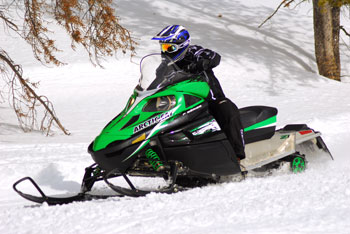
Team Arctic Wins Eight Classes at USCC event

Two races into the 2008-09 United States Cross-Country (USCC) season, Team Arctic’s D.J. Ekre has made it perfectly clear he’s the guy to beat in the Pro Open class, this time winning at the Grafton Equipment 100 in Grafton, ND. But his teammate Brian Dick has also made it clear that it’s going to be a battle, finishing less than one second behind in a dramatic two-lap battle.

Dan Ebert of Lake Shore, Minn., finished a close fourth with Ryan Simons (Camrose, Alberta) in fifth, making it one of several Cat-dominated podiums during another stellar race that saw Team Arctic racers win eight classes and fill most of the podium positions.

The dominating performance in Pro Open set the stage for what looked like a repeat performance in the premier Pro 600 final. And for five of the six laps it played out as predicted, with Team Arctic’s Ryan Simons leading (based on time) while swapping fastest-lap honors with Ebert.

Heading into the sixth and final lap, Simons enjoyed an 11-second lead, but a deteriorating drive belt began to unravel, forcing Simons to reduce his speed in fast sections, which ultimately cost him the win, just five seconds out of first.

“I could tell that a cord was unwinding, so I babied it in as best I could,” said an understandably-dejected Simons. “Second place is better than blowing the belt completely and finishing back in the pack, so I’m satisfied with my decision.”

Ekre (Shevlin, Minn.) and Ebert finished fourth and fifth respectively, less than two minutes off the winning time.

In the other classes, Team Arctic racers delivered solid performances aboard their Sno Pro 600 race sleds. Jolene Bute of Alden, Minn., returned to her winning ways in Pro Women.

For the second time in as many races, Spencer Fett of Frazee, Minn., nailed a strong second place in Semi Pro ranks, this time in the Improved class.

Adam Brandt edged out Erik Bute for top honors in the Amateur Improved class, with Mark Arneson and Stuart Brandt taking fourth and fifth, producing for a very green podium. Brandt, of Moorhead, Minn., did it again in the Amateur 600 class, this time ahead of Team Arctic’s Cody Matthews and Bute again for a class sweep.

Cole Lian and Adam Mach battled hard in the Juniors 10-13 class, with Lian (Thief River Falls, Minn.) taking the win by just eight seconds. Cole Davidson finished in third, making it yet another Team Arctic sweep. In the Junior 14-17 class, Stuart Brandt (Moorhead, Minn.) took the win by just one-hundredth of a second. And Garet Grzadzielewski won both 120 Class events.

“Winning eight classes, including the Pro Open, made Grafton another great event for our racers and teams,” said Team Arctic Race Manager, Mike Kloety. “The Sno Pro 600 continues to prove it’s one of our World’s Fastest Snowmobiles, as well as the most capable in the gnarly rough and bumps that define USCC terrain racing.

“Our racers, teams and sleds are poised to perform extremely well at the Red Lake I-500, the next race on the USCC schedule held Jan. 16-18 in Thief River Falls. Right now mechanical talents like Corey Berberich, Brian “Hector” Olson, Steve Houle of Speedwerx, Brian Dick and Russ Ebert are working extra-hard to make sure all riders have the best set-ups for the I-500, and I know we’ll be ready.”

About Arctic Cat – Arctic Cat Inc., based in Thief River Falls, Minn., designs, engineers, manufactures and markets all-terrain vehicles (ATVs) and snowmobiles under the Arctic Cat® brand name, as well as related parts, garments and accessories. Its common stock is traded on the Nasdaq National Market under the ticker symbol “ACAT.” More information about Arctic Cat and its products is available on the Internet at www.arcticcat.com

AND THE WINNER IS…

Press Release –

On Dec. 18th, 2008, the winning ticket for the “Let’s Go Snowmobiling Package” of two Yamaha Four Stroke snowmobiles and a two place enclosed Triton trailer (total package valued at $19,600) was drawn at 7:00pm at 141 Main Street, Morrisburg, ON.

The lucky winner was Mr. Adam Thompson of Chesterville, Ontario, ticket # 10324. Mr. Thompson purchased his ticket from the Mountain Trail Blazer Snowmobile Club and was flabbergasted to find out that he was that lucky winner.

Adam said, “I have never won anything in my life.” and stated he is keeping his prizes and will be sledding this season on many of the groomed trails in Eastern Ontario.

Adam and his family have always been eager to discover the great trails, breathtaking scenery, serenity and camaraderie that exist in the sport of snowmobiling.

Adam was not the only winner coming out of this event. The participating snowmobile clubs from District 1 shared the $27,200 profit that will be put to use in trail maintenance and safety programs, thus providing a better and safer product for snowmobilers in communities all over Eastern Ontario.

The District One Board of Directors would like to thank all who purchased tickets, all volunteers who sold tickets along with Yamaha Canada and Triton Trailers for their support. Once again congratulations Adam Thompson of Chesterville! Lottery License #M594302

DISTRICT 1 ‘HOGS’ MEDIA ATTENTION

Press Release –

In the never ending attempt to attract new riders and tourists, District 1 again breaks new ground as the season charges ahead with a new concept in wildlife viewing on the trails.

Based on the safari park concept, animals have been strategically released along the trail system to allow trail riders rare photo opportunities. Long horned Scottish Highland cattle are now roaming the central part of the district near Kemptville along A104.

Many sightings have already been made and snowmobilers have been stampeding into the area to catch a glimpse of the shaggy beasts. Although they have been hard on the field pickets and they do pose a rather imposing obstacle on the trail, John Boals, District Manager, has been working diligently with the Risk Management Committee to come up with proper insurance and signage to accommodate these beasts.

John states that he has many good ideas around marketing using these animals as mobile billboards. Sales have been brisk as businesses are lining up to have their logo branded on to the cattle in order to beef up their image with the snowmobiling community.

Phase 2 of the safari park project has involved the release of a large number of wild boars from the Embrun area. Although smaller and quicker than the Highland Cattle, they still provide the sledders with numerous photo opportunities and the twist with these porkers is the male’s bad temper which makes for some interesting sled encounters.

While most of the time these animals prefer to be left alone, occasionally a bad tempered boar will give chase to passing sleds which generates quite a bit of excitement and lasting memories for the pursued.

Have your camera ready because you never know when one of these boars will ham it up for your photographic pleasure. Reports indicate that the boars are avid travelers with sightings as far afield as Cornwall and Spencerville.

But be careful on the trail because you never know when one will dart out in front of you causing you to ‘Ride a Hog’ and we aren’t talking Harley. Donations of roadkill are being gratefully accepted for the Kemptville Club BBQ and many other clubs events.

In closing, District 1 invites all animal lovers to come and see for yourself. If you are tired of the same old porcupine, raccoon, squirrel, chipmunk, deer, moose, wild turkey, fox, wolf, and rabbit sightings, come to District 1, the alternative to Yellowstone National Park for wildlife viewing.

In the immortal words of Porky the Pig, ‘A-BID-EE A-BID-EE that’s all folks!

Take a look at these chilling statistics

The Indianapolis Star

Winter officially arrived with Sunday’s solstice. But for many Americans, autumn 2008’s final days already feel like deepest, coldest January.

New Englanders still lack electricity after a Dec. 11 ice storm snapped power lines. Up to 8 inches of snow struck New Orleans and southern Louisiana that day and didn’t melt for 48 hours in some neighborhoods.

In Southern California last Wednesday, a half-inch of snow brightened Malibu’s hills while a half-foot barricaded highways and marooned commuters in desert towns east of Los Angeles. Three inches of the white stuff shuttered Las Vegas’ McCarren Airport that day and dusted the Strip’s hotels and casinos.

What are the odds of that?

Actually, the odds are rising that snow, ice and cold will grow increasingly common. As serious scientists repeatedly explain, global cooling is here. It is chilling temperatures and so-called “global warming.”

According to the National Climatic Data Center, 2008 will be America’s coldest year since 1997, thanks to La Niña and precipitation in the central and eastern states. Solar quietude also may underlie global cooling. This year’s sunspots and solar radiation approach the minimum in the sun’s cycle, corresponding with lower Earth temperatures. This echoes Harvard-Smithsonian astrophysicist Sallie Baliunas’ belief that solar variability, much more than CO2, sways global temperatures.

Meanwhile, the National Weather Service reports that last summer was Anchorage’s third coldest on record. “Not since 1980 has there been a summer less reflective of global warming,” Craig Medred wrote in the Anchorage Daily News. Consequently, Alaska’s glaciers are thickening in the middle.

Across the equator, Brazil endured an especially cold September. Snow graced its southern provinces that month.

“Global warming is over, and global warming theory has failed. There is no evidence that CO2 drives world temperatures or any consequent climate change,” Imperial College London astrophysicist and long-range forecaster Piers Corbyn wrote British Members of Parliament on Oct. 28. “According to official data in every year since 1998, world temperatures have been colder than that year, yet CO2 has been rising rapidly.” That evening, as the House of Commons debated legislation on so-called “global-warming,” October snow fell in London for the first time since 1922.

These observations parallel those of five German researchers led by Professor Noel Keenlyside of the Leibniz Institute of Marine Sciences. “Our results suggest that global surface temperature may not increase over the next decade,” they concluded in last May’s “Nature,” “as natural climate variations in the North Atlantic and tropical Pacific temporarily offset the projected anthropogenic (man-made) warming.” This “lull” should doom the 0.54 degree Fahrenheit average global temperature rise predicted by the U.N.’s Intergovernmental Panel on Climate Change, the Vatican of so-called “global warming.” Incidentally, the IPCC’s computer models factor in neither El Niño nor the Gulf Stream. Excluding such major climate variables would be like ESPN ignoring baseball and basketball.

So, is this all just propaganda concocted by Chevron-funded, right-wing, flat-Earthers? Ask Martin Hertzberg, a physical chemist and retired Navy meteorologist.

“As a scientist and lifelong liberal Democrat, I find the constant regurgitation of the anecdotal, fear-mongering clap-trap about human-caused global warming to be a disservice to science,” Hertzberg wrote in Sept. 26’s USA Today.

As global cooling becomes more widely recognized, Americans from Maine to Malibu should feel comfortable dreaming of a white Christmas.

January Is Environment Month in Ontario

Press Release –

Across Ontario, snowmobilers have been doing their part to keep nature beautiful for more than 40 years.

This January, the Ontario Federation of Snowmobile Clubs (OFSC) celebrates these achievements during Provincial Snowmobiling Environment Month and reminds snowmobilers: to stay on OFSC trails; to leave tracks not trash; to avoid noisy after market mufflers; and to maintain sleds at peak operating efficiency.

Environment month celebrates snowmobiling’s evolution to cleaner and more advanced technology. Today’s snowmobiles run more efficiently, effectively and quieter than ever before, with 98% fewer hydrocarbons and 94% less sound than older sleds.

Significantly reduced emissions, virtual elimination of smoke and smell, and much greater fuel efficiency herald a good news story for the future of snowmobiling. Overall, snowmobiles account for only a small fraction of all the motor fuel burned annually in Ontario.

Provincial Snowmobiling Environment Month also highlights that the presence of OFSC snowmobiling is contained, minimal and seasonal. While Ontario’s total land area is just over 900,000 square kilometres, the surface footprint of all OFSC snowmobile trails is approximately 122 square kilometres, about the same as one good-sized town.

By choosing to ride on clearly defined and organized trails that take up less than .0025% of our overall landmass, OFSC snowmobilers substantially reduce interaction with wildlife and plants. In addition, trail riding occurs with a blanket of snow protecting the earth, thereby further mitigating any impact. After the snow melts, nature flourishes again from spring to fall on OFSC trails.

Provincial Snowmobiling Environment Month is also a celebration of many OFSC stewardship accomplishments. Each OFSC snowmobiler contributes one dollar from the fee for a Snowmobile Trail Permit to the OFSC Environment Fund.

The OFSC has invested more than $1.35 million from this fund to underwrite worthy environment projects such as fuel containment systems, erosion control, and reseeding and replanting.

Recent Environment Fund initiatives also include sponsoring a University of Waterloo engineering team for the Society of Automotive Engineers (SAE) Clean Snowmobile Challenge.

This annual international competition helps create new technology to further reduce exhaust emissions and sound.

Meanwhile, the OFSC is also partnering with the internationally recognized School of Environmental and Natural Resource Sciences (SENRS) at Fleming College (Peterborough, Lindsay, Cobourg & Haliburton) to work strategically in advancing environmental and natural resources stewardship programs and initiatives.

The OFSC is committed to proactive leadership and support for snowmobiling and snowmobile trails, to conserve, protect and appreciate the environment in a responsible, long-term sustainable way, which enhances the health, enjoyment and prosperity of Ontarians, by working with stakeholders in many ways, including effective planning, education, programs and environmental projects.

Best Athletes in the World Set to be at Canterbury

Press Release –

Round 3 of the AMSOIL Championship Snocross Series Set for Canterbury Park January 9-11; Top X-Games Snocross Racers and Freestyle Athletes to Compete

The top professional snocross racers on the planet, as well as the leading freestyle athletes anywhere will invade Canterbury Park in Shakopee, Minnesota for Round 3 of the AMSOIL Championship Snocross Series.

More than 15,000 fans are expected to witness the world’s best snowmobile riders compete side-by-side for more than $250,000 on a racetrack littered with huge jumps and insane terrain. Racers will fly more than 80-feet in excess of two-stories high as they negotiate a course laid out in front of the heated Canterbury Park venue.

Winter X Games Champions including Minnesota’s own Tucker Hibbert and Levi LaVallee as well as freestyle king Chris Burandt will be there, giving area fans one of the few opportunities of the year to see these incredible riders in person.

The weekend heats up fast Friday night at 7:00pm with a FREE Monster Energy Slednecks Invasion Tour freestyle showcase. The top freestyle athletes in the world including Chris Burandt and Paul Thacker will perform some of the most insane tricks ever seen on a snowmobile including a back-flip!

Riders will launch their snowmobiles from two freestyle ramps to a backdrop of infused rock and free swag for the fans. Joining them will be the biggest names in snocross racing for an evening of hospitality, autographs and family fun.

Competitive juices flow early Saturday morning with support class racing, culminating with the Main Event from 4:00pm to 7:30pm. This all-out showcase of the top Pro and Semi-Pro riders anywhere will be bar to bar non-stop action, with Pro and Semi-Pro finals running back to back.

During the action, the heated Canterbury Park facility will host displays from leading snowmobile manufacturers and aftermarket suppliers along with food and beverages. There’s also free snowmobile demo rides or the kids with a chance for one lucky participant to win a new Arctic Cat kids snowmobile.

Capping off the weekend will be Sunday support class racing, with local racers competing on a national track. Racing gets underway at 9:00am both Saturday and Sunday, but race fans will want to be sure they are in the stands 4:00pm Saturday for the Main Event.

Advance weekend passes are just $30 with kids 12 and under FREE! Visits www.isocracing.com for more information and tickets.

Arctic Cat Weight Correction in Supertrax

0

Seems Supertrax messed up the claimed manufacturer’s weights for the Crossfire 800 and 1000 in our 4-stroke comparison article last issue.

In our Crossover Power & Weight Data Chart on page 36 we indicated the dry weights were 545 and 534 lbs respectively for the CF1000 and CF800 with 141-inch tracks.

According to info sent to us by Arctic Cat this week, both sleds are considerable lighter.

The standard issue Crossfire 800 141-incher weighs in at a claimed 471 lbs and the 1000 at 497, dry.

The Sno-Pro versions of both these sleds are even lighter.

The same adjustment goes for the Crossover Footprints Chart on the same page. The footprint for both these sleds will be much lighter than we published for comparison sake in the article.

The Cat 800’s footprint is down from .631 pounds per square inch to .556 and the 1000 comes in at .587 lbs/sq-in.

These are considerable weight changes and make a difference when comparing these two Crossfires to 2-stroke Crossover sleds like the Ski-Doo Renegade 800R and the Polaris 800 Switchback.

Fortunately, the article was about 4-strokes and not a direct comparo of these 2-stroke sleds.

Something Very New From Yamaha

0

Here’s the deal. We’re sworn to secrecy… sort of. Actually, we can tell you we rode a completely new Yamaha over the Christmas break but as of this writing we cannot publish any pictures or disclose technical details… yeah right, if we had any.

The reason: We didn’t really see it – even though we rode it and the staff present for our 140 mile tour patently refused to answer any specific questions about it, beyond verifying it was painted red.

Of course those who follow Yamaha’s product carefully will no doubt be able to fill in some blanks, just as we did.

While we came away impressed and have pretty solid hunches we know what’s going on here, nothing is etched in stone because the Yamaha brain-trust will simply deny this ever happened.
Our impressions are pretty significant after a minus 15C all-day pull to Whitney, Ontario on some of the sweetest, freshly groomed, table-top smooth trails we’ve seen in years.

The sled steers easier and offers more intuitive feedback through the handlebars than any snowmobile, particularly any Yamaha, we’ve ridden to date.

Inside ski-lift, something Yamahas have struggled with, is markedly decreased and we suspect what looked like a new ski profile combined with the aforementioned light and responsive steering feel are reducing this unwanted trait in a pretty dramatic way.

The sled lays down power in the typical Yamaha 4-stroke linear way but there’s something different here. The engine is buttery… no, velvety smooth beyond any 4-stroke engine we’ve plied to date. How many holes does it have? Dunno for sure… we think maybe four.

Rider ergonomics are much improved with a taller, more upright rider-forward seating perch that immediately improved comfort and control allowing the pilot to easily perform gymnastics in twisties or make sitting-to-standing transitions through trail junk.

Ride quality is consistent with what Yamaha has become legendary for – exceptional. That’s because the monoshock skid looks pretty much the same as what we’ve come to know and love here at Supertrax.

Trail trash, craters, and jigglers are erased completely with this set-up. We also felt traction – particularly when exiting turns or pulling away from rest was better than any previous 121-inch Yamaha. Hmm, wonder why?

We’ll have more on this new Yamaha later this month – including some pics we were allowed to take but had to surrender when the Yama-staffers demanded a body cavity search after the ride. Thankfully, after they found them they didn’t want to keep them. We will put them up for your viewing pleasure soon.

Yes, most definitely, stay tuned.

YAMAHA RS VECTOR: Comfort + Mileage = Big Smiles

0

From The Pages of Go Snowmobiling Magazine

Last year, Yamaha graduated the Vector to the Apex rider-forward platform and increased the appeal of its most popular model (up to that point).

Despite the upgrade, the Vector was still upstaged by its newest sibling, the razor-edged Nytro. This is a shame because for Ontario long distance trail riders, the Vector was and still is a much better choice. Why? It’s a combination of comfort, ride and great mileage.

Although the Nytro scores high in these categories, the Vector exceeds – and does it all for a lower sticker price.

Only two variations of the 121-inch Vector are available for 2009: The baseline Vector equipped with steel body gas shocks and the slicker painted GT with GYT-R piggybacks up front.

Surprisingly, both sleds use the same shocks and spring rates in the rear. This is all good because the Vector’s dial-on-the-tunnel adjustable monoshock skidframe is impeccable.

It’s really the only skidframe in this class that comes within a hair’s breadth of matching Arctic Cat’s sliding arm setup for all round ride compliance and you can instantly tune it to your liking, if you choose to.

Both models come with electric start and reverse – boiler plate features in this category – and comparable digital/analog gauge packages.

The Vector’s 3-cylinder 4-stroke is Yamaha’s only carbureted snowmobile engine and it’s a good one, making 120 honest horsepower and sending impressive torque through its clutches down to its 1.25-inch RipSaw track.

We’ve never been disappointed with this sled’s power output. Is there a downside to carburetors? In this case, we don’t think so.

Our experience with the Vector engine is that it starts and idles beautifully even in frigid temperatures and has a surprisingly linear and predictable power delivery.

We have yet to hear a pop or sputter as we’ve spooled up the clutches and the engine always seems more than willing to produce an even temperament whether accelerating from launch or when summoned at mid-range.

Gas mileage is among the top sleds we’ve rated at Supertrax and last issue’s MPG Masters comparo put the carbureted Vector among the best in this category, exceeded only by the Ski-Doo 600 E-TEC.

Here’s a consideration: If you’re planning on saddlebagging, the 121-inch Vector may lack the necessary space to comfortably accommodate all your gear.

Its in-body storage is minimal and valuable seat space can be taken up by your add-on tied-down luggage. We’d suggest spending a bit more for the 136-inch Vector LTX.

With the longer tunnel and track you’ll gain even more ride compliance and you’ll have bonus space at the back of the tunnel for loading bags and gear.

We can’t explain it, but we think the LTX, with its longer track, looks way better proportioned, too.

The Vector offers great comfort and enough amenities to fully satisfy Ontario big-milers this winter.

Click here for specs and details!

Ride Report: Arctic Cat Crossfire 600 141

0

By: Kent Lester

We were skeptical about the trail riding proficiency of the 2009 Crossfire with its longer 141-inch track.

Since we do most of our testing on trails, we really don’t like the idea of dragging extra inches of track around tight corners on groomed trails. We’ve put a couple hundred miles on it now.

We first rode the sled in Colorado last March and were impressed with its crisp running EFI 600 but, because of conditions there, couldn’t tell if adding the 141-incher had produced any negative effect on handling.

Although this isn’t the most sophisticated 600 2-stroke out there (it’s not an SDI or DFI and only uses a pipe sensor to control emissions), we felt it worked very nicely in the lightweight Crossfire chassis and delivered decent power with almost no fuss.

At warm-up there’s considerably more smoke from the exhaust than the E-TEC, though.

Our press 600 was set up by Birch Point Cats in Bobcaygeon, Ontario, and even with a fully studded track, we were shocked at how well the sled handles on hard packed snow.

Yup, it’s a 15-wide track, so even though the extra length only adds about another 2.5 inches on the ground, you’d expect there’s a fair bit of resistance from the studs and extra lug surface and track width (compared to the 14-inch wide ’09 CF-R). Not so.

We didn’t notice one iota of difference in the way this sled handles even compared to last year’s 136 Crossfire – and believe us, this thing can float large in deep powder!

The new 141 Crossfire makes a strong case for OEMs fine tuning sleds they already have in production. This one is a sweet ride and, frankly, has surprised us all.

Click here for specs and details on the 600 Crossfire