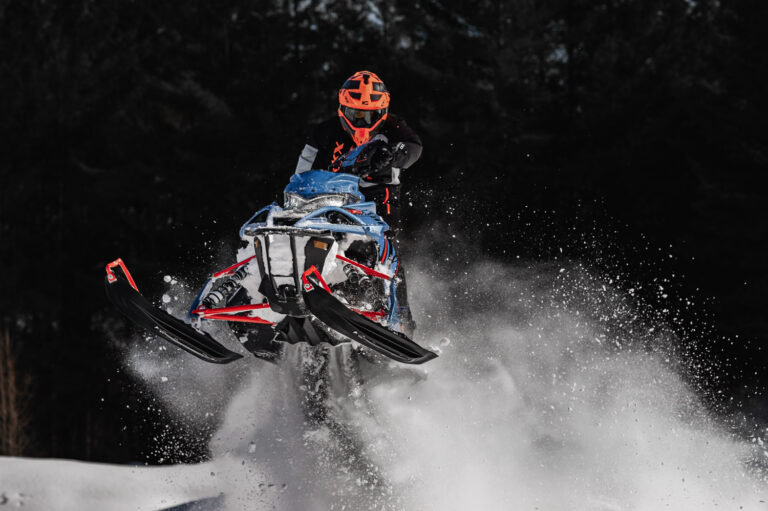
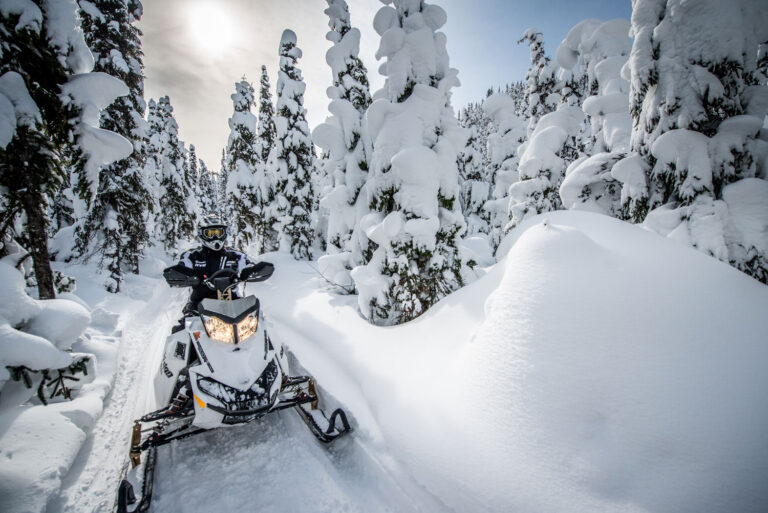
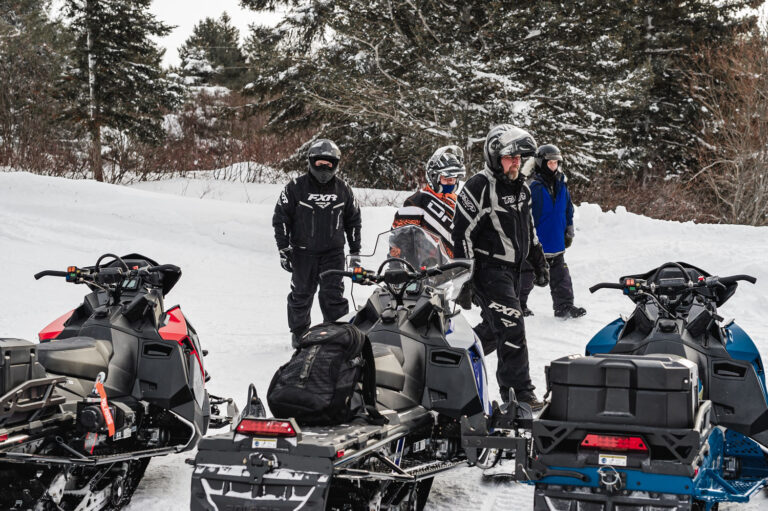
We take a closer look at the diversity within Yamaha’s snowmobile lineup as the company has a sled designed for every level of rider, from beginners to adrenaline junkies craving the highest horsepower machines.
Luke and AJ answer the call and respond to common questions we get about riding in Québec. Tune-in and get all their insights to some of the best regions to visit based on the type of riding and terrain preferences you may have along with fun and interesting peripheral actives you and your family can enjoy. If you’re not hooked on Québec by now, you certainly will be after you’ve ridden its trails this winter. Plan a trip this year and you’ll be visiting again every year – guaranteed!
SUPERTRAX and SNOWTRAX TV have received an exclusive invitation to check out Ski-Doo’s highly anticipated 2025 snowmobile line-up in advance of it being released to the public this coming February.
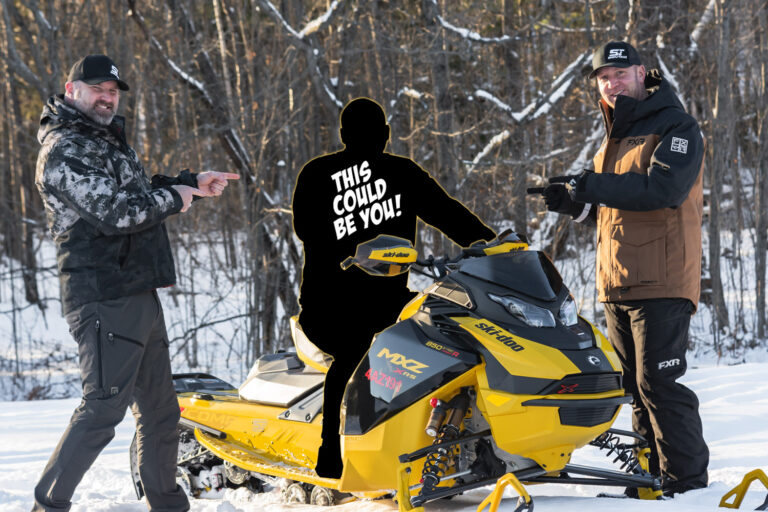
What makes this invitation even better, is that we’ve been asked to invite a special guest to attend with us to evaluate the newest rides and participate in some of the coolest Ski-Doo special events!
Who might this special guest be? Well, it might just be you! That’s right, we’re seeking the ultimate Ski-Doo fanatic, someone that lives and breathes Ski-Doo, someone who has become an urban legend and has the social following to support his or her status. You might say this special person is such a die-hard Ski-Doo rider that they bleed yellow.
The special guest will participate alongside AJ and Luke revealing the latest Ski Doo snowmobiles for 2025 model year. This exclusive event is scheduled to take place in Valcourt, Quebec between the dates of February 18-21, 2024.
If you think you’re this person and you don’t want to pass up on this exclusive opportunity, here’s what we want you do. Create a short video that demonstrates your die-hard love for Ski-Doo, showcases your yellow blood personality and expresses why you think you are the ultimate Ski-Doo fanatic most deserving to attend this exclusive Ski-Doo event and share it with us.
Complete the list of entrant credentials listed below and include information within body of email.
Provide a link to your submission video for us to view.
ENTRANT CREDENTIALS:
First and Last Name: Email: Phone Number: Country of Residence: Full Address: Date of Birth: Social Media Accounts: (Please include links to all valid social media and video posting accounts registered to your name; including but limited to the following: YouTube, Facebook, Instagram, Twitter / X, TikTok, etc.)
TIPS FOR SUBMISSION:
Make it easier for us to identify your video. Include your first and last name within the video title.
YouTube: Upload video and mark video as “unlisted” Select share and copy and paste link into email.
Vimeo: Upload video and mark video as “unlisted”. Select share and copy and paste link into email.
Contest Rules/Eligibility: This Contest is open to legal residents of Canada, the United States who have reached the age of majority in their country/state/province/territory of residence as of the date the Contest Period begins, who must have all applicable valid driver’s license and who have a valid email address and provide valid contact information. No purchase necessary.
Employees of BRP, their subsidiaries, distributors, dealer’s, vendors, service providers, affiliates along with advertising and promotional agencies of BRP as well as Trax Media, and their respective immediate families (spouse, parents, children, siblings, and their spouses) and individuals living in the same household of such individuals (whether related or not), are not eligible.
Entrants must submit video along with links to applicable social media accounts demonstrating worthiness of contest parameters as detailed in contest description. Entrants must abide by the local laws and practice safe and responsible actions. Always wear a helmet and don’t drink and ride.
Responsibility: This promotion is not administered by Bombardier Recreational Products Inc. and its affiliates. All federal, state, provincial and local laws and regulations apply. Void where prohibited by law. Entrants must provide proof of age. Entrants must allow their video submission along with his or her identity and image to be used for promotional purposes. Winner assumes all responsibility and liability for actions, injury, or accident during contest fulfillment event. No prize substitutions are allowed. Winner must be available for prize fulfillment on dates set out at time of winner’s notification. Winner must be able to travel in either the United States or Canada without restriction. All decisions by judges are final. Contest closes January 15, 2024. Sponsor will attempt to contact the Winner between for a period of three (3) days following the date of the judging. If Sponsor is not able to make contact directly with the Winner within the allotted time, using the email address and telephone number the Winner will have provided, then Sponsor may, at its sole and absolute discretion, either select another Entrant or proceed without involving another Entrant. Sponsor is not responsible for failed attempts to notify the Winner. Prize fulfillment is to take place in Valcourt, Quebec between the dates of February 18-21, 2024. Demo rides related to a portion of the prize fulfillment are weather permitted and shall be operated at the sole discretion of BRP.
It’s time for my annual responsible use harp. In an effort to maintain your attention I will attempt to make this report moderately entertaining.
I’m saying moderately entertaining because I believe the issue of responsible use is the most important challenge organized snowmobiling has faced in its storied history. I’m not joking. The reality we are a well organized, safety conscious and committed-to-good-behavior group of sanctioning bodies, makes it seem pretty crazy we’ve gotten ourselves so far down this troublesome road.
Yes, we are in a serious pickle. It is the undisputed truth that the OEMs (AC, Pol, SD, Yamaha and Lynx) have had to build what their customers want or they will not be viable businesses. However, it does seem strange a serious response to off-trail “Free Riding” (the bane of every hard-working snowmobile club volunteer) has taken so long.
It’s not like the first off-trail excursion generating a trail closure happened two or three years ago. The original Ski-Doo Summit (at that time targeted at vertical riding) and the Polaris SKS came to market in the early 90’s. Trail riders bought them because they offered expanded use beyond the realm of groomed trails. Not much was said about this in the snowmobile media. Now it’s the start of the 2024 season and it might be time for a serious and sobering response from the industry.
When things got really out of control, in the late two-thousands and early twenty teens – the backlash to “Free Riding” pivoted 180 degrees. All of a sudden, riders thought of trails as nothing more than a route to get to a never-before-seen world of untouched powder in the flatlands.
We all know what happened next. Landowners lost their minds and vented on the volunteers who run our snowmobile trail systems across North America. The landowners had every right to be ticked. Acting on nothing but landowners good graces, clubs and their members (that’s you and I) have established a mostly interconnected groomed trail system across most of North America. Suddenly we saw trails being closed wholesale. Make no mistake about this – trails are closing and the number one reason is off-trail free riding.
Let’s make this clear: We need our landowners way more than they need us. Having the rules set out for 30 to 40 years about staying on the trail, torn up and shredded by snowmobilers who actually believe they can go “anywhere there’s snow” is the best description of the problem. It’s actually way too simple.
The images promoted by everyone in this business from the OEMs to the clothing manufacturers to the, dare I say it, the media and many more stakeholders perpetuate the falsehood you can go anywhere with an X-Over snowmobile. Let me counter this with a bizarre thought. Reality is this: If we don’t fix this problem we’re going to be able to go nowhere with any kind of snowmobile – as far as groomed trails on private land are concerned.
Friends, here’s the truth: Private landowners from the east coast of North America through the central snow belt states and provinces to the midwest and further west are supremely agitated and – read this twice – are closing trails on their property every day.
They’re doing this because a number of snowmobilers think wearing a backpack, having three tattoos and carrying a foldable snow shovel makes them a freerider. It might, in their minds. However, when we all end up sitting around the smoking hole that was dug by irresponsible use, these freeriding pilots will be in the same situation as all trail riders – no place to ride.
So where will we ride if we don’t stop riding off-trail on private property? Oh, we’ll still ride! You can be sure of this. The trespassing won’t stop until every entry point on landowner’s properties are gated. Many snowmobilers will ride lakes. Many will go through the ice or drive into rivers. Then there’s roads. You know those conveyances built for wheeled vehicles that grind our carbides off in a few miles? Yep, there’s our destiny if we don’t wake up and do something.
WHAT CAN WE DO?
Stay on the marked and groomed trail at all times.
Refuse to ride with anyone who doesn’t agree to do the same. Seriously.
Never ride without a Trail Permit on sanctioned trails.
If you want to freeride, research places in your jurisdiction where you can do it legally. These locales do exist.
That’s a good start. Let’s get serious about this and preserve our trails in an effort to keep our landowners happy.
Luke sits down with Ski-Doo’s Global Product Manager, Robin Martel and Pascal Vincent, Director of Global Product Strategy for an informative discussion on the all new Rotax E-Powered Grand Touring Electric snowmobile and their go-to-market strategy of servicing commercial tour operators within their Unchartered Society network.
Online editor, Mike Lester, challenged me to do a couple reviews on definitively historical and otherwise ground-breaking Yamaha sleds.
Such a challenge always interests me as the younger guys around here need to be reminded of this adage: “Those who forget the past are destined to repeat it”. Actually, that isn’t the actual interpretation of this noteworthy adage, but it does suit my purposes for this article.
THIS CHANGES EVERYTHING!
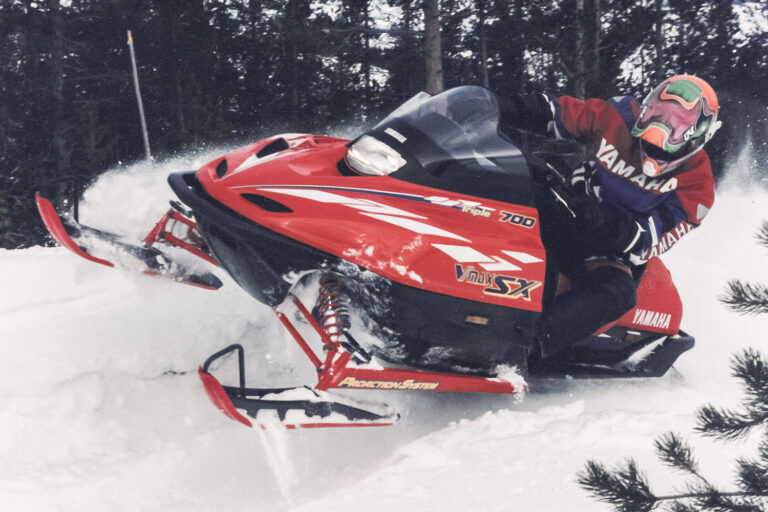
The arrival of the 1997 Yamaha Vmax 700SX was among the most highly anticipated events in the sport at that time. Why? Everyone absolutely knew Yamaha could not continue to produce sleds with its TSS (Telescopic Strut Suspension) and be taken seriously. Almost 20 years had passed since Polaris brought its Indy trailing arm system to the market and at this time in sno-mo-history the Roseau sled-builder was slaying the market selling a rumored 100,00 new units annually.
The arrival of the all-new Vmax met the market head on directly at its sweet spot. The snowmobile business was consumed with triple cylinder 2-stroke engines. The Indy 650 and Indy XLT 600 triples captured the imagination of a jillion buyers. Yamaha was now legitimately in the game, albeit a couple years late.
Not to worry. The Yamaha faithful gobbled up their Vmax 700’s in record numbers and the sled did not disappoint. Using an all-new, purpose-built triple cylinder, single pipe, reed valve inducted, 120-degree firing mill opened the door on something missing in Yamaha showrooms: The national anthem of snowmobiling spilling out the SX 700’s melodious pipe.
Add in this reality: The 700 triple would go on to become known as one of the most reliable and bulletproof snowmobile engines of the modern era.
SILKY SMOOTH
The 700SX triple put out what is widely reported to be a silky 110-115 ponies. Using proprietary Yamaha primary and secondary clutches and what felt like a low friction drive system spinning a 121-inch track, the sled could pull just past (an indicated) 100 MPH (160 KMH) on Kevlar Lake. The sled was truly competitive to the Polaris triple cylinder fleet and as a result made no excuses for its linear spread of power.
Equally important to the success of the Vmax 700 SX was the presence of a full-on trailing arm independent front suspension (IFS). No more TSS. The market and Yamaha dealers went ape over the sled’s arrival with mainstream IFS. Yamaha coined the set-up “Pro Action Plus” IFS and it looked awfully familiar. Clearly Yamaha was benchmarking Polaris’s Indy IFS.
The SX came with premium aluminum body coil-overs up front and as a result the sled handled well and took bumps in stride. One issue we found interesting was Yamaha’s reluctance to duplicate their version of Polaris’s “tipped in” trailing arm design using unequal length upper and lower radius rods. This nuanced trick helped trailing arm Indys so equipped to handle better on-center and generate less bump steer. The Yamaha used equal length radius rods.
TO COUPLE OR NOT TO COUPLE
Out back the SX 700 brought Yamaha’s proven 121-inch rear skid to the party with a notable change. The entire industry was tied up in a legal jackpot with Polaris surrounding its patent on rear suspension coupling. Polaris would eventually settle the lawsuits and Yamaha would openly disclose the SX rear suspension’s tandem pull rods (debuted on the SX 700) acting on the rear swingarm drop link was a form of coupling as well.
Settlement dollar figures were never made public but suffice it to say Polaris did alright on this deal which included a license to Ski-Doo’s proprietary RER engine reverse system.
The coupled skidframe on the 700 SX gave Yamaha seriously legitimate big bump control and compliance (for that time). As a result, the sled garnered acceptance with hardcore ditch bangers of the era.
LEGITIMATELY ICONIC
So, there you have my opinion and observations on a sled that changed the course of Yamaha’s snowmobile fortunes. The SX marked the end of TSS and a new beginning for Yamaha snowmobile chassis and suspension design.
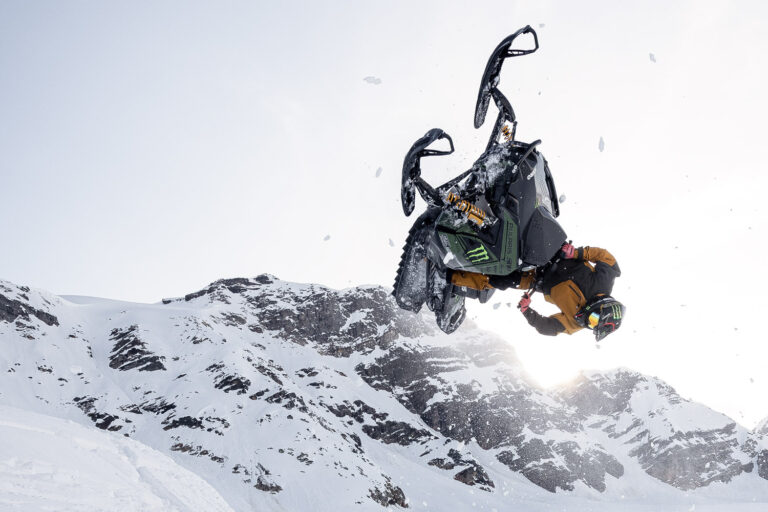
AJ meets up with Winter X-Games phenom and MBRP Exhaust Ambassador Brett Turcotte in the mountains of BC to learn some advanced riding techniques along with getting the low down on the different MBRP exhausts he chooses to use.
I know, it’s too early to speculate on a question of this magnitude. Or is it?
Here’s where I’m going: Three years ago no one would have believed any snowmobile OEM would have the testosterone to introduce a turbocharged 2-stroke targeted directly at the consumer flatland/trail marketplace. As we all now know, both Polaris and Ski-Doo offer their turbocharged 2-stroke engine packages in trail sleds.
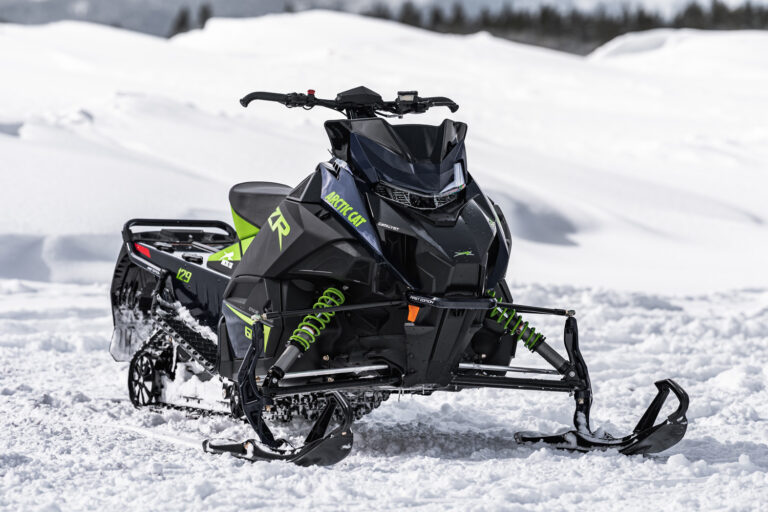
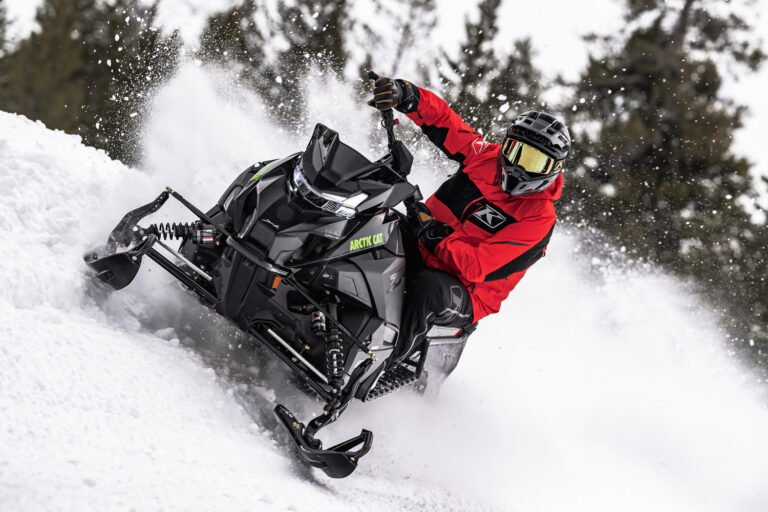
Arctic Cat has a new 858cc 2-stroke SDI twin engine package destined for 2025 model year CATALYST models in three genres: Trail, X-Over and mountain. The sheets are off these new sleds with the impressive 858 under the hood.
Understanding Arctic Cat has been on the cutting edge of turbocharged 4-stroke power in the snowmobile biz, we’re wondering if AC will settle for continuing to cover this profitable segment with the current Yamaha 4-stroke Thundercat in the ProCross chassis.
Would AC be wiser to spend development money on figuring out a way to get Yamaha’s 998cc triple turbo into the CATALYST chassis and leverage Yamaha way into the future for these formidable powerplants or…would development money be better spent shoehorning a turbocharger into the new 858 for an MY 2026 introduction?
I cannot see Arctic Cat going to market without a turbo in its lineup. After all, AC was the first OEM in this industry to intro a turbocharged snowmobile engine.
Remember the T-660 Suzuki triple cylinder 4-stroke turbo circa 2006? No one will forget the incredible succession of Suzuki 1100cc 4-stroke turbos in the F and Pro Cross platforms. Arctic Cat pretty much owned the turbo marketplace for more than a decade. BTW, building and selling the fastest production snowmobiles in the world for years is a highly profitable proposition.
Honestly, I cannot answer the original questions I posited at the beginning of this diatribe. However, my question of whether or not AC will turbo the CATALYST with either a 2-stroke or a 4-stroke turbocharged engine seems pretty elementary at this juncture.
So, I’ll go out a limb here and offer my best guess. Yes – and yes!