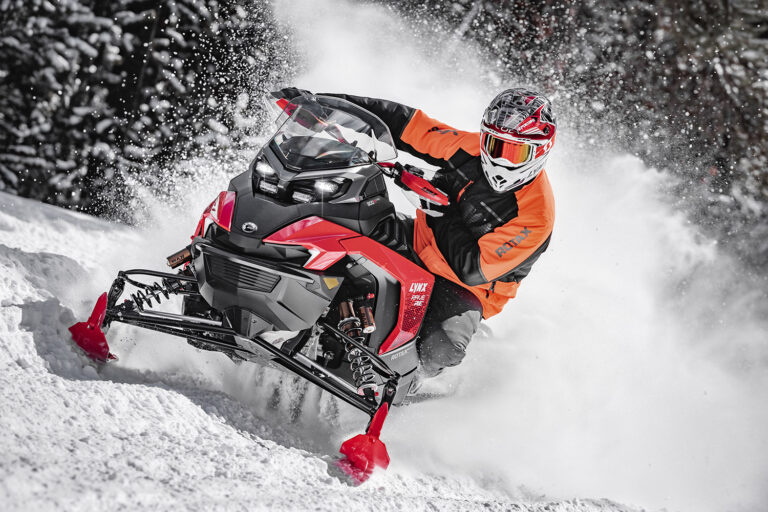
The Lynx product line has been offered in North America for a couple of years now and has quickly established itself as an extremely desirable brand. Its unique appeal has been to those who see themselves as experienced, aggressive riders demanding ultimate performance from their sled.
These are riders who prioritize high speed suspension response and near-perfect handling in the bumps just as much as raw acceleration and top speed. After all, why ride bumps with gargantuan power if the sled’s chassis can’t handle it? The RAVE RE’s 850 E-TEC twin has proven to be more than adequate.
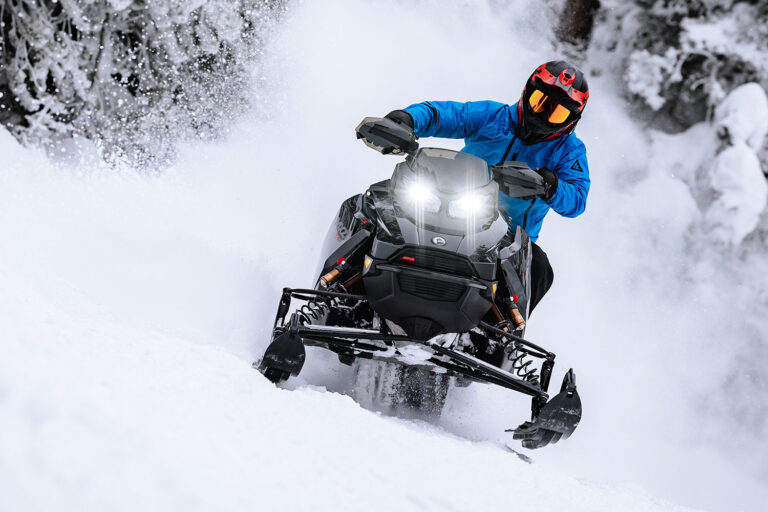
If there’s one thing we can unequivocally say about the RAVE RE, it’s that the Radien² chassis can handle everything the most powerful snowmobile engines in the industry can dish out. Accelerating through whoops or stutters, the RAVE tracks straight and true, daring the rider to hold the throttle open longer, trusting the suspension to perform beyond the incredible.
The front end is very much Ski-Doo but the skid frame is pure European, using the PPS 3 uncoupled 137-incher the Lynx is most identified for.
With the throttle held open, the sled lifts its head and grazes the bumps with the skis while the Pippola suspension simply sponges up the junk. It’s a unique, unforgettable experience to ride a sled that performs like this! Its uncoupled skid has great flotation and offers a higher level of handling quickness.
A reasonable question aimed at a 600 version might be: “Why give riders less power instead of more?” At first glance, the answer may be about lower price. After all, a 600 will have a lower MSRP than an 850 – but we think there’s a bigger reason. Simply, it’s about the RAVE RE reaching a bigger market.
There are tons of avid snowmobilers who love the Lynx cachet but just don’t want an 850. The fact is, the ROTAX 600R E-TEC is a very strong performing 2-stroke and because of the prowess of this chassis, makes a great marriage with it.
Another indicator of the above is last year’s recalibration of the RAVE RE’s shock package. To be fair, the original RAVE’s shock calibration was firmer than most North American riders were used to. Last year the valving was modified so the bottom part of the travel was softer – not a lot, but still softer.
The sled was much nicer for all-day riding – and it didn’t lose its high-speed damping ability. Suddenly more people were interested!
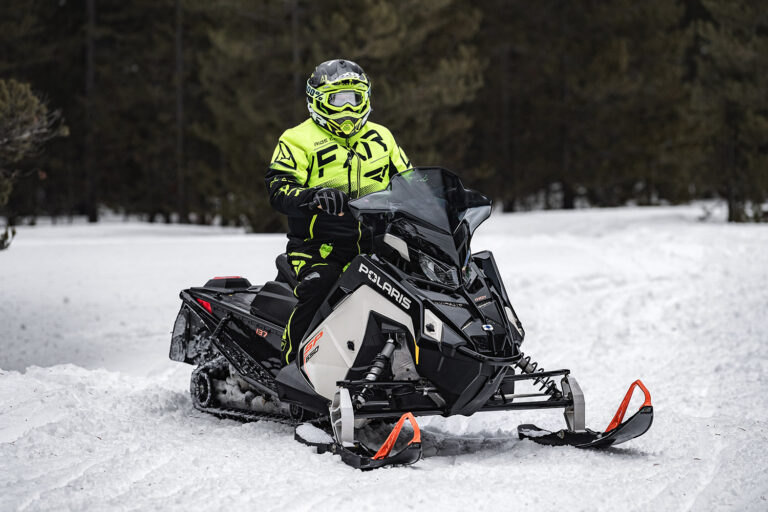
Motorhead Mark takes us through one of the value-line snowmobiles we’ll be featuring in our value snowmobile shootout coming up this season on SNOWTRAX. This overview looks at the 2025 Polaris Indy SP in the MATRYX platform featuring the Patriot 650 engine and 137-inch skid.
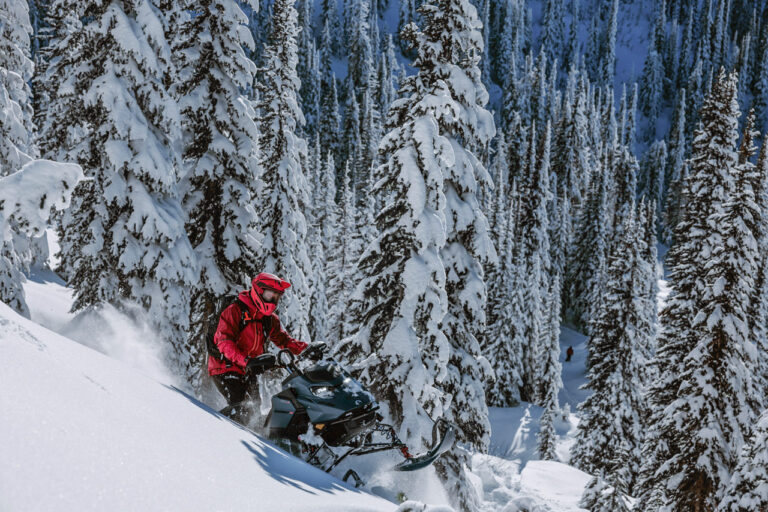
Luke sits down with Ski-Doo’s Product Development Manager, Frederic Desjardins for an informative discussion of Ski-Doo’s line-up of Deep Snow snowmobiles, including the Summit X, Summit Expert and Freeride.
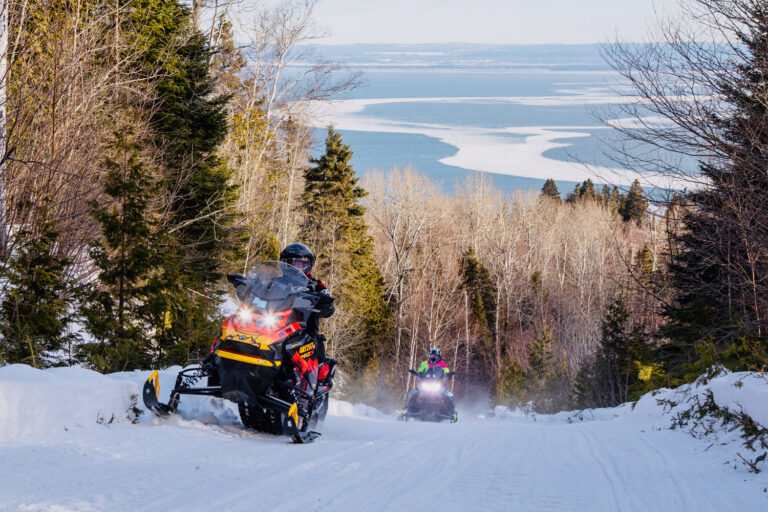
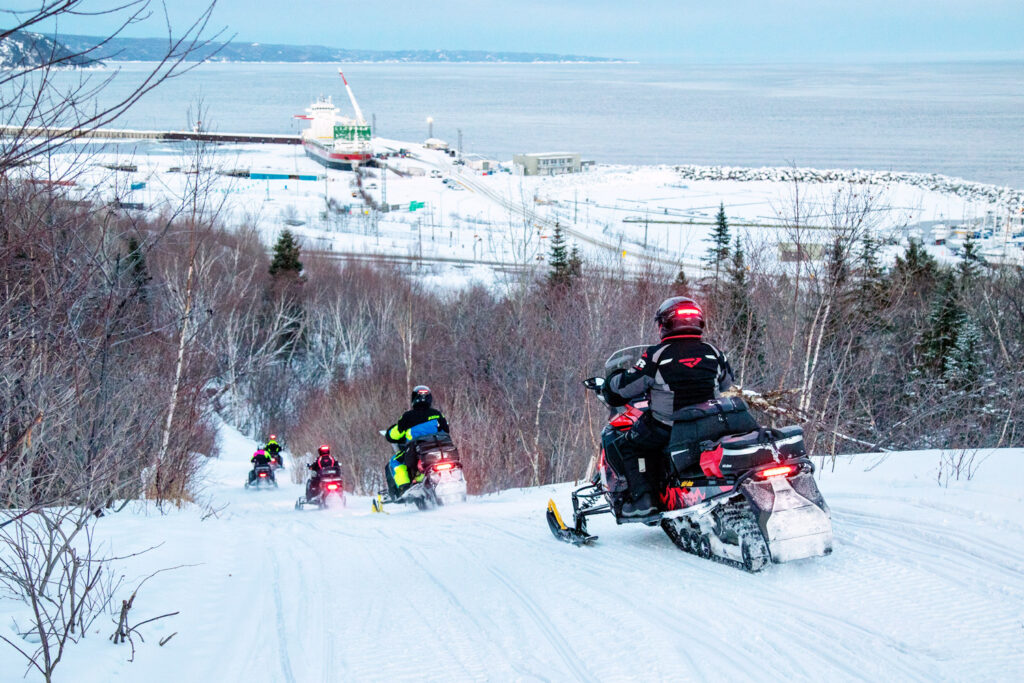
A remarkable ride debuted last winter, destined to become one of Quebec’s premier snowmobiling attractions. This epic new loop takes in both shores of a mighty waterway, known for 9,000 years by indigenous peoples as “Kaniatarowanenneh” (River of the Iroquois). Then in 1534, French explorer Jacques Cartier renamed it the “St. Lawrence” while trying to discover a route to Asia. Cartier would be surprised to discover that almost five centuries later, snowmobilers are embarking on their own explorations along his route – but looking for fun, not the Orient.
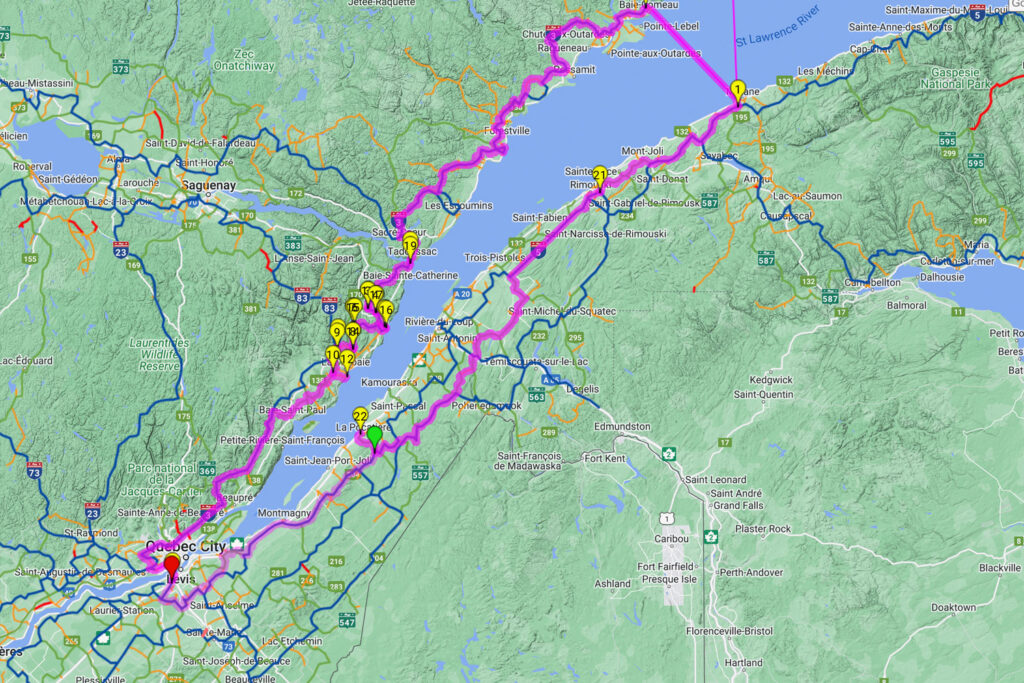
Aptly named the Grand St. Lawrence Snowmobile Tour, this circle tour takes six days of riding to cover its minimum distance of 1,355 kilometres (840 miles) between Lévis and Baie-Comeau. But the Grand St. Lawrence Snowmobile Tour didn’t happen overnight or by chance. From an idea that took seed almost a decade ago, this impressive ride blossomed into the first officially named, multi-region loop in La Belle Province.
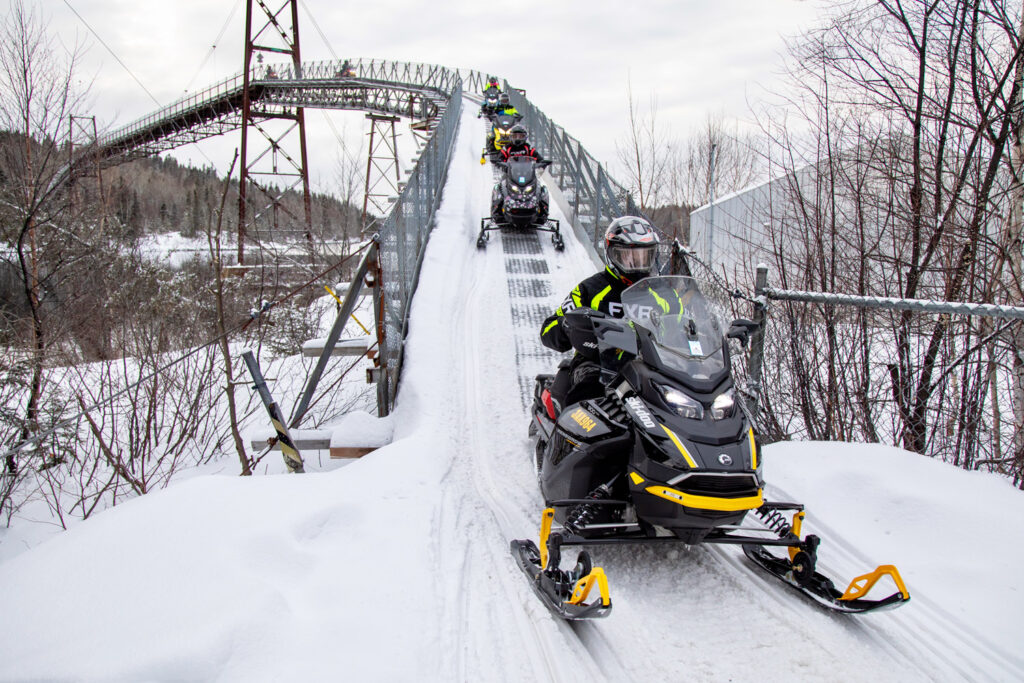
Photo Credit: Martin Lortz – World’s Highest Snowmobile Bridge over Manicouagan River in Cote-Nord
Participating Tourism Regions
Whereas other Quebec loops are all within one tourism region, organizing the Grand St. Lawrence Snowmobile Tour required the collaboration of several neighbouring regions – Charlevoix, Chaudière-Appalaches and Quebec Maritime (which includes Bas-Saint-Laurent, Cote-Nord and Gaspésie). Their idea is to provide snowmobilers with a must-do loop that samples some of the best sledding available in each of their regions. This unique circuit stages from Lévis, a convenient location for many riders trailering to Quebec to access snow sooner with more trail time.
Without much fanfare, these regional partners introduced the Grand St. Lawrence Snowmobile Tour for the 2024 season. This lowkey debut provided an opportunity for their new product to be tried, tested and assessed in a real world situation, before being widely promoted to snowmobilers everywhere.
Photo Courtesy of FCMQ Interactive Trail Map
Getting Ready
As the first snowmobiling media to experience the new loop, our mission was to give snowmobilers the scoop on how to do it, what to expect, and to provide valuable feedback for tour organizers to help make it even better. Effectively, we were the guinea pigs for the tour’s soft launch – and test riders for you!
With that goal in mind, we spent many hours studying, pre-planning, and reviewing our proposed tour itinerary to nail down the details that can make or break a good ride. Afterwards, we fine-tuned the itinerary again, so that snowmobilers would have the most complete template possible to plan their own Grand St. Lawrence Snowmobile Tour.
Of course, it helps that I’ve previously snowmobiled in each one of the regions participating in the Grand St. Lawrence Snowmobile Tour on other fondly remembered tours. So, I quickly agreed that this new loop brings some of La Belle Province’s best riding and scenery together in one outstanding tour…
The Grand St. Lawrence Snowmobile Tour is also the first and only Quebec loop routed on both sides of the St. Lawrence. Making this happen involved overcoming an immutable fact of Quebec geography: this mighty river divides La Belle Province in two: north and south of the St. Lawrence.
Perhaps nothing speaks better to this geographic reality than the designation of FCMQ Trans Quebec (TQ) and Regional Trails (RT). From their trail numbers, snowmobilers know automatically which side of the river they’re on, because trails on the north side include a “3” in their number, while those on the south side are indicated by a “5”. It’s almost like having two distinct trail networks across the waterway from each another – in fact, no FCMQ trails continue from one side of St. Lawrence to the other with the same number.
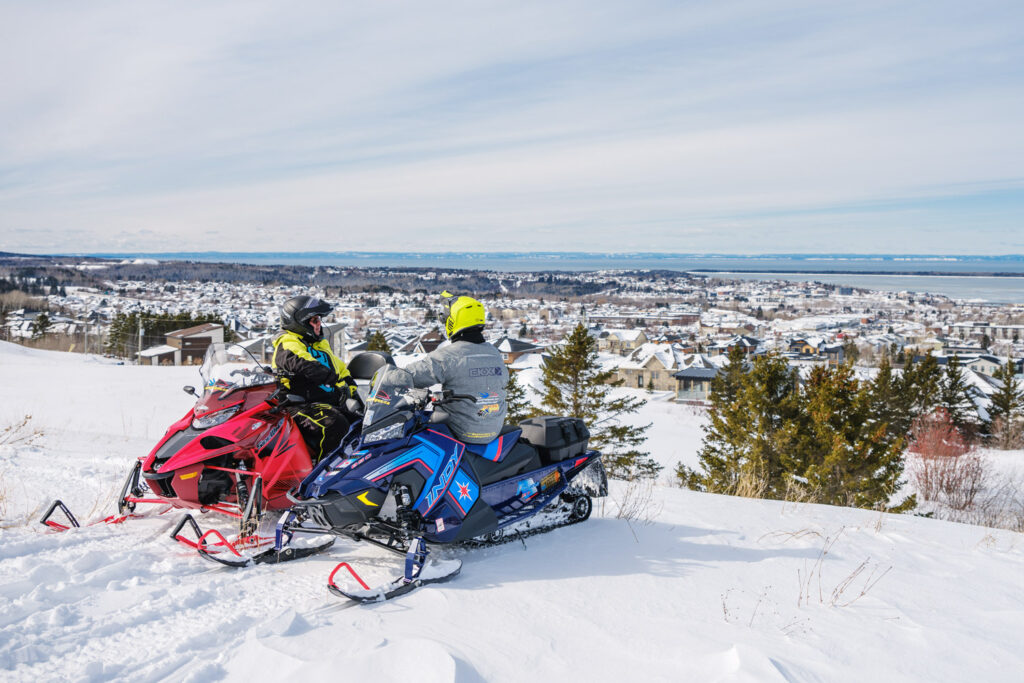
On the north side of the St. Lawrence, this tour takes in the elevations of the Charlevoix Mountains (part of the Laurentian chain) and panoramic lookouts at Montagne de la Croix (Local Trail 64), Mont à Peine (TQ 3), Mont Thérèse-Casgrain (Local Trail 54) and Lac-Gravel (RT 378) all located between La Malbaie and the mouth of the Saguenay River. Then, it’s on to the rugged ups and downs of TQ 3 through Canadian Shield terrain in Cote-Nord, from Tadoussac to Baie-Comeau. On the south side regions of Gaspésie, Bas-Saint-Laurent and Chaudière-Appalaches, you can either ride closer to the river on TQ 5 to enjoy the St. Lawrence lowlands, or head inland to travel TQ 35 through the foothills of the Appalachians.
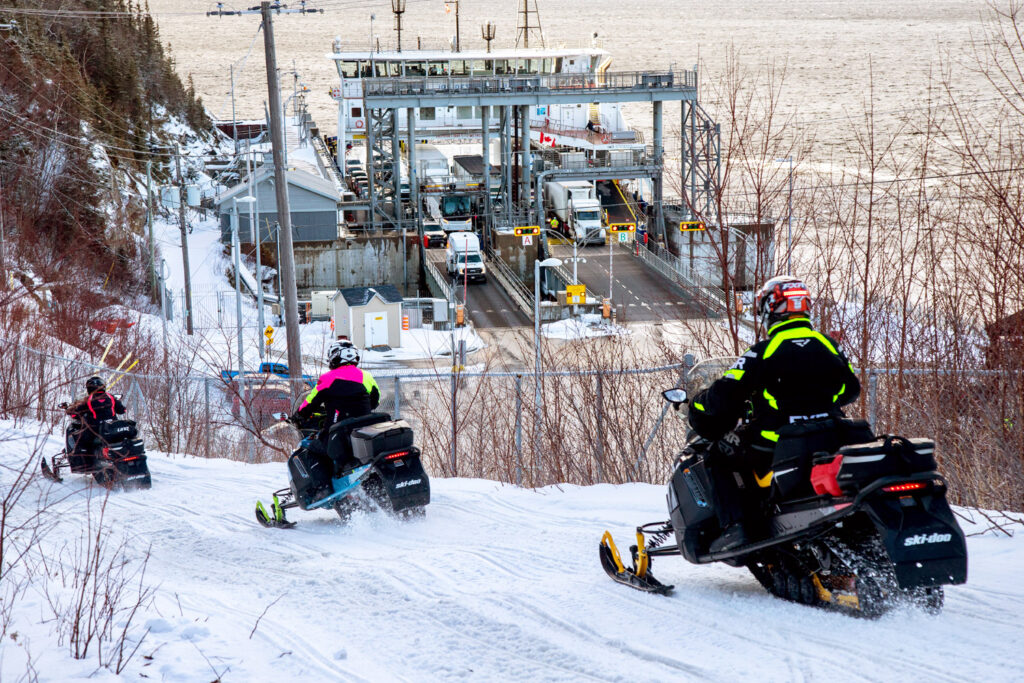
Photo Credit: Martin Lortz – Approaching the Saguenay River ferry crossing
Favourably Located
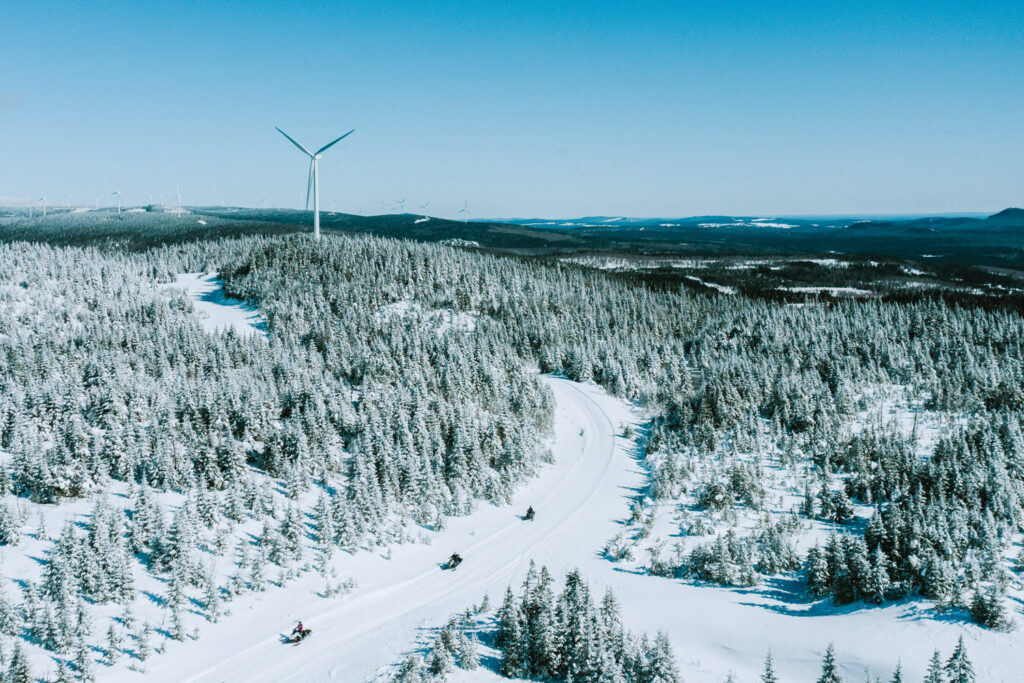
Location is also a special advantage of the Grand St. Lawrence Snowmobile Tour. Its northerly positioning and elevated terrain deliver a long riding season with abundant snow and cold for awesome trail riding. No wonder, because the eastern half of the Grand St. Lawrence Snowmobile Tour on both sides of the river is actually as far north as Monts-Valin!
What’s more, the loop is positioned east of Quebec’s main population centres. Thus, most trails on the loop avoid the wear & tear of daily traffic around the big cities. Instead, they run through more rural areas, where services are plentiful in snowmobile-friendly coastal towns and villages that really cater to winter lovers.
Photo Credit: Martin Lortz – Approaching the Saguenay River ferry crossing
The Scoop On River Crossings
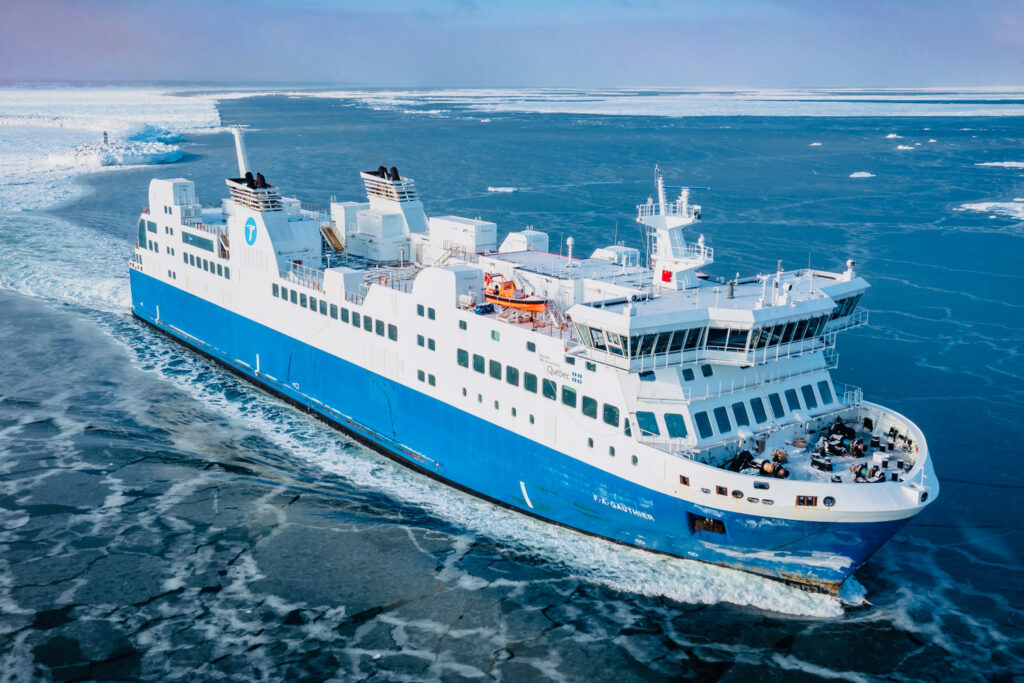
All of this is possible because safe river crossings are an integrated part of the Grand St. Lawrence Snowmobile Tour. At its west end, this loop includes an enclosed snowmobile shuttle across the bridge between Lévis (south side) and Quebec City (north side). 535km (465mi) farther east, the widest crossing is via the winter ferry running 61km (38mi) between Baie-Comeau and Matane. In between, the Grand St. Lawrence Snowmobile Tour also includes a short ferry ride across the Saguenay River from Baie-Sainte-Catherine in the Charlevoix Region to Tadoussac in the Cote-Nord Region (see river crossing sidebar for more info).
I quickly realized that the Baie Comeau/Matane winter ferry schedule would actually determine our entire tour itinerary, and here’s why: we’d decided to snowmobile the Grand St. Lawrence Snowmobile Tour clockwise, staging from Lévis to do the north side first. So, given the ferry schedule and the six days we had available to ride, our staging from Lévis had to start on a Sunday morning if we were going to make the Wednesday ferry from Baie-Comeau at 11am (departure time is 5pm on other days).
While the Baie-Comeau to Matane ferry is the primary, reliable and year-round connector between the two shores for locals, stormy weather occasionally disrupts its schedule. To account for this remote possibility, I added a “spare” day to the end of our itinerary, allowing us to move our drive home a day later if necessary. The key takeaway here is that regardless of whether you want to do this loop clockwise or counter-clockwise, be sure to start your itinerary by checking the winter ferry schedule first and plan accordingly.
These ferry rides are a key part of what makes the Grand St. Lawrence Snowmobile Tour special. The whole ferry experience is extraordinary – where else can you find a ferry that transports sleds and offers lunch on board? Suddenly, you’re briefly transformed from a landlubber to a seafarer with incomparable views of the river, the ice, the coasts – and if you’re lucky, a seal or two. Plus, the Baie-Comeau-Matane ferry, with all its passenger amenities and comforts, is more like a cruise ship! Even the embarking and disembarking is memorable.
But ferries are made for cars and trucks, not sleds, so I recommend doing this loop with Rollerskis™ from Qualipieces on every sled. These easily installed ski wheels not only provide easier steering at gas stations, restaurants and lodgings. They also made traversing the many paved access areas and metal ramps/floors of ferries a breeze by lifting our runners above any damaging contact. And that meant a better ride overall thanks to our sharp carbides!
Want to ride more than the minimum loop distance? The Grand St. Lawrence Snowmobile Tour also offers snowmobilers routing options. The 1,355 km (840 mi.) basic distance of the six-day loop can easily be extended by several hundred kilometres. Simply select alternative and more roundabout trails, especially in the Bas-Saint-Laurent and Chaudière-Appalaches south shore regions.
Riders who want to add days or distance can also consider taking the opportunity to go farther east than Baie-Comeau in Cote-Nord by adding the two-day return ride on TQ 3 to Sept-Iles (282km/175mi each way), or taking TQ 55 through the middle of Chaudiére-Appalaches to check out incredible views around Massif South Park (RT 547), then returning to the Lévis staging point from the south via TQ 35.
Whatever your itinerary preference, the Grand St. Lawrence Snowmobile Tour is an epic bucket-list adventure that’s also a great couples tour and will make many thumbs-up memories. So why not be among the first to give it a go by planning your own Grand St. Lawrence Snowmobile Tour loop ride this winter?
Chaudière-Appalaches Region: Hotel & Suites Normandin, Lévis (418) 831-3119 or 1-800-749-3119 Charlevoix Region: Fairmont Le Manoir Richelieu, La Malbaie (418) 665-7303 or 1-800-441-1414 Le Quebec Maritime – Cote-Nord Region: Complexe hôtelier Escoumins, Les Escoumins (418) 233-2401 or 1-888-225-3463 Hotel Le Manoir, Baie-Comeau (418) 296-1435 or 1-866-996-3391 Le Quebec Maritime – Bas-Saint-Laurent Region: Hôtel L’Empress, Rimouski (418) 723-6944 or 1-866-305-6944 Auberge Cap Martin, La Pocatière (418) 856-4450 or 1-866-995-6922
River Crossing Info
Lévis to Quebec City: Despite the recent and unexpected cancellation of the privately operated Sled Shuttle, touring riders still have good do-it-yourself options for crossing the St. Lawrence River. Saguenay Ferry: (418) 235-4395. Free. Runs 24/7. No reservations needed. Crossing time: 15 min. Baie-Comeau to Matane Ferry: Advance reservations recommended by calling 1-877-787-7483. Arrive for boarding at least 45 min. prior to ferry departure time. Cost: #38.05/sled. Refreshments & indoors lounge available on board. Crossing time: 2 hours + embarking & disembarking time.
Since the introduction of the Ski-Doo NEO, the sno-mo biz has been pretty difficult to navigate. Obviously the whole Covid paradigm shook the industry to its roots and altered the marketplace generating so much demand, prices for new (and used) sleds went stratospheric creating what I’ll call a “false market”.
Remember when you couldn’t buy a new sled during for full pop? That was only 3 years ago! The pandemic mentality saw tens of thousands of new sled buyers paying thousands above MSRP for a new ride. It was a phenomenon never witnessed in snowmobiling.
What now seems strange is the shocked look on the faces of dealers and OEM’s as a result of the imploding marketplace in recent days and months. Did anyone really think the escalating demand would last indefinitely?
Here’s my point. The NEO project was pointed directly at the price conscious purchaser who wanted a real snowmobile at a way low MSRP. That’s where our comments about the psychology behind the new NEO sounded an awful lot like the those behind the Sea-Doo Spark.
The NEO and the Spark share a low MSRP, deliver high value, full capability and respectable performance. Because Covid dramatically skewed retail pricing, we think the whole NEO project was at best misinterpreted and at worst completely misunderstood.
So here’s the reality. Covid is ancient history along with its ridiculously escalating pricing. We’re back to selling snowmobiles below MSRP, and sometimes substantially below and all of a sudden the NEO is looking pretty attractive.
This whole shift means the NEO can effectively pick up where it got lost in the middle of an inflated price fiasco. Check out its MSRP in the US and Canada and it really is worth a look for many reasons.
PRICING:
MXZ NEO Starting at $6,849 US and $8,549 CDN MXZ NEO+ Starting at $7,649 US and $9,599 CDN
Summit NEO Starting at $7,999 US and $9,999 CDN Summit NEO+ Starting at $9,499 US and $11,699 CDN
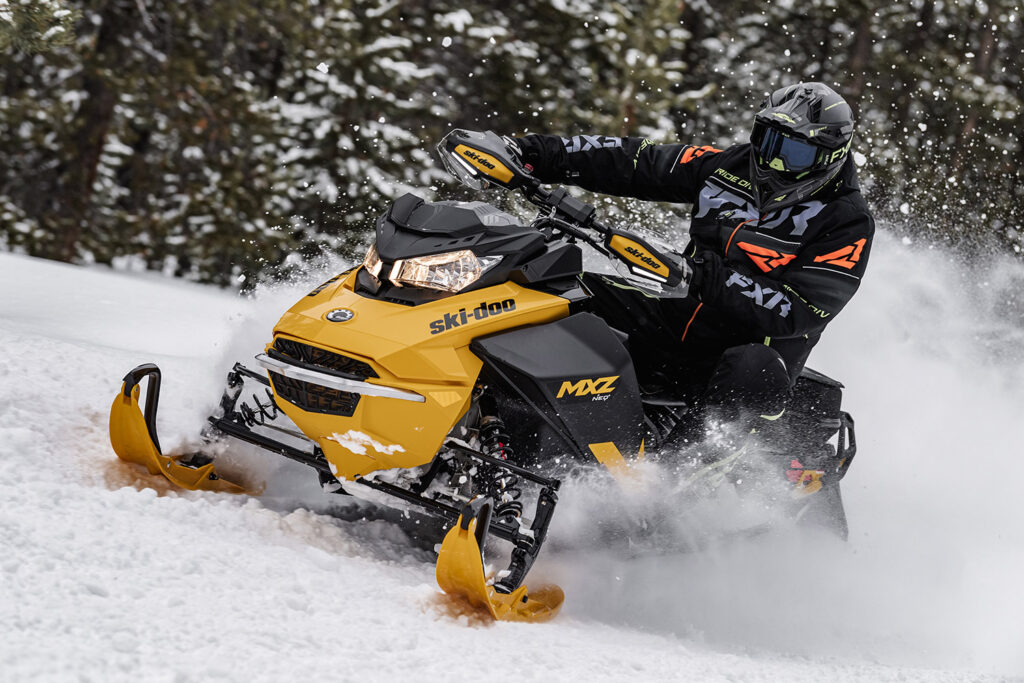
The NEO is built on a full-on REV G4 variant tub and tunnel. The front suspension is Ski-Doo’s RAS X set up. The rear skid is an all-new single shock unit delivering an impressive ride. It uses two variations of the ROTAX case reed, 600 EFI oil-injected, liquid cooled twin producing 40 and 55 in the 120-inch MXZ NEO and NEO+, and 55 and 85 ponies respectively in the 146-inch Summit NEO and NEO+.
No question horsepower numbers aren’t heroic here, but the reality is this – because the sled is capable, has good bones and is propelled by a torque laden ROTAX 600 EFI, the Neo gets up and goes. The sled is light and can be flicked around on tight trails or in deep snow delivering precise and confidence inspiring handling. Strangely it will impress even seasoned riders.
So who’s the NEO buyer? I think this very question was refused an answer when the NEO first appeared. It could turn out the NEO is a legitimate parallel to the wildly popular Sea-Doo spark. It is also possible the Neo will get panned because of its less than brawny powerplant. Keep in mind its ergos can accommodate smaller stature pilots as comfortably as full size riders.
Here’s what I think is undeniably true. The Ski-Doo NEO cannot be dismissed as something less than a full-on snowmobile. The problem with my assertion is if snowmobilers don’t get a chance to ride the NEO they may never have any appreciation for how much sled you get for the money.
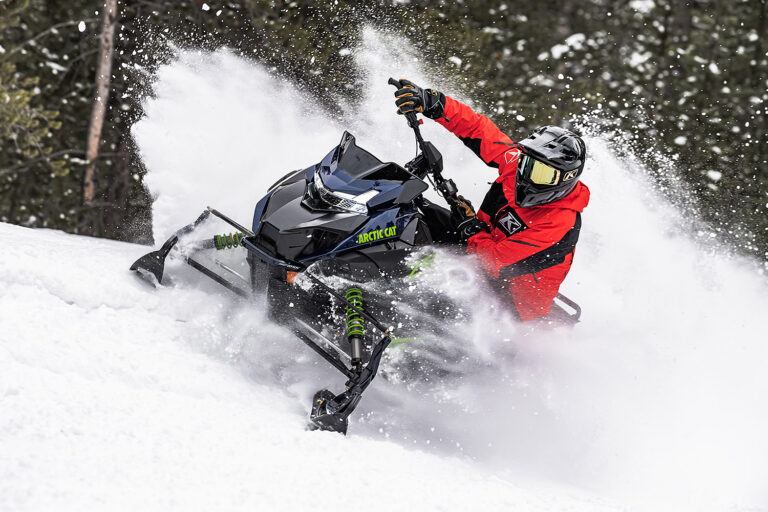
AJ gets some help from MBRP’s very own Josh Barkey shaving weight and increasing the horsepower from our Arctic Cat ZR 600 CATALYST with the addition of MBRP’s latest exhaust offering.
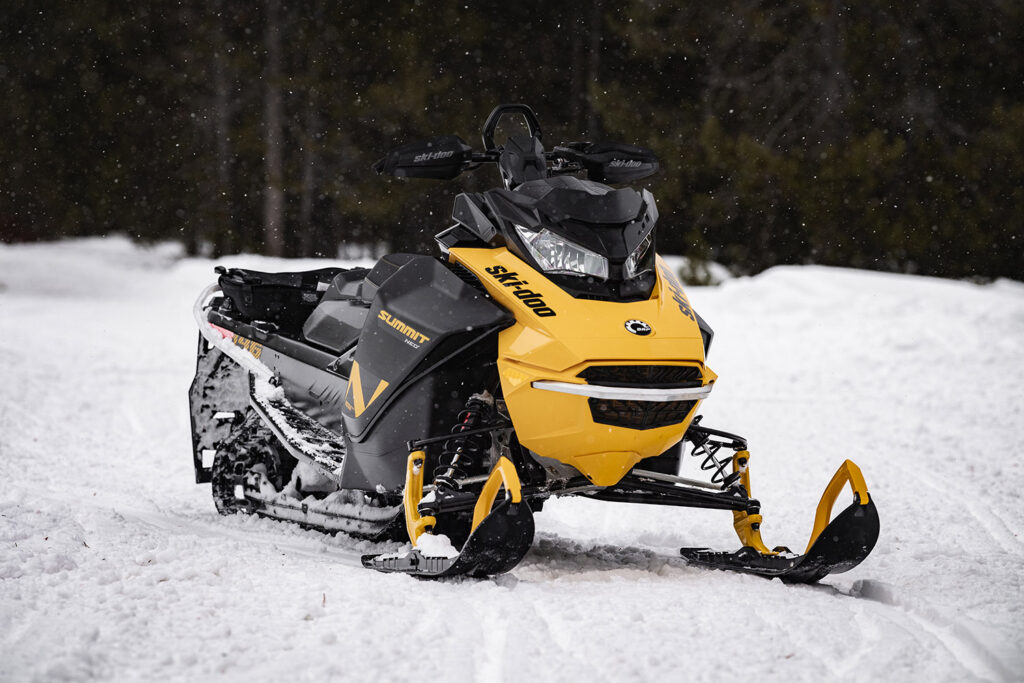
Ski-Doo just announced the introduction of a 2025 late release, Special Edition Summit Adrenaline with Edge package.
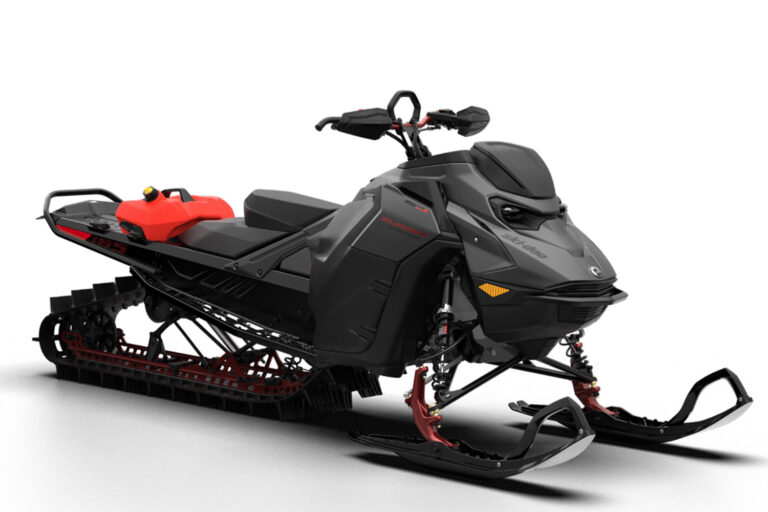
The new model includes the choice of a normally aspirated or for the first time in-season, turbo charged engine, along some of the most sought-after accessories pre-installed and a unique coloration.
“This snowmobile brings huge value to buyers with all the best features like clean running E-TEC engines, short tunnel for easy handling and a deep snow rider’s best friend, SHOT starting, plus the hottest accessories,” stated Elsa Vilarinho, BRP Global Director, Marketing, Snowmobiles and On-Road. “Someone that missed purchasing a turbo charged model usually available in spring only, or is looking to renew their ride will find this to be a great opportunity to get a sled that’s ready to go right out of the crate.”
This 2025 Summit Adrenaline with Edge package features a unique Carbon Black coloration with Spartan Red accents to highlight its upscale nature. Buyers also have the choice of either the Rotax 850 E-TEC or 850 E-TEC Turbo R engine – the first time the Turbo R has been offered in season.
Additionally, the package includes accessories most commonly added by deep snow riders:
Soft Glove Box Extension
LinQ Fuel Caddy = 11 L/3 Gal
Deep Snow Ultra Lightweight Seat w/integrated belt holder
Flexible Hand Guards
Adjustable Brake Lever
3 configurations are available:
850 E-TEC – 154 x 2.5 in.
850 E-TEC – 165 x 3.0 in.
850 E-TEC Turbo R – 165 x 3.0 in.
Production of this unique snowmobile has already begun and they will be shipping to dealers very soon in limited quantities. Buyers wanting more information about this model are encouraged to reach out to their dealer soon.
About BRP: BRP Inc. is a global leader in the world of powersports products, propulsion systems and boats built on over 80 years of ingenuity and intensive consumer focus. Through its portfolio of industry-leading and distinctive brands featuring Ski-Doo and Lynx snowmobiles, Sea-Doo watercraft and pontoons, Can-Am on and off-road vehicles, Alumacraft and Quintrex boats, Manitou pontoons and Rotax marine propulsion systems as well as Rotax engines for karts and recreational aircraft, BRP unlocks exhilarating adventures and provides access to experiences across different playgrounds. The Company completes its lines of products with a dedicated parts, accessories and apparel portfolio to fully optimize the riding experience. Committed to growing responsibly, BRP is developing electric models for its existing product lines. Headquartered in Quebec, Canada, BRP has annual sales of CA$10.4 billion from over 130 countries and a global workforce of close to 20,000 driven, resourceful people.
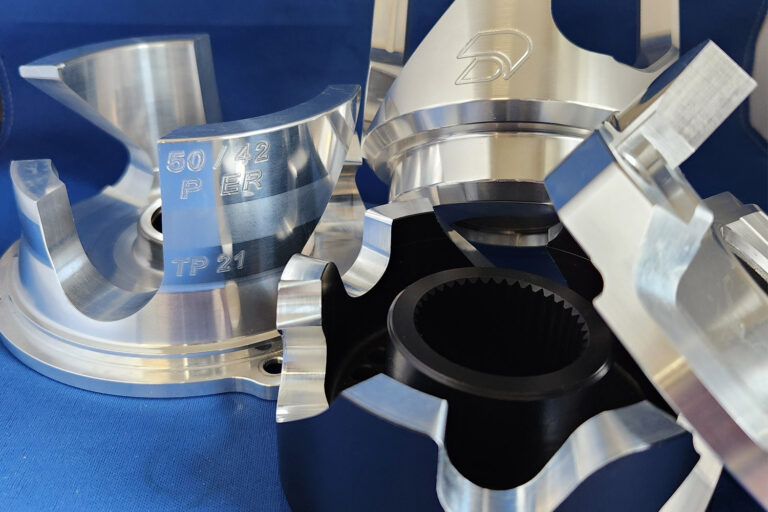
The clutching gurus at Dalton Industries are also the largest supplier of snowmobile helixes for ALL OEM BRANDS in North America.
Dalton, known as “the source for clutch tuning components”, provides the highest quality billet construction and has the widest selection of available angles to optimize your sled’s acceleration performance in the sweet-spot of its powerband.
If Dalton doesn’t have your helix on the shelf, its team can usually machine it and ship it within a day or two and have you back in the saddle, leaving your buddies in the snow dust when it’s time for WOT.
Visit DaltonIndustries.com and get your helix in just a few days, anywhere in the USA or Canada.
Luke sits down with Ski-Doo’s Global Product Manager, Vincent Deschenes and Etienne Girard, Manager, Product Development for an informative deep dive into the new RAS RX front suspension and Pilot RX ski found on the 2025 MXZ X-RS 850 Turbo Competition Package and then is joined by Pascal Gagnon, Vehicle Dynamics Specialist discussing Smart Shox and how it compares to competitive IMU based Semi-Active systems.
AJ provides a closer look at Arctic Cat’s 2025 NORSEMAN 400 sport utility snowmobile featuring a fuel-injected 397cc 2-stroke single, mid-sized chassis, standard rear rack and a high touring windshield and a 146-inch Cobra track.