Home Blog Page 148

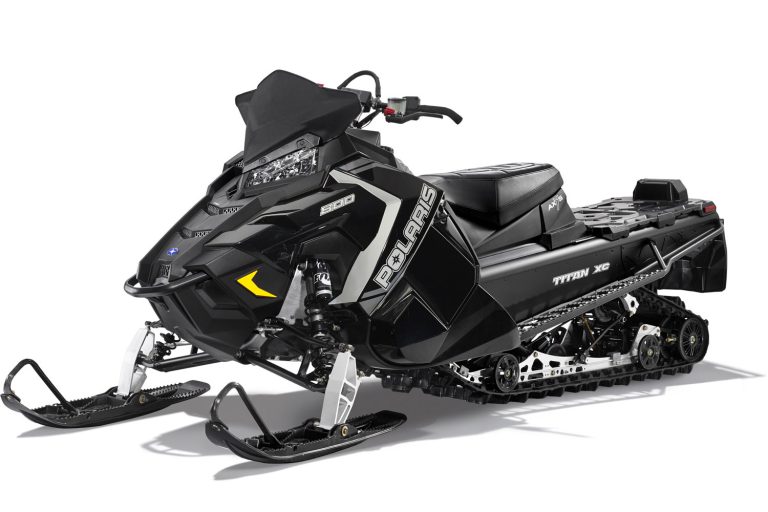
2018 POLARIS TITAN SERIES

0

There’s a new breed of sleds from Arctic Cat and Polaris this year.

To be fair, this genre wasn’t invented by either, rather it was begun by Ski-doo with its Expedition Extreme series.

What Cat and Polaris have come up with this year are two models that constitute a pretty good response.

What are we talking about? First, Polaris has just introduced a 2018 line of sport-ute sleds called Titan.

There are three versions: The baseline SP 155, the cross-country focused XC 155 (Fox QS-3’s all around with the deepest track) and the Titan Adventure – a dual purpose utility and touring sled.

What makes these new Titans so attractive is the fact they are all powered by Polaris’ stellar 800HO 2-stroke Cleanfire twin with TEAM BOSS secondary clutches and dual range sub-trannies and are based on the AXYS front end design.

Traction is provided by a 20-inch-wide track with 1.8-inch lugs (XC), 1.375 (SP) and 1.5 (Adventure). The Adventure also uses trail calibrated QS-3’s front and rear while the SP uses IFP gassers all around.

The SP and XC models look for all-the-world like regular crossovers until you start to examine them closely.

It’s then you discover these are regular crossovers on steroids. They’re big sleds in the 600-lb range but because of their slick drivetrains, can really rip powder and are amazingly agile on trails – very similar to Ski-Doo’s 800 E-TEC powered Expedition Extreme.

All Titan models are extremely fun to ride and offer truly impressive and surprising performance with their quick handling, monster grunt and excellent ride quality.

WINTERIZED SPORTSMAN XP 1000

0

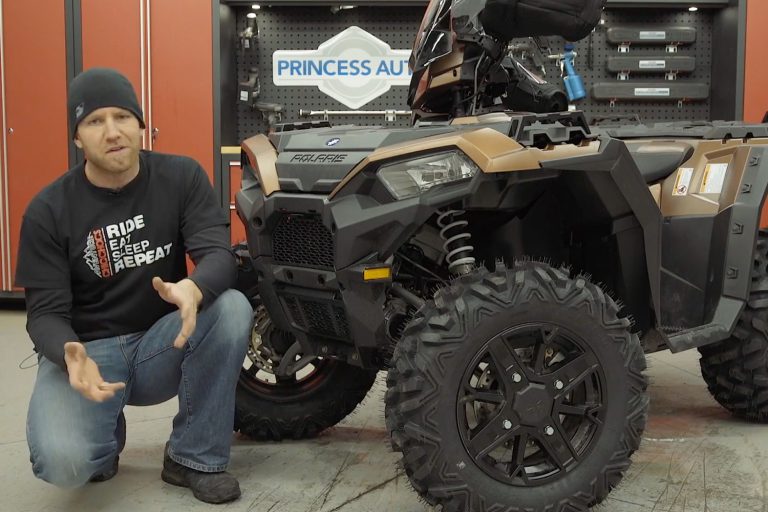
In this Trail Tech segment, AJ pulls out one of our DirtTrax rigs and winterizes a Polaris Sportsman 1000 XP for the final weeks of cold and snow.

Subscribe to our YouTube Channel!

Northwest Ontario Adventure

0

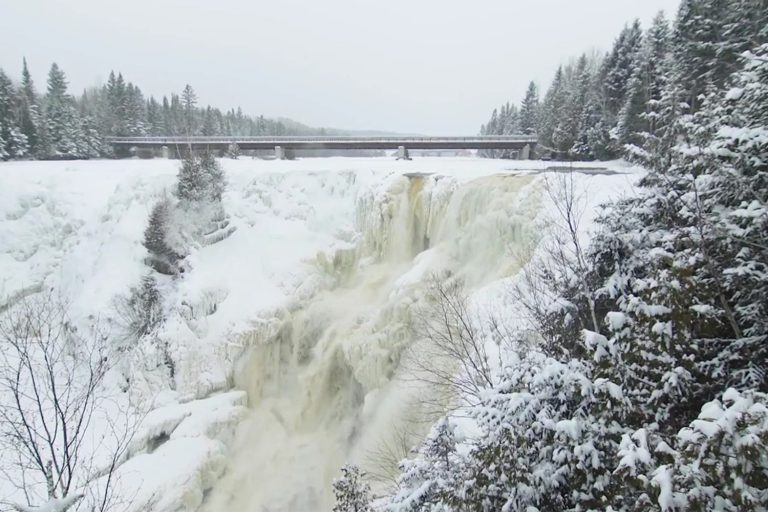
AJ Lester ventures on a journey to Northwest Ontario to take in the sights, soak in the culture and of course, do some snowmobile riding in the area of Atikokan and Thunder Bay.

Subscribe to our YouTube Channel!

THE SWITCHBACK REINVENTED

0

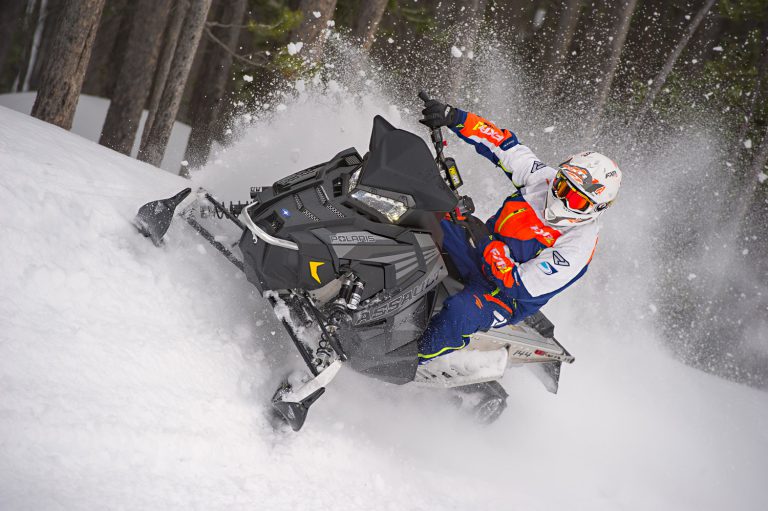
2017 Polaris Switchback Assault 144

We’re not gonna mix words here. The original Pro Ride-based Switchback Assault has not been among our fave rides. It used a 144-inch uncoupled skid without torsion springs and gave its rider an unrepentantly stiff ride. Some said it rode like a dump truck in moguls and handled like an overloaded A class motorhome in the twisties. Okay, maybe a C Class motorhome. The problem was the chassis was too much off-trail and too little on-trail to be a real dual-purpose snowmobile.

For 2017 Polaris moved the Switchback Assault into the AXYS front clip and developed a brand new skid. The changes Polaris made amount to a completely new sled and we mean more than just parts and power. We mean a new response in terms of ride and handling.

The 800 HO is a complete re-think of the original Cleanfire 800. It pushes out 160-odd-ponies using 3-stage exhaust valves and a 2.5 pound lighter crank. The engine cases and all associated hardware have been rationalized and designed for both efficiency and lightness. Case in point: The 800 CFI actually weighs one pound less than the 600! There’s an electronic oil pump for vastly improved oil efficiency and standard equipment V-Force reeds are used.

Interestingly, the lightened crank trick has been emulated in Ski-Doo’s new Rotax 850. It’s obviously a solid idea that delivers enormously improved throttle response, spool-up and corner-to-corner thrust. Keep in mind, we suspect it was this Polaris engine that motivated Ski-Doo to do an 850 instead of another 800.

The Assault’s rear suspension desperately needed rethinking. The all-new skidframe is not an RMK cast-off or clone – it’s a new generation of skidframe utilizing an ultra long front torque arm, torsion springs and an uncoupled rear arm, referred to in Polaris marketing hype as the IGX skid.

The new front torque arm, dimensionally identical to that used on the Pro-XC external shock skids (RUSH), produces over 40-percent more travel. This is not inconsequential. This travel improvement, in concert with a non-coupled rear drop link produces two important results: First, mogul absorption is remarkable, and we don’t mean when compared to the old torsion-less skid. We mean when compared to Pro-XC! Only under the worst conditions we could find was anyone able to conclusively say the Pro-XC was better than the IGX.

The second benefit of the uncoupled rear arm is deep snow mobility. The new Switchback climbs on top of untramped snow easily thanks to the increased front arm movement and the uncoupled rear drop link. Sounds like a win-win to us, but you’ll be the final judge.

You have the choice of the 1.35 Cobra or a Series 4, 2.0-inch deep lugger for traction. The 1.35 is the best choice if you’re riding on-trail more than off. The 2.0 wins if you’re riding mostly off-trail. The 2.0 is rumbly on hard pack as a result of a stiffer durometer rubber while the 1.35 is mostly transparent, not generating annoying vibes or rumble but still capable on and off-trail.

We have to commend Polaris engineers on this re-invention of the Switchback Assault. There’s a lot here that’s new to digest, all in one year. As always, we’d love to see a better stock windshield – this one’s pretty chilly. We also think a clip-on passenger seat would be a superb accessory for those who justify their purchases to a significant other.

TEST RIDE: 2017 Ski-Doo Renegade X 850

0

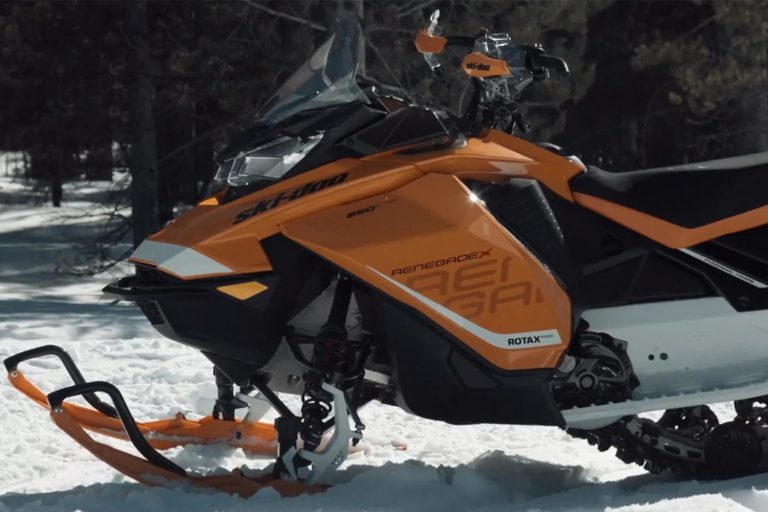
Mark Lester hosts this week’s Test Ride and takes out a 2017 Ski-Doo Renegade X 850 on the trail.

Subscribe to our YouTube Channel!

2017 YAMAHA SIDEWINDER B-TX

0

Big, Powerful, Innovative and Versatile. Is That Enough?

Despite its long track, the B-TX’s design target is certainly not to be a mountain sled. It’s really a deep snow sled you can take on a decent trail journey or, as it is now coined: A Crossover.

The bonus is that this sled floats powder like a 4-stroke mountain sled and its 1.75 lugs can handle some pretty decent climbs. If you go back a decade, there weren’t many pure mountain sleds with this much track – and certainly not this kind of power.

Power certainly is not an issue. The turbo allows this sled to perform consistently at very high altitudes and the steps Yamaha has taken to minimize turbo lag pay off in deep powder performance. Yes, it is heavier than a comparable 2-stroke but, for sure, there’s never any concern about a power shortage when you need to dip into the throttle when an imminent powder crisis rears its head.

One factor affecting performance is Yamaha’s choice to use a roller secondary clutch on all SideWinders. In deep snow, immediate backshifting and the quick load response of a roller will make a huge difference on the B-TX.

In heavy, damp snow with such a long track and 1.75-inch lugs, you need a clutch that can respond fast, especially when you’re carrying a lot of snow inside the sled’s suspension and track, when elevations are varying and the snow is harder to push through.

Is the BT-X the Crossover everyone will want? Probably not. After all, despite its strengths, it’s pretty expensive and the turbo market is a growing but fairly narrow sliver of the whole snowmobile market.

However, for those who want the ultimate in power, traction and versatility and can justify the cost of a very sophisticated ride, we strongly recommend this sled. It will impress you and surprise you with its abilities.

ARCTIC CAT C-TEC2 600 TWIN

0

THE 10 BEST SNOWMOBILE ENGINES OF ALL TIME! This list of 10 encapsulates all that is great in snowmobile powerplants going back several decades.

A new arrival just three seasons ago, this engine has plotted an E-TEC-like course toward iconic status.

However, the 600’s Dual Stage Injection (DSI) technology does not rely on uber-expensive, high pressure injectors to achieve clean burning, exceptional power and very impressive fuel economy.

Yes, you can argue this engine isn’t as clean as E-TEC however, it has forged a similar path proving there are ways to make 2-stroke engines cleaner, more efficient and powerful without adding any significant weight.

It’s refreshing to witness lightweight, efficient 2-stroke power proliferate in the new millennium. Oh, did we mention this engine absolutely rips?

2018 SNO-SCOOT & ZR200

0

WHAT WE THINK ABOUT THE NEW TWEENIES

We’ve dubbed the new Yamaha Sno-Scoot and Arctic Cat ZR 200 “Tweenies” because they suit an overlooked class of snowmobilers who are avid but haven’t had anything to ride.

These snowmobilers are kids between the ages of nine and fourteen who may have owned and even raced a mini-sled when they were younger and littler but simply don’t fit on one anymore. At the same time, both they and their parents don’t feel comfortable with them riding a full-sized sled.

The Sno-Scoot and the ZR200 are both perfect sized sleds for these riders. The plus is that there is nice power on tap to keep things interesting and with a 30-mph top speed, they can participate in real trail rides with friends and parents.

Here’s our take: Both these sleds are way, way more fun than they look like they could possibly be. On our test rides we observed full-sized, corn-fed adults ripping around on them and absolutely falling off, giggling.

With dual A-arm front suspensions, real shocks and a mind-bending 9-hp, the sleds rip in powder and in hard packed snow. No, we’re not talking about 800-class rippage, rather, something way less that still keeps the rider interested and engaged.

Both sleds have pretty sophisticated clutching, comfortable, supportive seats and sensible ergonomics.

Kids and even novice riding adults will love these sleds and they will serve the purpose of getting people interested in the sport – often as a result of their kids loving to ride on of these tweenies.

Our great hope is that the industry will stay with this concept for a long time. Maybe sales won’t be huge the first year or so, but we think as they catch on, there will be a sustainable and considerably large market for sleds like this and future variations.

SKI-DOO E-TEC 600 TWIN

0

THE 10 BEST SNOWMOBILE ENGINES OF ALL TIME! This list of 10 encapsulates all that is great in snowmobile powerplants going back several decades.

This might be the most important 2-stroke of the modern era. Nobody was expecting Ski-Doo to launch a full-on Direct Injection 2-stroke in 2008.

The entry of this technology is now indelibly etched as a landmark event for both lightweight performance and clean, environmentally friendly operation.

Essentially, E-TEC saved the 2-stroke from the steamrolling assault of heavier 4-strokes. Without this obvious one-upmanship by Ski-Doo, hope might have been lost for the 2-stroke.

As it is, we know E-TEC DI technology can produce clean exhaust, outstanding power and most importantly, lightness.

Sure, 4-stroke power will continue to proliferate, however, the E-TEC 600 marches upstream with best-in-class fuel economy and smokeless operation.

YAMAHA 973-1049 TRIPLE

THE 10 BEST SNOWMOBILE ENGINES OF ALL TIME!

In the mid-2000s we experienced this amazing 4-stroke triple in its 973cc carbureted form in the first Vector.

Little did we know it would become one of the most popular snowmobile 4-strokes of all time.

It truly hit its stride when it grew to 1049ccs and got EFI in the early part of this decade.

At 130-hp it produces the kind of power snowmobilers need and want and is widely used in a plethora of both Yamaha and Arctic Cat models today.

We’ve commented this engine feels much like a 2-stroke in its response and driveability.

It’s true, and may be one of the industry’s best reasons for 2-stroke lovers to convert to a 4-stroke.