Home Blog Page 146

2017 XF CROSS COUNTRY LIMITED

0

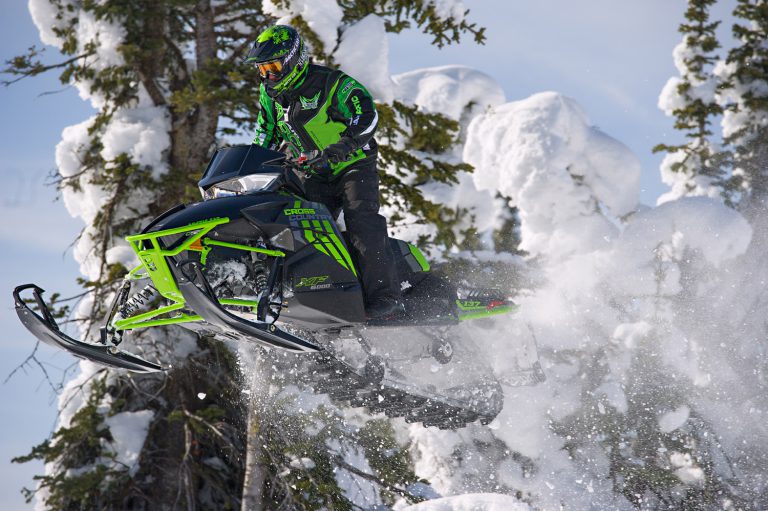
The XF Cross Country is a unique animal in that it bridges both trail riding and powder riding extremely well.

Although we wouldn’t call it a complete freestyler, we will vouch for its ability to handle all sorts of powder use, including some fairly aggressive climbing.

At the same time, this Cat is extremely good on trails. Its coupled back end and quick handling, hampered only by a pair of imprecise carbides, make it fun to ride and ever since Cat introduced this 137-inch track length a few years ago, it’s been one of our favorite ProCross configurations.

The Cross Country’s track and shock packages are what make it unique. We’ll take it a step further and blatantly declare this is a much better sled when you order it with a 2-stroke. Since the CC is definitely targeted at off-trail riding, weight is of the utmost importance.

Although the Yamaha 998cc turbocharged triple (9000) is very capable in powder due to its nearly limitless power, it’s way more comfortable on trails. Get it in the deep stuff and you’re usually pretty puckered with the prospect of getting it submerged.

The truth is, the new breed of crossover sleds from all OEMs needs to be slightly over-biased toward off-trail but still have strong competence on trails. Thus, choosing a fully coupled, sliding front arm skid is a stellar choice. Yes, the uncoupled 141 and 153 length tracks are really good in powder, too – actually flitting very close to a mountain sled’s potential – but the Slide Action 137 is just flat-out excellent in both applications.

Since the Cross Country uses a 1.75-inch Backcountry X track and has a full menu of Fox Zero Pro QS3 shocks (the front arm is a non-adjustable gasser) there’s absolutely no doubt you can adjust your way into a near-perfect trail ride.

Although a 1.6-inch deep track may be the ideal for trails, the 1.75 makes a huge difference off-trail and will likely survive slider wear on hard pack and won’t rip up the trails to the point snowmobile groomers will put an APB out for your sled.

Cat’s decision to move to TEAM primary and secondary clutches last year was a good one and guarantees you’ll get a good backshift in powder. It’s worth noting the Cross Country Limited has exactly the same gearing as Cat’s L-TX 137-inch trail-targeted sleds, so that underscores the benefit of Rapid Response clutching.

Back in the day, Arctic Cat’s most serious production racers were called “Cross Country Cats”. Although this one isn’t targeted specifically at cross country competition like those sleds were or even the current RR series, it has very strong potential to be loved by the above-average-skill, aggressive ditch and high speed trail rider.
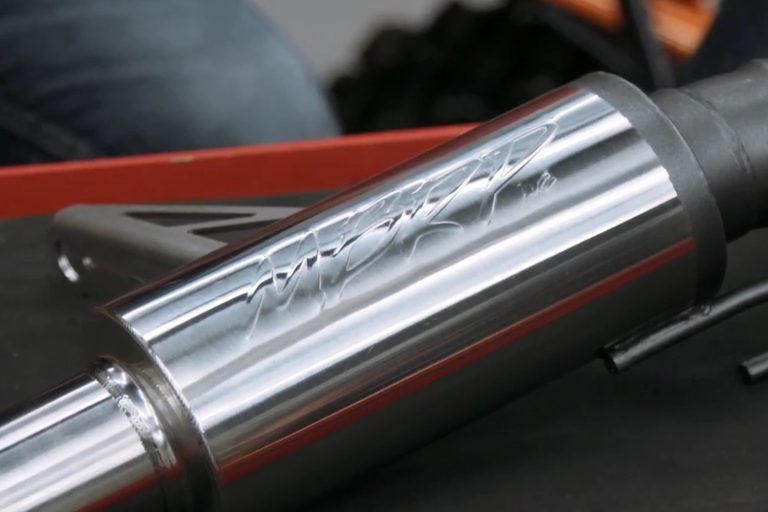
MBRP Turbo Exhaust System

0

AJ looks to increase horsepower and performance with an install of a new MBRP Exhaust System on a Yamaha Sidewinder, with the assistance of MBRP’s Powersports Brand Manager.

Subscribe to our YouTube Channel!

BRP REMOTE ACTIVATED LIMTER STRAP

0

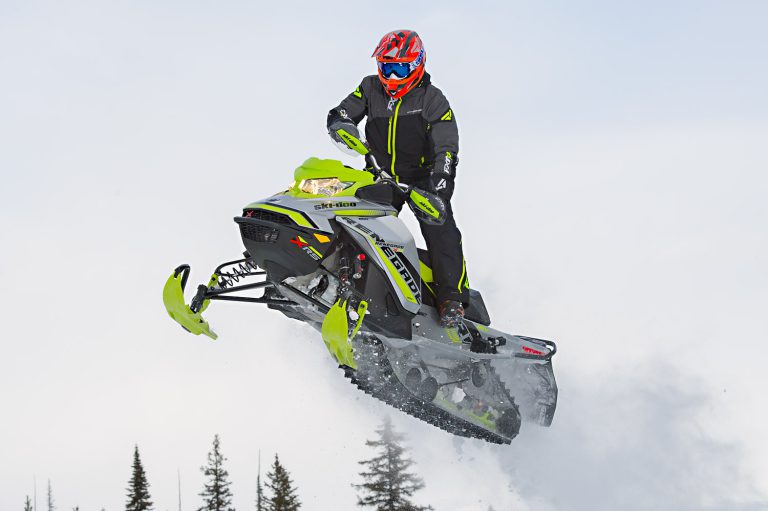
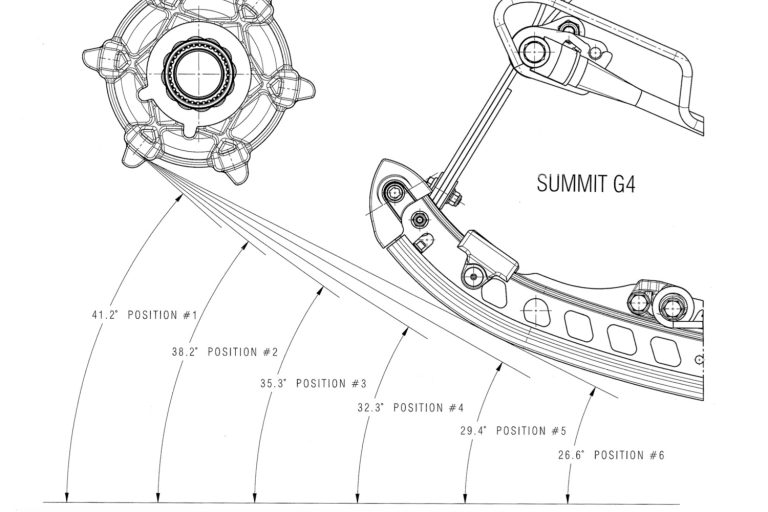
BRP introduced the adjustable limiter strap for tMotion rear suspensions two years as a quick easy way to adjust deep snow handling on Summit and Freeride snowmobiles.

This year the concept is taken further to a remotely controlled system for even easier and quicker operation.

Riders benefit from being able to quickly adjust their ride between a playfully light and agile set-up, to a more connected one where the track approach angle gets much more gradual and the skis don’t lift as easily.

By making it remotely activated, the dial like switch is mounted on the handlebar riser; riders can now change positions by twisting a knob rather reaching down by their feet to flip a lever.

The kit should also prove popular with the cross-over crowd as it also fits the new cMotion rear suspension on the 2018 Backcountry models.

If a rider wants more positive steering on the trail, they can move it to the shorter position, but when going off trail -switching to the longer position will provide better deep snow handling, in a very quick and convenient way.

Adjustment range is equivalent to 2 holes on a conventional limiter strap (1.3 inches/34 mm), with 2 settings to choose from: holes three (stock position) to five, or two to four.

The kit is available for all tMotion and cMotion suspensions from 2013 – 2018 Pricing is $269.99 USD/$329.99 CAD

Kody Kamm Wins His First ISOC Pro Open

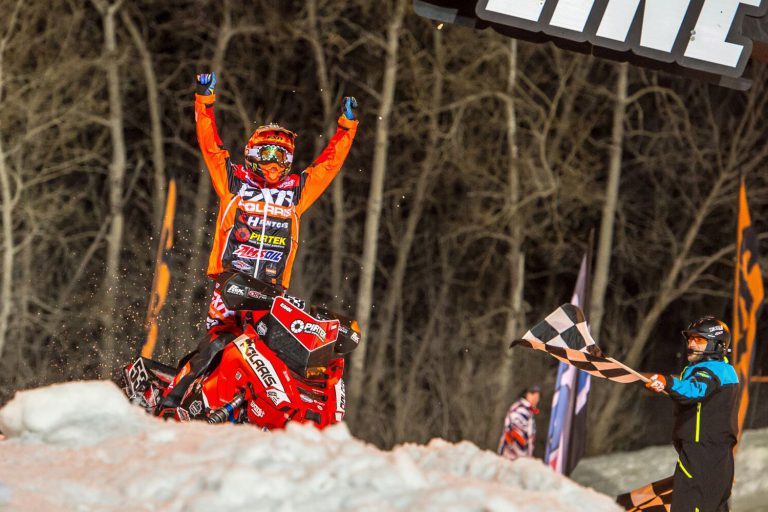
Polaris snocross racer Kody Kamm (Hentges Racing) won six straight heat races and two of three Pro Open finals at the ISOC season finale in Lake Geneva, Wis., to win the 2016-2017 Pro Open championship. Kamm earned an incredible 174 of 177 available points, finishing with 799 points and winning the title by 13.

Polaris Racer Elina Ohman (Davies Racing) won the ISOC Pro-Am Women’s points title, and Jake Angove (Judnick Motorsports) finished second in Pro Lite points.

Kamm entered the weekend second in points, 28 points out of first. ISOC also awarded five bonus points for each heat-race win during the season. Kamm took full advantage by winning all six heats this past weekend, earning him an additional 30 points. He won the Pro Open finals on Friday night and Sunday, and finished second in the Saturday final.

“I had lot of ups and down this year. I separated my shoulder and thought I was done after that, but I won my first race back,” Kamm said after receiving the champion’s red number plate. “This weekend I felt great, no shoulder pain at all. This is a dream come true.”

Kamm won the Pro Lite title in 2011-2012 and ended that season by moving up to race – and win – the Pro Open finale. His best previous finish in Pro Open points was second place in 2013-2014, and now the Kenosha, Wis., racer is a champion at age 23.

In 17 finals this season, he reached the podium 10 times with five wins, two seconds and three thirds. In winning his first Pro Open title, Kamm dethroned Tucker Hibbert, the four-time defending champion who had won five of the previous six titles.

Five Polaris racers were in the top eight in Pro Open points. Petter Narsa (Hentges Racing) was fifth, Kyle Palin (Team LaVallee, Loctite, Polaris, Red Bull) was sixth, Ross Martin (Judnick Motorsports) was seventh and Corin Todd (Leighton Motorsports) was eighth.

In the final two rounds of Pro Lite racing, Jake Angove (Judnick Motorsports) won one final and won two of four heat races to take second place in the season points race. Nickolas Lorenz (Judnick Motorsports) took second in the final race of the season and Zak Mason (Team LaVallee, Loctite, Polaris, Red Bull) was third.

For the season, Angove had three wins and nine podium finishes, including seven in a row in the second half of the season. Joining him in the top 10 in points were Lorenz in third, Mason in fourth, Cole Cottew (Cottew Motorsports) in sixth and Evan Daudt (Daudt Racing) in seventh.

In the final two rounds of Pro-Am Women’s racing, Elina Ohman (Davies Racing) of Älvsbyn, Sweden, won two of four heat races and finished second in one final to easily secure the season points title. She won 14 of the season’s 16 finals, and 27 of 32 heat races.

Jakki Farmer (Fort Fremont Racing) finished fourth in points, Amanda Duitsman (Plaisted Racing) was fifth and Tausha Lange (Lange Racing) was sixth.

Polaris Industries Inc. (NYSE: PII) is a global powersports leader that has been fueling the passion of riders, workers and outdoor enthusiasts for more than 60 years. With annual 2016 sales of $4.5 billion, Polaris’ innovative, high-quality product line-up includes the RANGER®, RZR® and Polaris GENERAL™ side-by-side off-road vehicles; the Sportsman® and Polaris ACE® all-terrain off-road vehicles; Indian Motorcycle® midsize and heavyweight motorcycles; Slingshot® moto-roadsters; and Polaris RMK®, INDY®, Switchback® and RUSH® snowmobiles. Polaris enhances the riding experience with parts, garments and accessories, along with a growing aftermarket portfolio, including Transamerican Auto Parts. Polaris’ presence in adjacent markets globally includes military and commercial off-road vehicles, quadricycles, and electric vehicles. Proudly headquartered in Minnesota, Polaris serves more than 100 countries across the globe.

Visit polaris.com for more information.

P-DRIVE WOBBLE

0

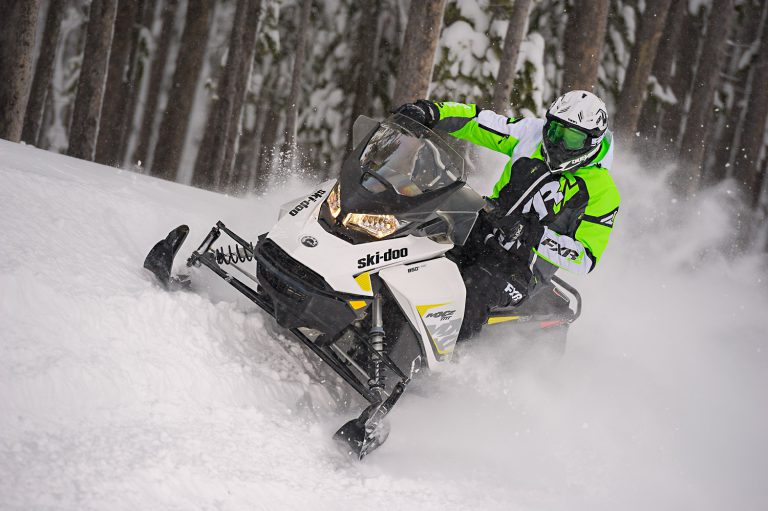
The all-new Roller Tower P-Drive primary clutch used on all the G-4 850’s from Ski-Doo has received another ingenious tweak designed to improve clutch alignment, reduce belt heat and soften vibration.

Listen up, because this is weird science. The fixed (back) sheave on the new P-Drive for MY 18 is actually cast so it wobbles. There’s .024 run-out on the sheave when installed on the crank.

To make this vibration absorbing effect work, the clutch and crank stub have to be timed together so the “wobble” occurs at a precise vibration cancelling moment during the engine’s 180 degree firing order.

The crank stub and the taper on the sheave are “D” shaped to ensure the clutch goes on correctly. The slight wobble also improves belt tensioning while compensating for vibration induced belt misalignment.

Yeah, we said it was weird science. Once again Ski-Doo is tweaking our sensibilities with ground breaking innovation.

Who would have dreamed a wobbling clutch could be a good thing?

Read about this technology here:

BRP VIBRATION DAMPING CLUTCH TECHNOLOGY

BRP VIBRATION DAMPING CLUTCH TECHNOLOGY

0

Since the launch of the REV Gen 4 platform, BRP has been using a Patent Pending technology on the pDrive clutch to minimize engine vibration.

This unique new solution adds no weight but solves the vibration issue many large displacement two-cylinder snowmobile engines experience.

To minimize vibration from the extra 50cc’s, extra 10 horsepower and 30% faster response of the Rotax 850 E-TEC, Ski-Doo engineers designed an industry first, counterbalancing pDrive fixed clutch sheave.

Those with a keen technical eye will notice the D-Shaped crankshaft alignment and the twenty four thousandths (.024) of an inch (.6mm) precise offset or runout built into the clutch sheave.

This runout keeps the belt more perfectly tensioned within the primary and secondary clutches to reduce vibrations sent into the chassis through the secondary clutch.

The timing of the runout’s high spot meeting the belt is synchronized with the engine’s firing to offer a counterbalancing effect without added weight or complexity. The net result is less vibration transferred into the chassis and the rider.

Because of reduced vibration transferred to the belt, the belt temperature remains stable or even cooler, compared to not having this runout.

2018 Ski-Doo & Yamaha Sneak Peek

0

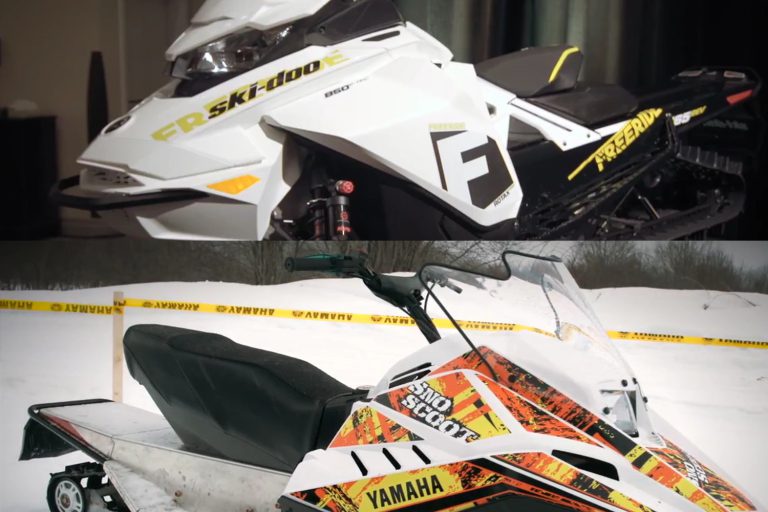
We get a snow-mo sneak peak of what is to come from model year 2018, including the Ski-Doo G4 Renegade XRS and the return of Yamaha’s SnoScoot.

Subscribe to our YouTube Channel!

2018 SKI-DOO XRS

0

SKI-DOO XRS HARDCORES CAN BE HAPPY NOW!

One of the biggest complaints we heard from died-in-the-wool Ski-Doo fanatics last year was that the newly-introduced G4 850 wasn’t available in the XRS package.

It meant if you wanted the good shocks and maximum track options you had to stick with the MX-Z XRS 800 in the XS platform for another year. Wah, wah!

MY2018 brings a new G4-based XRS with all the jam those hardcores have been asking for.

Available in both 129 (MX-Z) and 137-inch (Renegade) track lengths, the new XRS series brings an amazingly striking color combo of yellow, silver and black besides a second all-black scheme with the black having a more subdued complimentary nose band across the hood – a styling cue we personally wish the G4 would lose.

Both look awesome, however, and leave absolutely no doubt this is Ski-Doo’s premium performance model.

You can choose between an Ice-Ripper XT semi-studded track or a RipSaw, with 1.25-inch lugs in both track lengths or an optional 1.6 Cobra.

Frankly, we feel XRS riders would really benefit from the 1.6 option because this sled makes some serious power and both stopping and acceleration traction is at a minimum without aftermarket traction products installed on a 1.25.

One interesting change this year is a switch to Pro 36mm rebound adjustable front shocks compared to the usual 40mm units on XRS Ski-Doos of the recent past.

Although the compression and rebound adjustable piggyback gas shocks up front are very sophisticated and offer extreme performance, they may lack the “mental horsepower” appeal of the bigger units.

You have to give consideration to the fact, with the XRS being calibrated for the masses, there are few riders who will experience fade or damping limitations (bottoming) from these smaller diameter KYBs.

As it is, buyers are getting premium performance with less weight – a sensible and valuable trade-off – and there are still big 40s in the rMotion out back.

REMOTE COUPLING BLOCK ADJUSTER

This is false (ref: BRP REMOTE COUPLING BLOCK ADJUSTER). This does not change it from an coupled skid to an uncoupled.

You cannot change a coupled skid by adjusting rear stops to make it uncoupled. Parts need to be physically changed to do that.

You need to reword your article as it’s misleading.

Brad Ratch

Hey Brad!

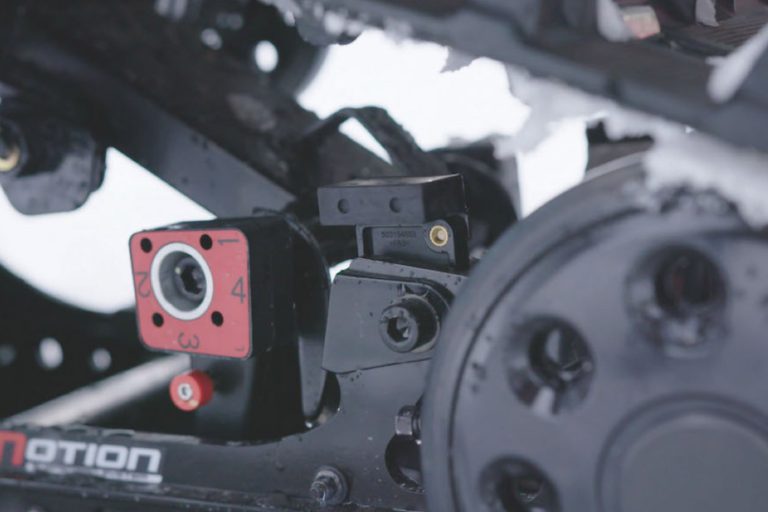
Sit up and pay strict attention to how the remote coupler adjuster works. It will allow the rider to use his or her pre-determined rear coupling setting (located on the drop link pivot) in any of the four positions or – this is where you’re confused – no coupling at all as it swivels the rear coupler stops on the rail extrusion completely out of the way – which means no, zip, nada coupling.

So, the system allows for either a predetermined coupling moment of #1 thru #4 or no coupling. We think it’s pretty cool.

Thanks,

Motorhead Mark

See original comment and response from Ski-Doo…

2018 Polaris & Arctic Cat Sneak Peek

0

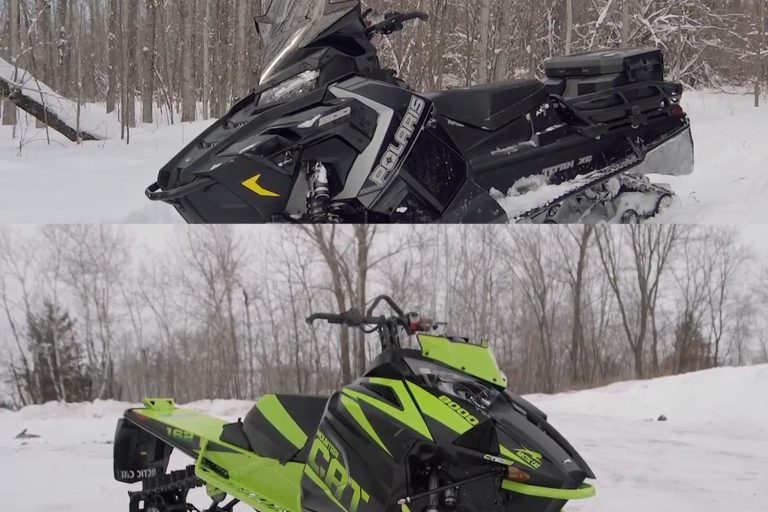
We get a snow-mo sneak peak of what is to come from model year 2018, including the Polaris Titan and Arctic Cat’s new C-TEC2 800 Engine as well as Arctic Cat’s ZR200.

Subscribe to our YouTube Channel!