Home Blog Page 10

First Ride – 2025 Ski-Doo MXZ X-RS with Smart Shox

0

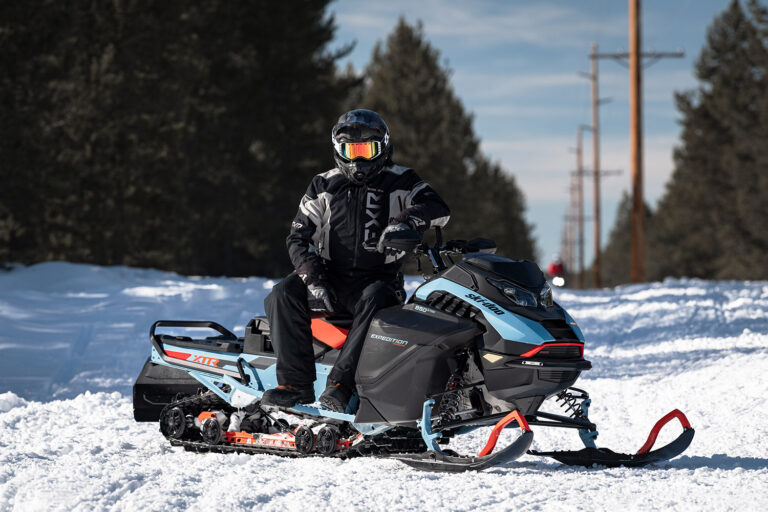
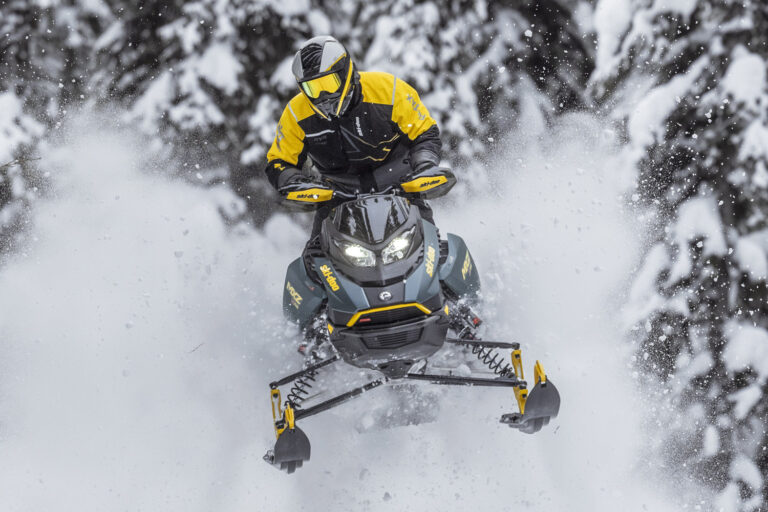
There are precious few 2025 sleds as sweet as the MXZ X-RS with Smart-Shox in the REV Gen5 Platform and I was more than a little excited to pull the trigger on this ride.

After my first 100 klicks I came away flat-out impressed with its handling prowess from the new Pilot RX skis and RAS RX front end. The 2025 MXZ X-RS can go toe-to-toe with a Polaris in the twisties. Frankly, the response to steering inputs in tight trails when you’re sawing on the bars and aggressively squeezing the loud handle are way, way familiar. 

What we mean is the MXZ in its many variants, going back more than 10 years, can’t hold a candle to the new G5 with RAS RX and Pilot RX skis. This move – above all other tweaks Ski-Doo has brought to the table year after year – is pure steak. No sizzle here; just genuine, game changing filet mignon.

You also can’t help but be impressed by Smart-Shox when you run into choppy trail surfaces. You’ll get to the point where you won’t even back off the throttle in the presence of sucker bumps or square edgers. The front shocks read the terrain and then warn the rear arm shock what’s coming, and it works as fast as greased lightning. 

KYB Pro Series dampers, ECU and associated chassis sensors have been available for two model years. However, due to a supply chain glitch with the original Smart-Shox in previous model years, followed by a disastrous winter last year, I hadn’t had a genuinely good opportunity to rip on them. I can now say with conviction that I am totally impressed with how this setup rides.

Usually, I’ll brace myself or pull myself up off the seat when encountering trail craters, but not here; just stay on the throttle and steer. You so rarely ever feel any harshness that you quickly become comfortable enough to dial up the wick in gnar. 

Here’s the verdict: Semi-active suspension is the future of snowmobiling. Keep in mind our 2025 Polaris Indy VR1 features the all-new DYNAMIX semi-active suspension and our initial exposure to it in West Yellowstone earlier this year produced overwhelming approval. For sure we’ll have these two state-of-the-art trail sleds running head-to-head in the next few days so stay tuned for more insightful impressions.  

Marlon Xplore Pro III Sled Deck

0

Marlon is well-known for manufacturing some of the nicest and most functional sled decks and is also a brand that’s constantly evolving. The latest edition of the Xplore Pro series sled deck exemplifies Marlon’s commitment to innovation and quality.

The list of improvements starts with a new sliding system that now uses a round tube within square tube, which significantly reduces surface area contact, minimizing friction points making it way easier to slide the deck wings in and out.

UHMW is still used inside the square tubing to reduce friction even further. Side rails are now bolted to rails vs the old way of welding them, which allow for slight adjustments to alignment in case slide rails get out of alignment. Further to this, slide rails now have two bolt location points which will limit extension width of wings for narrow mountain sleds vs trail sleds.

New decking material is a much thicker HDPE top with molded traction mat. HDPE deck is heavy duty mold and won’t warp due to heat expansion in the summer months. Hidden Marlon and BRAAP badging are revealed when you pull the wings out and Marlon says this puts your deck in “BRAAP mode”.

You’ll also find a new U-Style deck hook used to secure sleds in place. The outer hook is for trail sleds and inner hook is for Mountain sleds. The 2-point locations make sure the supplied Superclamp is perfectly centered to ski widths. Marlon decks still use full-length Supertracs on the outside wings for multiple tie-down locations.

The weather seal kit, which has been offered as an add-on accessory in the past is now comes standard and to make the underside of the deck even more weatherproof there’s a full sheet of aluminum that significantly reduces water leakage from the top of the deck into the bed.

The Xplore Pro III is available in black and white, and Marlon has gone away from decals and replaced with laser cut plates with interchangeable color backing with 4 rivet nuts.

8Ft deck fits into 6.2ft to 8ft truck beds and the 7 ft deck fits 5.5ft to 6.2ft boxes.

For more information on Marlon’s full product line visit marlonproducts.com

Polaris Integrated Center Auxiliary Light Windshield

0

Here’s a game-changing product from Polaris to give riders seriously improved visibility at night. The Integrated Center Auxiliary Light Windshield significantly enhances nighttime visibility while providing essential protection against winter’s harshest elements. Whether you’re riding at night, or navigating unfamiliar terrain, this accessory helps ensure a safer, more enjoyable ride.

Superior Lighting Performance

The standout feature of this windshield is the powerful 2,000-lumen auxiliary headlight, seamlessly built into the center of the windshield. This additional light source works in tandem with your Polaris snowmobile’s existing headlights, effectively doubling your field of vision. The bright, focused beam illuminates a wider area, allowing you to spot obstacles, wildlife, or turns with greater clarity and confidence. The auxiliary light is conveniently controlled through your snowmobile’s high beam switch, offering seamless operation without the need for additional controls.

Protection Against the Elements

In addition to boosting visibility, the windshield serves its primary function: shielding you from the elements. Winter conditions can be brutal, with wind, snow, and ice constantly challenging your endurance. The Integrated Center Auxiliary Light Windshield offers excellent protection, keeping wind, snow roost, and debris off you, so you can stay focused on the ride. Its durable construction ensures it holds up to the toughest winter environments.

Compatibility and Easy Installation

Designed to fit a wide assortment of Polaris sleds from model year 2021 onward, this windshield upgrade offers compatibility across the Polaris snowmobile lineup. Installation is straightforward, and the auxiliary light connection integrates effortlessly with your existing electrical system. This means you can quickly and easily enhance your snowmobile without complicated modifications.

Ride Safely and Confidently

With the Polaris Integrated Center Auxiliary Light Windshield, you’re investing in both safety and performance. The powerful lighting system gives you the confidence to ride at night, knowing you have superior visibility and protection.

Visit polaris.com for more information.

BOOST OR 9R?

0

No question about it. The Polaris 9R engine option available in the XCR, Assault and RMK has generated an avalanche of interest. It seems the availability of a “boutique” engine has appeal that goes beyond anything else in the 2025 Polaris lineup.

To say Polaris has stacked the top end of the market with tasty engine options is an understatement. What I see here is a complete and thorough reaction to the reality of the sno-mo-biz in MY25. Our sport has gone upscale – and not in a small way.

Hold the hate mail! We know there’s a formidable number of our viewers and readers who would swear there’s a market for downscale, cheap sleds. That might be true, but here’s why we think that number might not be as high as you think.

The NEO is entering its third season in the market and while the sled is selling, it isn’t altering the course of human history. Same goes for the Indy EVO. Both these sleds have high value chassis, suspension, standard features and the list goes on. Problem is they are not selling like ice cream on a hot day and there’s a reason for this.

The very core of the powersports business runs off ever-increasing power, handling, ride and trickery. The good news is that new millennium buyers are the reason for this constant upsurge.

Make no mistake about it – OEMs build what buyers want. If they don’t, a huge mountain of boxes would pile up behind the factory and at your local dealership containing snowmobiles the market does not want.

Back to the 9R and the Patriot Boost. I can tell you for sure the big sales and big profitability all hang out at this upscale, high performance, tech-featured market. Polaris builds these rockets because the overwhelming majority of snowmobilers want one. Maybe not today but for sure sometime in the future.

The question that must be asked today is whether one of these snow bullets is better than the other. Our team has made this determination and has filed its report for an upcoming episode of SnowTrax. Luke and AJ made up their minds last spring in West Yellowstone.

Keep in mind the 9R is at a distinct disadvantage at Wyoming’s 6000-feet-minimum elevation. In comparison the Boost doesn’t know where it is – it just knows how much compressed air it should ram down the Patriot’s throat to keep the motor swallowing the absolute maximum amount of boosted air and fuel to produce the most horsepower.

I’m going to take some latitude and proclaim that the Boost is a more appealing mill in almost any application the engine comes in, and I am going to make this proclamation on the following rationale.

While the 9R’s lightweight crank feels torquier right off engagement and pulls strong, the Boost feels a little softer right at engagement, then everything breaks loose, and that waste gate goes to work feeding gargantuan gulps of O2 into the Boost.

This violent surge of bare-chested, turbo-charged HP assaults your arms and neck until it levels out as you pass the 105 MPH (170 kmh) threshold and keeps on pulling right up to 115-120 MPH.

The 9R will keep squeezing Kevlar past the C-note, but its ability to achieve the Boost’s velocity diminishes. This reality was played out here at World HQ, which is at 900 feet above sea level.

For sure there’s a lot more to these two impressive powerplants than WOT pulls down Kevlar Lake. However, if you talk to the power-crazed legion who buy sleds at this power level you’ll soon realize unrelenting, unequalled top end jam is their number one purchase criteria.

The 9R is a twist in the road that must be annoying to the competition because nobody saw it coming and although I personally like the Boost, there’s a ton of goodness in the 9R’s lightweight, quick to spool, impressive torque.

For my money though, I’m all about turbocharged 2-strokes. The technology in the Boost is top drawer and impressive.

KIMPEX CONNECT | Snowmobile Cargo System

0

AJ’s in the TRAIL TECH shop outfitting our sleds with Kimpex’s growing assortment of Connect products including mounting bases, rails, tunnel bags and fuel caddy accessories.

RIDE IMPRESSIONS: 2025 Lynx Rave RE 600R

0

BRP launched Lynx into the North American marketplace 3 years ago with the intention to win over competitive owners and not cannibalize its own Ski-Doo brand.

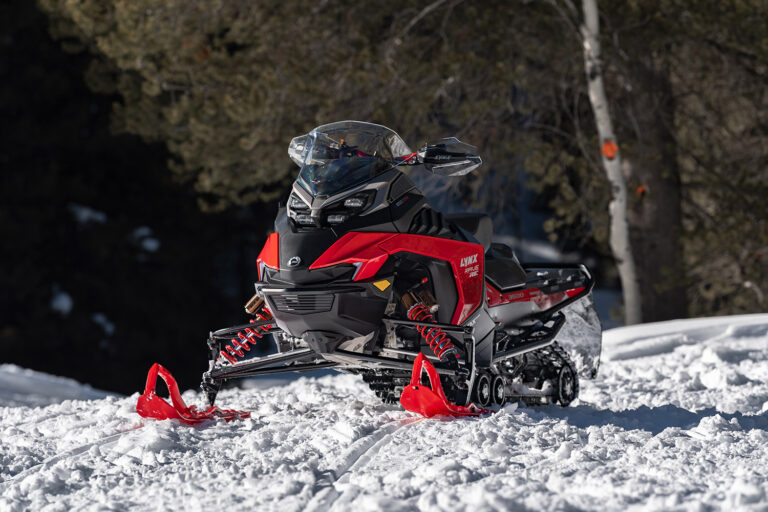
Snowmobiling in Scandinavia is fundamentally different than trail-based riding here in parts of North America and Lynx snowmobiles are designed to accommodate full-throttle roosts on ungroomed trails. The PPS³ suspension uses lots of travel but does not employ coupling, which means the RAVE RE will wheelie through rough terrain with skis off the snow. The sled responds to rider fore and aft movements telepathically. Frankly, the uncoupled nature of the PPS³ system creates a near “dirt bike-ish” response to rough trails.

Some may ask if the 3500mm PPS³ suspension on the RAVE RE 600 is overly stiff on North American trails and you need to understand this: PPS³ is not rMotion. Its set-up is almost bottomless, but in a firm sort of way from half travel to full compression. However, the sensation is not “stiff”. It is more of a precise feeling as the PPS³ eats everything from deep rollers to square edgers, to high-speed G-outs. PPS³ is unlike anything you’ll ride in the sno-mo-biz at this time in history.

Yes, an rMotion has a generally plusher response to junk trails. Strangely though, in rough terrain, the PPS³ suspension provides what can best be described as a more controlled and accurate response. How does this play out with the LFS+ front suspension used on the RAVE RE? Since PPS³ is uncoupled, you may be inclined to think it would produce inside ski lift. After-all, wasn’t ski-lift the reason virtually every skid this biz under 137 inches uses coupling? True story. However, the RAVE RE has a neutral response to cornering inputs and stays mostly flat on corner entry and exit.

A word of caution – the RAVE RE likes throttle. In simple terms drag the brake to the center of the corner then pivot using lots of throttle. On exit shift your weight rearward and dial up the power. BTW, the Blade XC+ skis on the RAVE are Lynx proprietary boards and have long, deep center keels that keep this sled slicing white top with little understeer.

The Rotax 600R E-TEC mill is essentially the same power-pack used by Ski-Doo in a plethora of models. Interestingly, our test pilots feel the engine delivers more urgent power – especially from mid-range to WOT.

We all agree the easy for-aft weight transfer (wheelie) response to throttle inputs gives the rider the sensation of extra-strong acceleration. Is the RAVE RE faster than a similarly powered MXZ? Can’t say for certain right now but it sure feels like it.

There’s some nice stuff the Lynx RAVE RE carries standard. Try KYB PRO 46 HLCR Kashima coated shocks, ultra-cool indirect lighting on both sides of the hood, cast toe hold close offs and a slightly narrower seat-to-gas tank junction thanks to its Radien² platform design.

What can’t be quantified in words though is the allure the Lynx brand continues to carry and cultivate. When you show up on a Lynx RAVE RE 600R, heads will definitely turn, and you can’t put a price on that.

2025 Polaris Patriot 9R Switchback Assault 146 Detailed Overview

0

AJ showcases all the features of the 2025 Polaris PATRIOT 9R Switchback Assault 146 featuring the PATRIOT 9R engine.

Why Can’t We Go Back To The Old Days?

0

Our valued readers and viewers are once again asking, “Why can’t the sno-mo-OEMS build a simple, fan cooled, low featured, old-style snowmobile with old style parts and sell it for a lower MSRP?”.

Economies of scale dictate what an OEM can sell a sled for. To oversimplify, if an manufacturer sells a bunch of a certain model, it can build them for less and hopefully pass that savings onto consumers. The Sea-Doo Spark PWC demonstrates this reality in the best way. Sea-Doo sells more Sparks than any other model in its line-up and the lower cost to produce Sparks results in a lower MSRP. 

So why can’t the OEMs resurrect a 440 fan from early the two-thousands and slide it into a 2005 Rev chassis and sell it for $5995?

I’m not going to dig too deep here because, as much as I respect the rationale for this question, there is no possible way a manufacturer could do this. Fan cooled 2-stroke engines are required by the EPA to use “clean credits” to get them to market. A company like Yamaha would have a ton of credits – and may even sell them to other OEMs so they can comply. 

While this might sound like good news it is not. The entire premise here is to build a low-cost sled. Buying EPA credits is not a low-cost venture. Even if Polaris has enough credits to cover sales of 550 Fan EVOs you have to wonder what happens when they run out.

Furthermore, the cost to produce a snowmobile engine – of any displacement – is not that much different when you compare a 550 fan to a 600 liquid to a 850 and…the list goes on. Simply put the manufacturing savings to be gained using a smaller displacement engine are not anywhere near what you might think.

This same rationale holds true for a snowmobile chassis, track, clutches, body work, skis, brakes and the list goes on.

The Ski-Doo NEO and the Polaris EVO are the answer. While the MSRP of both sleds is higher than $5995, the engines are mostly EPA compliant (the EVO does require credits because it’s a 2-stroke). 

The NEO uses an existing platform (the G4) and the EVO uses the ProRide platform. The savings from using in-production, up-to-date platforms and engines is substantial and passed on to the retail buyer. The fact both of these sleds are in the sub 10K range is remarkable in 2024. 

The final reality is that there is simply not enough demand for a basement priced, resurrected “old” new snowmobile. The best answer to the question is the Ski-Doo NEO and the Polaris EVO.

So don’t think there’s going to be a sub $6000 new sled on the horizon. What the OEMs (specifically Ski-Doo and Polaris) have accomplished is remarkable with the EVO and the NEO. Get a ride on either this winter and you’ll agree – they’re a ton of fun for the money.

2025 Ski-Doo MXZ Adrenaline 600R Detailed Overview

0

It’s AJ’s turn to highlight another value-line snowmobiles we’ll be featuring in our value sled shootout coming up on SNOWTRAX this season, this time showcasing the 2025 Ski-Doo MXZ Adrenaline 600R featuring the ROTAX 600R E-TEC engine.

SPOTLIGHT: 2025 SKI-DOO BACKCOUNTRY X-RS

0

The 2025 version of the Backcountry X-RS may be the most diverse rendition of the crossover model – ever! By special ordering this model you can have a sled that is so close to a pure mountain sled all it needs is a few decals stuck on its skin to set it apart. On the other hand, you can order up a Backcountry that absolutely dominates in a trail setting.

First, the ultimate XR-S mountain climber: Simply check the boxes for the 154-inch x 16-inch track with 2.0 or 2.5-inch lugs. You could build it with either the 850 E-TEC or the 850 E-TEC Turbo R, both with pDrive clutching and it would come with the narrow 39-inch ski-stance and DSX-2 deep snow (wider) skis.

Honestly, this sled will go anywhere you could imagine taking the most dedicated mountain sled. It would have the cMotion uncoupled crossover skid and not the pivoting tMotion X design used on almost all Summits. Take it down a notch and build the same sled with a 146 x 15-wide track and you’d still be comfortable in the most vertical territory.

Then there’s the trail version of the BC X-RS. Build this one with the 146-inch, 15-wide track with 1.6-inch lugs wrapped around the cMotion and, if you go for the wider 43-inch ski-stance you get the newest RAS RX front end and the 2-step keel Pilot RX skis.

This version is still completely competent off-trail but its on-trail handling is a full cut above any former Backcountry model. Both 850 E-TEC engines are available and pDrive is standard. Pro-36 3-position KYB’s are used at the skis on all X-RS Backcountry’s and two Pro 40 EA3s reside in the skid.

Ski-Doo has attempted to cover all the bases with the desires of the most serious crossover owners. To fine-tune your X-RS for the way you ride, you’ll need to be intentional with how you order it, though.

There’s such a wide range of options and features here, you could miss the mark and end up with a sled that’s just a smidge away from perfect for you.