Home Blog Page 15

2024 Polaris Patriot Boost Indy VR1 137 Review

0

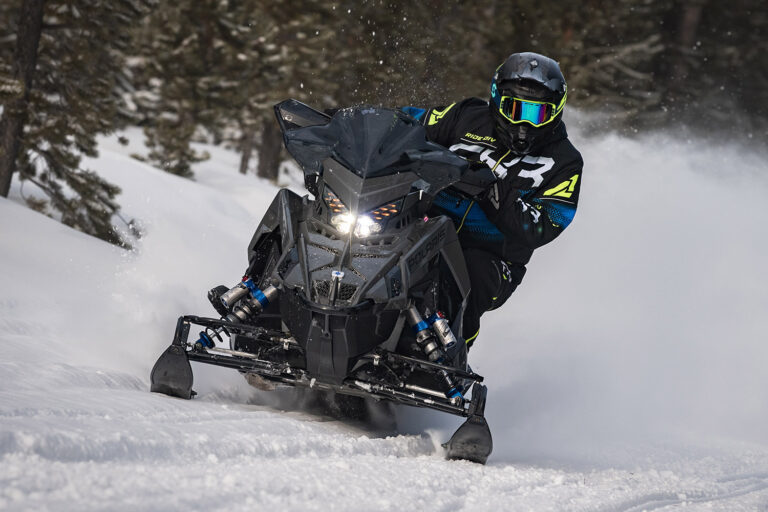
AJ’s lighting up the trail aboard the fully jammed and fully turbo’d 2024 Polaris Indy VR1 137 featuring the Patriot Boost turbocharged 2-stroke engine.

KLIM F3 Carbon Pro Helmet ECE

0

The KLIM F3 Carbon Pro Helmet ECE represents a new level in snowmobile helmet engineering redefining conventional notions of lightweight and safety and has been engineered to reduce fatigue and enhance comfort during every ride by integrating cutting-edge technologies to provide unparalleled protection and performance.

At the core of its design is Koroyd, which is an energy-absorbing material engineered to revolutionize impact protection. Unlike traditional materials, Koroyd uniformly crushes upon impact, effectively decelerating energy in a controlled manner to ensure superior impact absorption.

Constructed with ultralight hand-laid carbon fiber, the F3 Carbon Pro Helmet strikes a balance between strength and weight to ensure optimal shell thickness and resin distribution, resulting in a helmet that is not only one of the lightest in its class but also among the safest.

The helmet’s visor is designed to enhance field of view while simultaneously improving aerodynamics and strength and its extra-large eye port provides maximum vision for the wearer. It also features a Fid-lock quick-release strap to ensure hassle-free helmet removal and its high-efficiency ventilation system, comprised of 13 intake vents and 6 exhaust vents, optimizes airflow for enhanced comfort during extended rides.

With its innovative technologies, meticulous construction, and emphasis on rider comfort, the KLIM F3 Carbon Pro Helmet represents a new level in helmet design and offers snowmobilers the assurance that they’ll be protected and comfortable on every ride.

For more information visit KLIM.COM

SNOWTRAX 2024 – Episode 7

On this episode of SNOWTRAX…

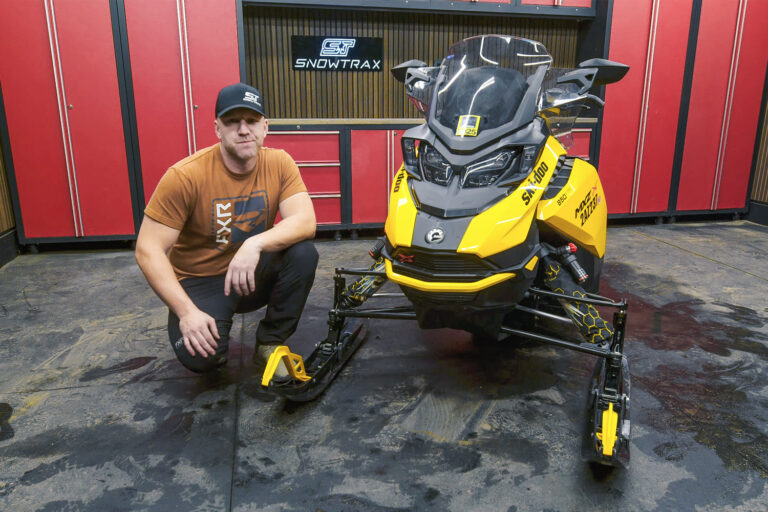
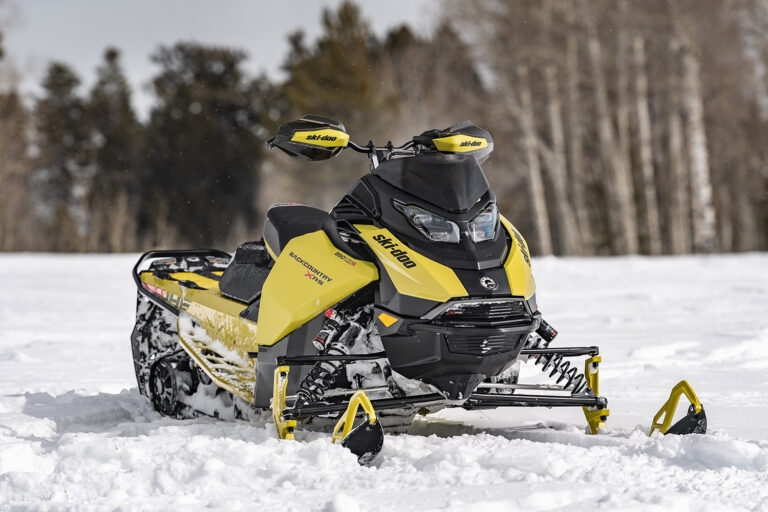
Luke takes a deep dive into the technology behind the ROTAX 850 E-TEC Turbo R engine that resides in the MXZ XRS Competition Package.

Then AJ’s in the TRAIL TECH shop providing a step-by-step installation of a Polaris 7S display on our 2024 Indy SP 650 that does not come from the factory with this display already installed.

Then AJ upgrades the carbides on our MXZ XRS 850 Turbo R Competition Package with some serious traction products from Woody’s.

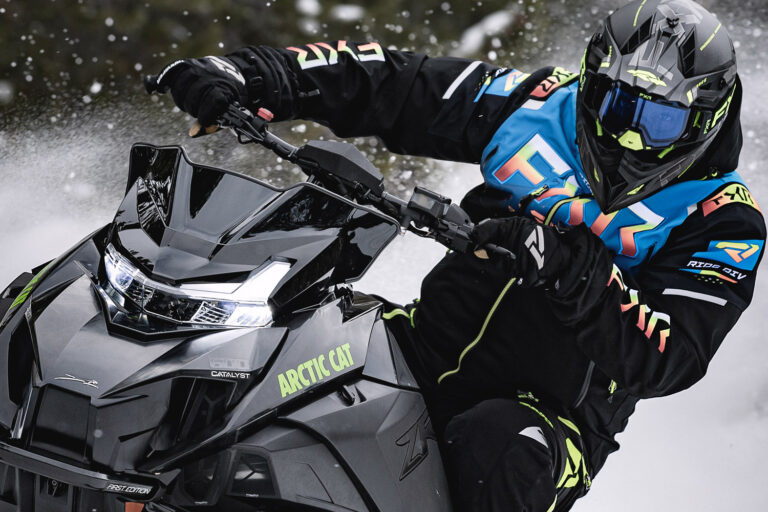
Then in TEST RIDE, Luke evaluates the on-trail and off-trail capabilities of the ALL-NEW 2024 Arctic Cat RIOT 600 in the revolutionary CATALYST platform.

2024 Polaris ProStar S4 INDY XC 137 Review

0

Motorhead Mark shares his thoughts on the 2024 Polaris Indy XC featuring the PROSTAR S4 4-stroke engine.

2025 Final Edition Yamaha Snowmobiles Released

0

After a week of successful dealer deposits and as part of its annual Spring Power Surge Program, Yamaha has opened online deposits to consumers for 2025 Final Edition Yamaha snowmobiles.

As part of Yamaha’s special salute to its last year of snowmobile production, Sidewinder and Viper models will come with special final edition badging along with select special finishes including an anodized color-matching adjustable 4.5-inch handle riser.

The iconic Sidewinder SRX will also have its production capped at 998 snowmobiles and its special badging will identify the unique production number ranging from 001 through to 998.

2025 Final Edition Yamaha Snowmobiles Released
Sidewinder SRX snowmobiles pay tribute to the 998 Genesis Turbo Engine with a limited production run.

The Sidewinder M-TX LE will also make its final mountain comeback and the Sidewinder X-TX LE will feature Electronic Power Steering. There’s also plenty of other sleds available for 2025 decked out with Yamaha’s innovation over the last 57 years.

Consumers placing early deposits on 2025 Sidewinder and Viper models receive a 1-year factory warranty, plus a 3-year Yamaha Motor Protection Plan.

Spring Power Surge runs through to March 29, 2025

POLARIS 9R CHANGES THE RULES

0

By now you’ve likely figured out the maximum displacement of a big bore, 2-stroke hypersled is supposed to be 850 ccs, right?

Although there’s no official rule that 850ccs should be the largest allowable displacement for a 2-stroke sled’s engine, Arctic Cat, Polaris and Ski-Doo have all ended up at this number. The question is: Why has “850” almost universally become the benchmark?

From the conversations I’ve had with people who are in the know, people who eat, breath and sleep snowmobiles and the technology required it takes to build them, the 850 zone provides what is largely accepted as the biggest displacement you can use to build a 2-stroke twin without having it vibrate you and the sled it’s mounted in right off the trail and into the ditch.

This seems like a compelling enough argument, except for one thing. Until Ski-Doo introduced the G5 REV platform and Polaris landed the Patriot 850 in the MATRYX, both these manufacturers had an 850 with some uncontrolled shaking.

Flying in the face of these last couple paragraphs Polaris goes full speed ahead developing a Patriot-based variant called the 9R. Its team knew full well the risks of creating an uncivilized engine when the 9R project embarked. The engine is every bit as smooth and buttery as the 850 Patriot mounted in a MATRYX chassis due in part to two unrelated issues.

First, Polaris developed a new motor mounting system employing five mounts. This looks after any and all vibrations emanating from the naturally aspirated 850, Patriot BOOST and now the 9R. Second, the 9R uses a special lightened crankshaft which further calms the engine making it feel completely refined.

Here’s the issue on everyone’s mind. What’s the power output of the 9R when compared to the other two 850 Patriot variants? Let’s assume the naturally aspirated 850 makes 165 HP. Polaris claims the Patriot BOOST produces 12 more horsepower than that, which for sake of argument let’s say that amounts to just shy of 180 horsepower. So what about the 9R in comparison? Polaris claims the 9R produces 9 more ponies than the naturally aspirated 850, which we can say amounts to approximately 175 horses.

Unfortunately, at this spring’s Snowshoot event in West Yellowstone we couldn’t accurately perform any meaningful comparisons of the BOOST versus the 9R. Why? The Boosted (turbocharged) 850 doesn’t know it’s at 6600 feet elevation in West Yellowstone. It automatically adjusts its wastegate to bring the engine back to its maximum programmed horsepower.

The 9R doesn’t use a hairdryer to make power so any of the numbers posited above mean absolutely nothing at 6600 feet. Truth is the 9R is faster than an 850 but to compare it to the BOOST would be meaningless until we get our hands on both engines in comparable chassis like an XCR 9R 136 and a VR1 BOOST 137 at sea level.

So, here’s what I can tell you. The 9R knocked our socks off with its low inertia crank spooling up like its telepathically hooked to your thumb. The engine feels super smooth at both idle and engagement. At trail speeds it would be impossible to perceive any difference between the civility of the 9R and a stock Patriot 850 except for one noticeable trait. Throttle response felt extra urgent and strong at trail velocities. Corner-to-corner acceleration is immediate and without humps or bumps.

Would I pony up the extra cash to buy a 9R? Yep, I would. There’s so much cache with having one of these rockets, I find it pretty much irresistible.

So, would I walk by the 9R for an 850 Boost? Doggone it, that right there might be the toughest question for MY25.

WET WEIGHTS SHOWDOWN!! Comparing Our Entire 2024 Fleet!

0

For the COMPLETE eighth episode of the 2024 SNOWTRAX season, Luke and AJ wanted to sit down to discuss the results we saw with some of this season’s most popular sleds and respond to some of your comments about what the scale uncovered following the popularity of our YOUTUBE-EXCLUSIVE 2024 snowmobile wet weights weigh-in featuring our entire fleet of sleds.

2025 Arctic Cat ZR 858 CATALYST with ATAC Detailed Overview

0

AJ provides a detailed close-up look at Arctic Cat’s 2025 ZR 858 with ATAC featuring the ALL-NEW 858 C-TEC2 2-stroke engine, Fox iQS shocks with ATAC and the new Garmin G8 display.

MBRP Performance Exhausts for The Arctic Cat ZR 600 CATALYST

0

When it comes to modern day snowmobiles, maximizing horsepower and shaving weight is the name of the game.

While snowmobile manufacturers go to painstaking lengths to squeeze every available ounce of horsepower out of engines; engineers have their hands tied when it comes to shedding the weight from emission regulated exhaust systems.

This is where aftermarket exhaust companies like MBRP can play a pivotal role in dropping significant pounds while increasing performance with modest horsepower gains along with delivering a crisper throttle response and an overall better sounding package.

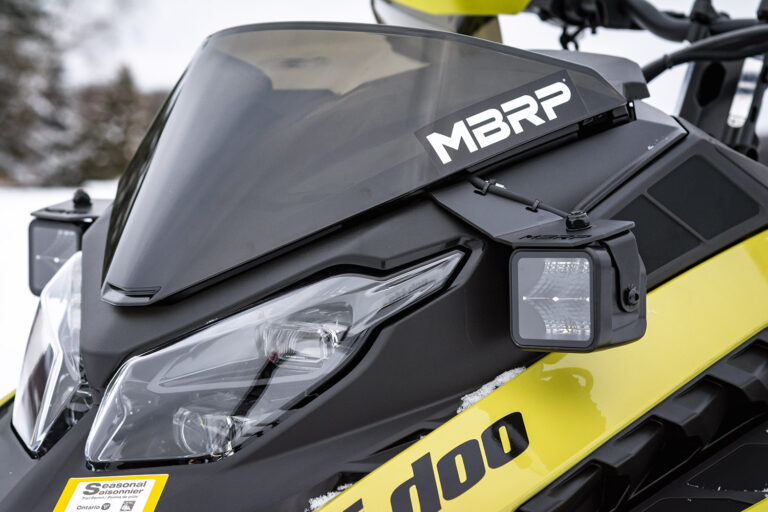
MBRP’s latest performance exhausts are for the highly anticipated and sought after Arctic Cat 600 C-TEC2 engine in the CATALYST chassis. The exhausts are constructed from T304 stainless steel and are Tig welded. The Race and Trail exhausts are also fitted with laser cut brackets for precise fit, thereby making it easy to slip the exhaust into place using hand tools and existing exhaust springs.

The RACE exhaust (P/N: 2390316), featuring a more aggressive sound is targeted to closed course racing and mountain riding applications. It relies solely on the performance exhaust core and sheds an impressive 16 pounds from the stock muffler while increasing horsepower by an additional 3 HP.

The TRAIL Exhaust (P/N: 239T114), with its more moderate and trail-friendly tone has an additional chamber core compared to the Race exhaust and shaves off 12 pounds while delivering a 1 horsepower increase.

While evaluating the TRAIL exhaust our test riders commented on the crisper throttle response that really comes to life past three quarter throttle along with the signature and pleasing MBRP exhaust note that enhances the deeper tone of the 600 C-TEC2.

MBRP prides itself on high performance exhausts that stand up to the harshest environments and offers a 2-year full coverage warranty on all its snowmobile exhausts.

For more information on MBRP’s full line of products visit mbrp.com

DYNAMIX HITS THE SNOW FOR 2025

0

DYNAMIX semi-active suspension might be the most impressive new technology from Polaris for MY25.

It’s no secret Polaris has been working with semi-active suspension control in its off-road side-x-side vehicles for quite some time now. We’ve been driving DYNAMIX-equipped RZRs since about 2018 and after this much exposure to DYNAMIX and its benefits we have to say we have the highest respect for this technology and we suspect that after one ride, you will too.

You might be wondering if DYNAMIX is the same as SMART-SHOX and here’s the important detail that sets DYNAMIX apart. While SMART-SHOX gathers, processes and adjusts both compression and rebound damping using accelerometers on the front IFS and rear arm shocks, DYNAMIX is notably different as it gathers suspension inputs using a chassis-mounted Inertial Measurement Unit or IMU.

The shocks on the front IFS, front arm and rear arm do not assimilate information to the IMU. The IMU is constantly reading the movements of the sled’s chassis. Things like roll, pitch, accelerative G-forces and braking effects on the chassis. All this information is processed by the IMU, then communicated to all four shocks making necessary compression adjustments to all four to keep the chassis level fore, aft and side to side.

A simple example is what DYNAMIX does on a WOT (wide open throttle) take-off. As the sled’s track gets bite, the IMU senses the rear of the chassis squatting under accelerative forces and immediately stiffens the rear arm to control chassis pitch. You can actually feel this intervention.

The same situation occurs when the sled is pushed into a turn at speed. The chassis will start to roll to the outside causing the IMU to increase damping on the outside front IFS shock – effectively levelling the chassis side to side.

Catch a bit of air and the IMU makes adjustments to all four shocks to compensate for harsh landings based on speed and hang time.

This kinda stuff is happening hundreds of times a second. The good news? You can feel it and you’ll be a more confident rider because of it.

Making the system even more impressive is the rider’s ability to track what each shock is doing right on the 7S screen in each mode you select. Toggle between COMFORT, RALLY and EXTREME based on your riding style and you can actually see compensation levels rise and fall for each shock represented on screen.

That’s a brief and elementary run through DYNAMIX. What it is and does is overwhelmingly impressive and we’ll be sure to share more about this technology with you in the weeks ahead.